Roy Velásquez was the son of Mexican immigrants living in Austin at the height of segregation in the 1930s. He saw how hard it was for people of color to get around town when they weren’t allowed in taxis and the streetcar ended far from their homes on the East Side.
Velásquez decided to do something about it and support his family at the same time: He launched a taxi service.
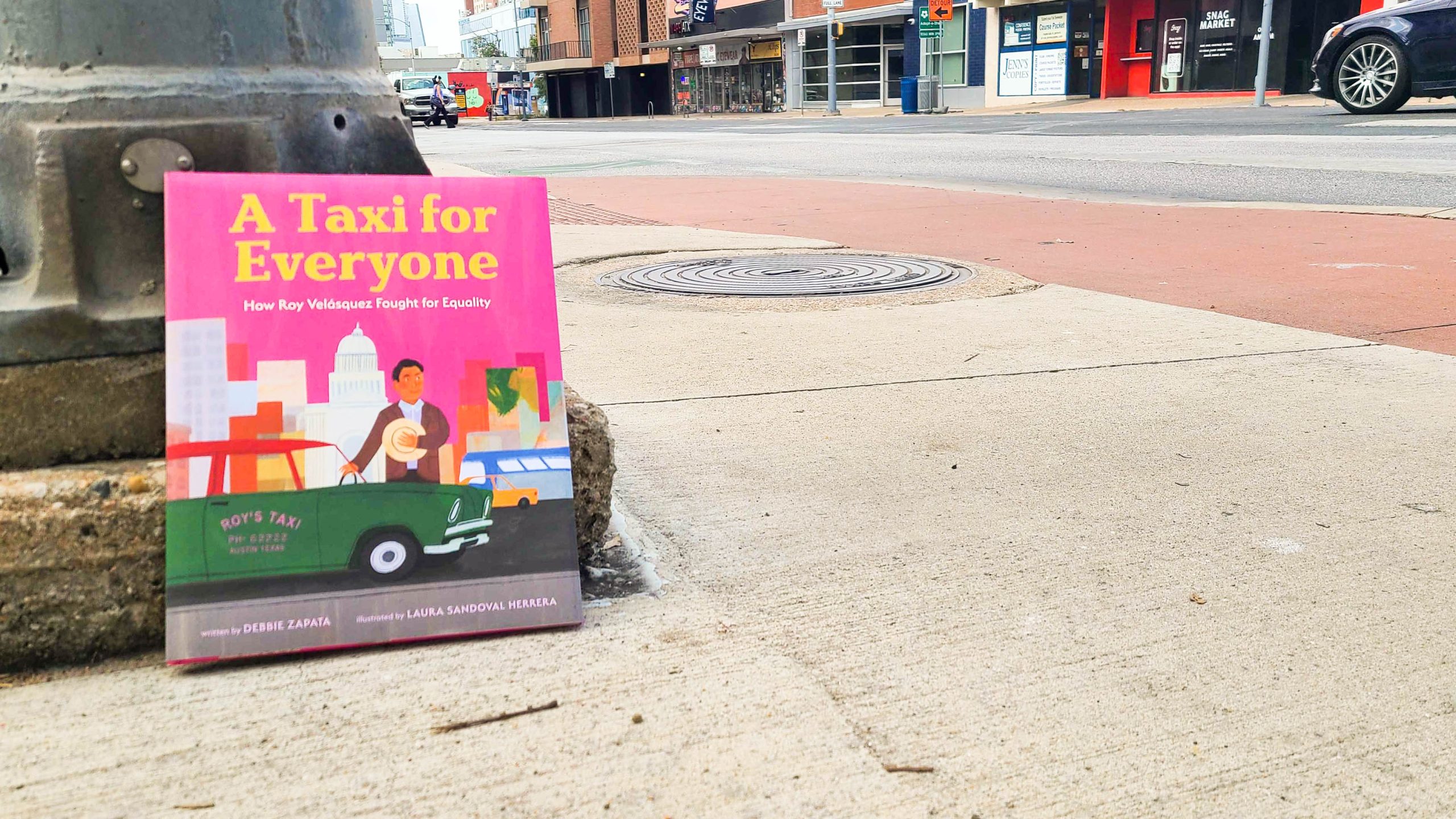
His story is the subject of a new picture book, “A Taxi for Everyone: How Roy Velásquez Fought for Equality” by Debbie Zapata and illustrated by Laura Sandoval Herrera.
Zapata grew up in Austin and she said her grandmother would sometimes take Roy’s taxis to the bus station after visiting the capitol city.
“They really stood out because they were seafoam green with red roofs, which Roy created as a tribute to the Mexican flag. We would see them at airports driving around town,” she said. “It was kind of always around, but I didn’t know the man behind the cab. And I started to look into that once I started writing picture books in 2016.”
Velásquez grew up as first-generation immigrant and moved his family to Austin in 1927, shortly before the Great Depression. Zapata said you can’t understand Roy’s story without understanding Austin’s 1928 master plan that forced people of color to move to the East Side of the city.
“We know a lot of the rich history of Clarksville where a lot the freed slaves settled after,” she said. “But with the 1928 master plan, it really was this idea that what was then East Avenue, which we know as I-35, would be the dividing line.”
Velásquez owned a home and a car on the East Side, but when the stock market crashed, his construction income dried up.
“He had a family and four brothers to take care of. And so, he had an idea that he could get a taxi,” Zapata said. “When he did that and went to go and apply for jobs, every taxi company said ‘no, I can’t hire you. You would scare off my clientele because you’re Mexican American.’”
So Velásquez started his own company, and offered rides to everyone, including people who were not welcome in other cabs.
Zapata said she wanted to tell this story to kids in picture book format because of the lessons it teaches.
“Roy’s story is a story about service and hope and making a difference and community. And I feel like that’s something that kids are always looking towards for themselves,” she said. “Today’s kids are very proactive. They have a lot of opportunities to know about what’s going on in the world and in their own small communities.”
Zapata also wanted to highlight a regular person who had a big impact. At the height of the company, Roy’s Taxi owned 60 cabs and operated for 75 years.
“I think part of that was really about the hard work and the dedication to community. In some of Roy’s accounts, even if somebody couldn’t pay for a taxi ride, he had a lot of regulars so they might pay him in a sack of flour or a bag of frijoles and really made it possible for some people to just hold onto their jobs,” she said.
“That particularly was the case during the Great Depression when streetcars would fill up and if you didn’t get to your job, there were plenty of unemployed people who were ready to take that job from you. And so they were willing to pay an extra five cents and take a cab ride with Roy.”