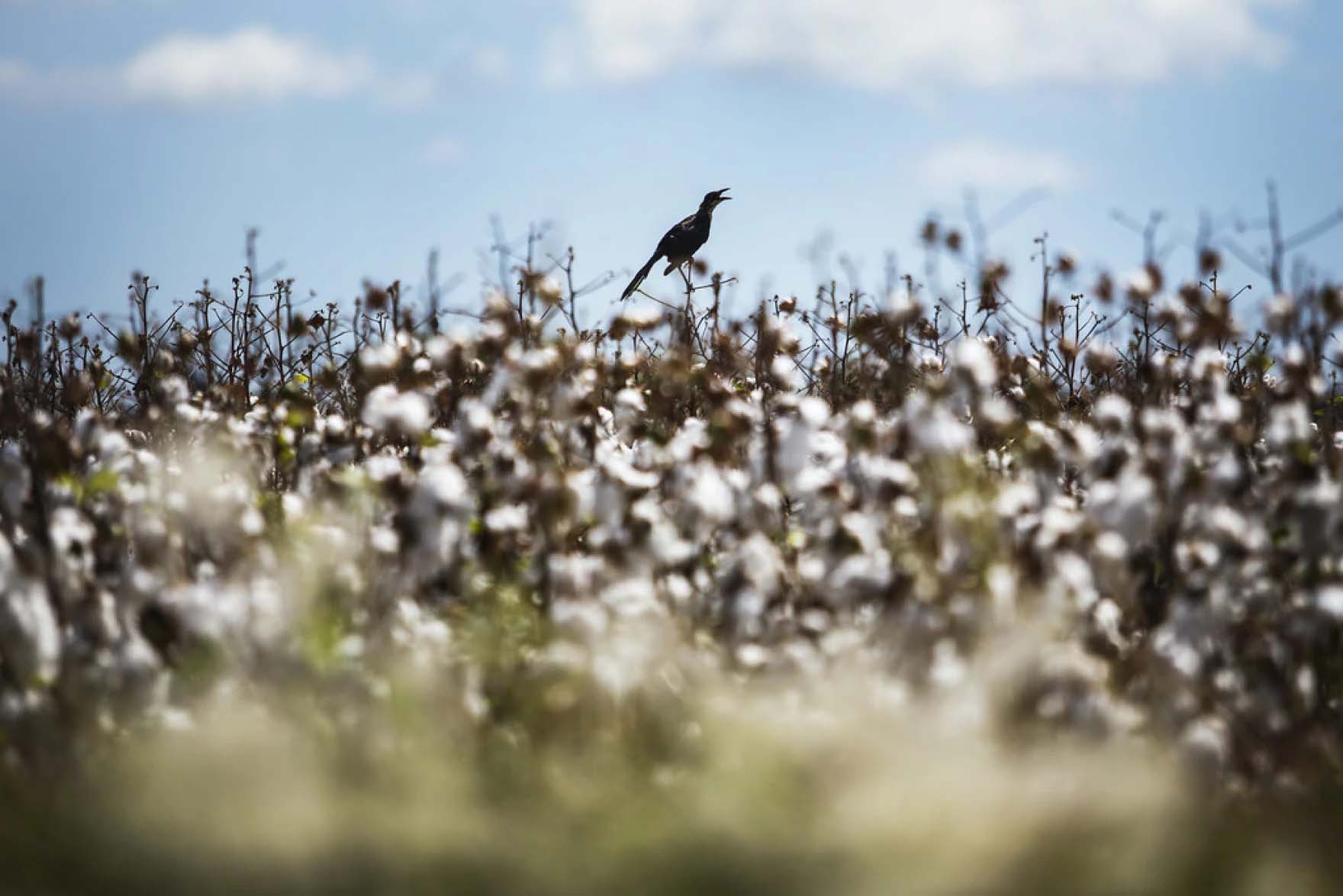
A sprawling coalition of lawmakers, agriculture officials and industry insiders are looking to give a key American crop a leg up over the competition.
For decades, demand for U.S. cotton has remained stagnant.
“Over the last 20 years, we actually haven’t had any growth,” said Hank Reichle, who’s a board member of the National Cotton Council and CEO of Mississippi-based cotton cooperative Staplcotn, which exports American cotton around the globe.
Although people still buy lots of cotton products – including clothing, medical supplies, and bedding – many garment makers have replaced the natural fiber with man-made materials such as nylon or polyester, which are easier to work with and often cheaper.
“Consumers have become more comfortable with synthetic fibers, particularly polyester, in their clothing,” said Robert Antoshak, a cotton and textile consultant. “Going back to the 1980s, probably two-thirds of the consumption of apparel in the United States was made with cotton. Now it’s down to maybe one-third, and that’s all imported.”
As demand has fallen, the U.S. cotton industry has downsized as a whole.
In 1991, the U.S. Department of Agriculture counted more than 1,500 cotton gins, facilities where the plant’s fiber is separated from its seeds for use. There are now just over 400.
U.S. cotton has also faced increasing competition on the global market from countries such as Brazil, where farmers have dedicated significantly more acres to the crop over the past 20 years.
“International textile manufacturers have a range of choices, whether that be U.S. cotton or Brazilian, Australian, west African…or synthetic fibers. And unfortunately, in too many cases, they’re picking those alternative fibers,” said Gary Adams, president and CEO of the National Cotton Council.
Now, the U.S. Department of Agriculture and others in the cotton industry hope to spur more demand for American cotton through new campaigns and help from Congress.
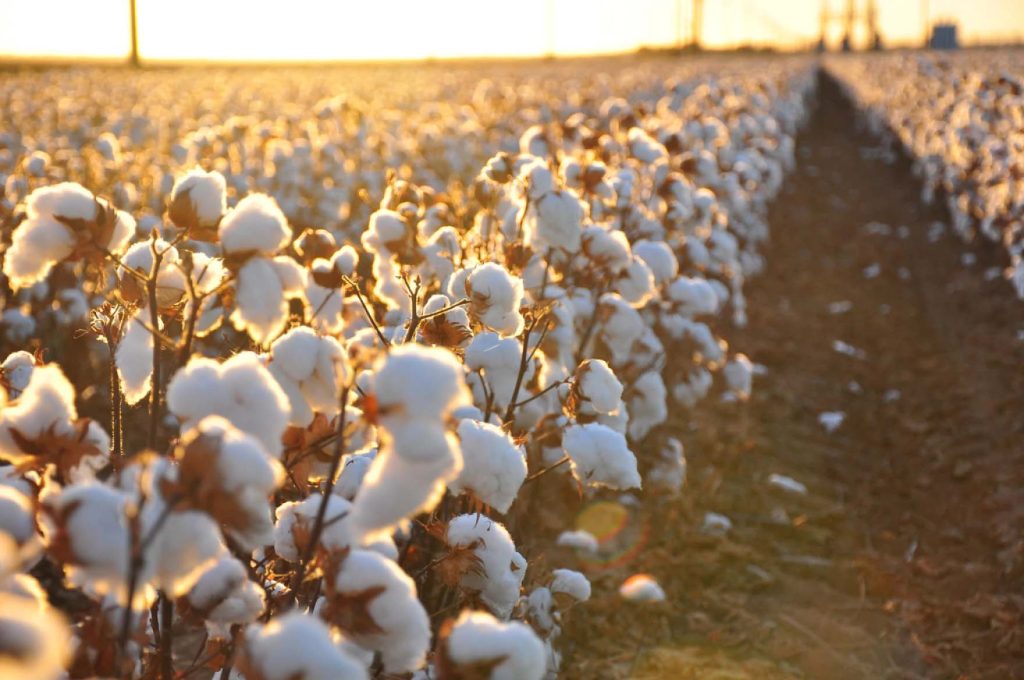
Cotton ready for harvest in north Texas sits in a field in 2011. The U.S. has faced increasing competition from international cotton growers in recent years.
Kimberly Vardeman / Flickr Creative Commons
U.S. cotton’s ‘time to shine’
Industry leaders like Adams are betting on new legislation that aims to boost interest in U.S. cotton, known as the Buying American Cotton Act.
The bill, which is currently making its way through Congress, would provide tax breaks for manufacturers who use U.S. cotton. The more material used, the bigger the incentive. Companies can also save by assembling and selling the product in the U.S.
The legislation requires manufacturers to verify that they’re using U.S. cotton.
“We wanted to give a tax credit that rewards and incentivizes the documented use of U.S. cotton, and then make sure that the tax credit scales based on any of the value added in the United States,” said Adams, who lobbied for the bill.
The National Cotton Council predicts that with the tax credits, U.S. growers and processors could produce up to 4 million additional bales of cotton per year. Right now, they produce about 14 million bales annually.