From KUT News:
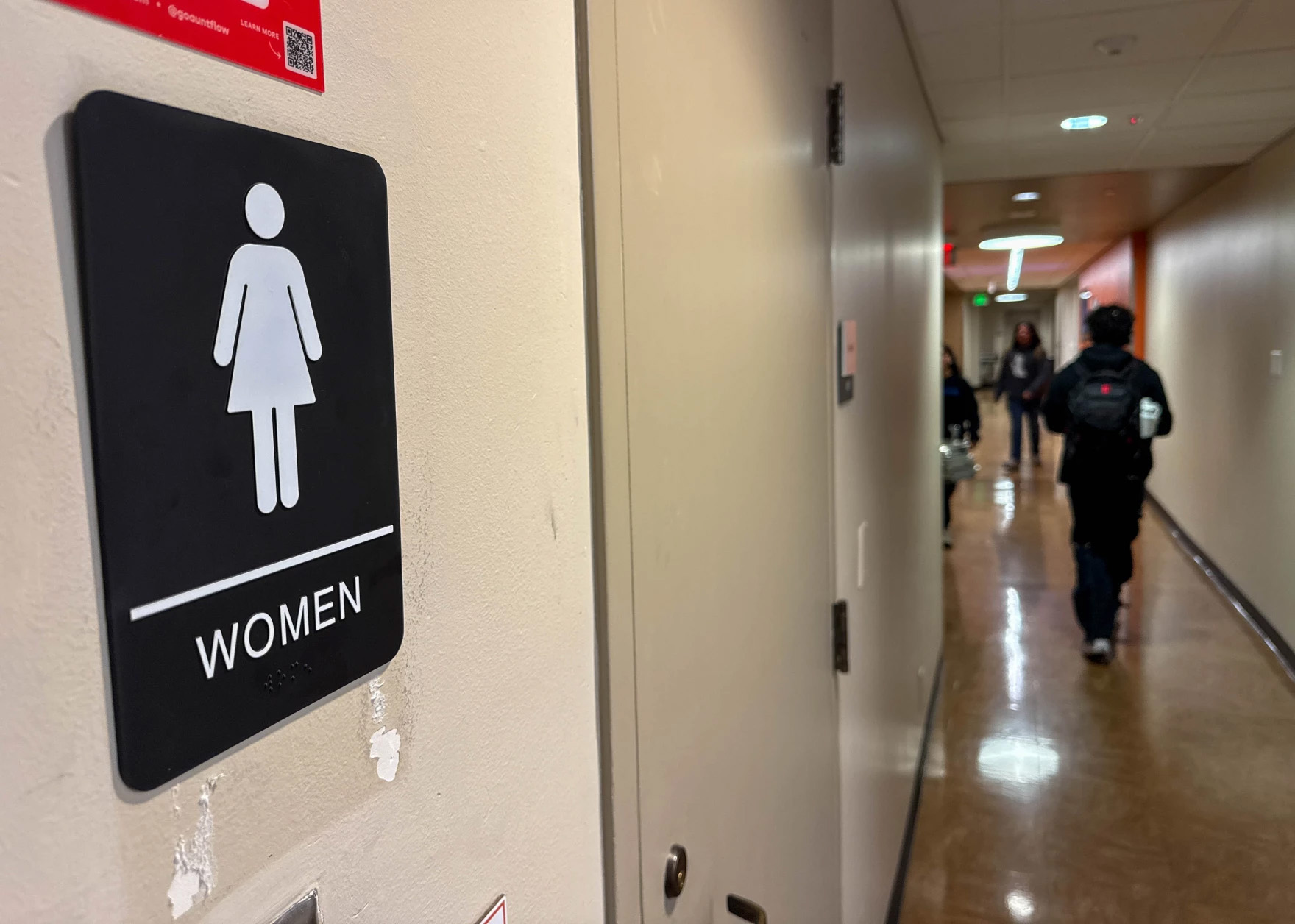
By the time Senate Bill 8 — Texas’ so-called “bathroom bill” — went into effect on Dec. 4, gender neutral restroom signage at UT Austin had already been replaced.
The law requires people to use public restrooms aligned with the sex assigned to them at birth. Supporters of SB 8, including Texas Gov. Greg Abbott, have called it a “common sense” policy that would protect women across the state by ensuring “no men in women’s restrooms.”
It only applies to public facilities, including government buildings, public libraries and parks.
But besides updating bathroom signage, it’s unclear how the law will be enforced.
Ash Hall, a policy and advocacy strategist with the ACLU of Texas, said they are “holding their breath” as the law gets rolled out across Austin.
“Any time we’re in a government-owned or operated building … there’s a chance that we’re going to be stopped, harassed, reported, asked to leave,” Hall said. “We just don’t know what to expect.”
Individuals will not be held liable for using the “wrong” restroom, but the bill states the Texas attorney general will fine political subdivisions, like Travis County, the city of Austin and the University of Texas at Austin, if they violate the law. Fines start at $25,000 for the first offense and swell to $125,000 for subsequent offenses.
How is the law being enforced?
Over the weekend, a group of transgender activists tested how the Texas Department of Public Safety would enforce the law at the Capitol.
The group used the restroom, at first, without issue and then moved to the rotunda for a peaceful protest. The activists said several DPS troopers blocked certain individuals in the group from using the restroom a second time and asked to see IDs.
Caleb Armstrong and Chase Brunson, co-founders of Local Queer who both identify as trans men and helped lead the protest, said they were not asked to show their IDs to use the men’s restroom.
But Ry Vazquez, a transgender woman, said she was singled out. Vazquez said DPS was unevenly enforcing the law and “making up the rules on the fly.”
“It seemed like they were not given guidance on how to enforce this bill or enforce this new policy that had been put in place,” she said. “A lot of them were flying by the seat of their pants.”
A DPS trooper later cited Vazquez, along with three other demonstrators, with criminal trespass warnings, which bans them from Capitol grounds for one year.
Armstrong said the incident at the Capitol was one of the first examples of how the new law will push trans people out of public life.
“It’s not only about the bathrooms,” he said. “It makes it so you can’t go to your kid’s band concert because you’re not allowed to use the bathroom that aligns with who you are at their school. Or you can’t go spend a day at the public park because you’re terrified to go into the restroom.”
UT Austin swiftly changed its signage
On the UT Austin campus, at least one gender-neutral, bathroom with multiple stalls has been changed to a women’s restroom. The university also implemented a new bathroom policy on Nov. 25.
The language mirrors that of the law and explicitly states “females” and “males” — as they are defined in the bill — can enter spaces designated by sex, such as restrooms, locker rooms or changing rooms.
A spokesman for UT Austin did not directly answer questions about how the new policy would be enforced.
Travis County officials also did not specify how they plan to enforce the law, but said the county “will follow all state laws and regulations passed by the Texas Legislature,” in a statement to KUT.