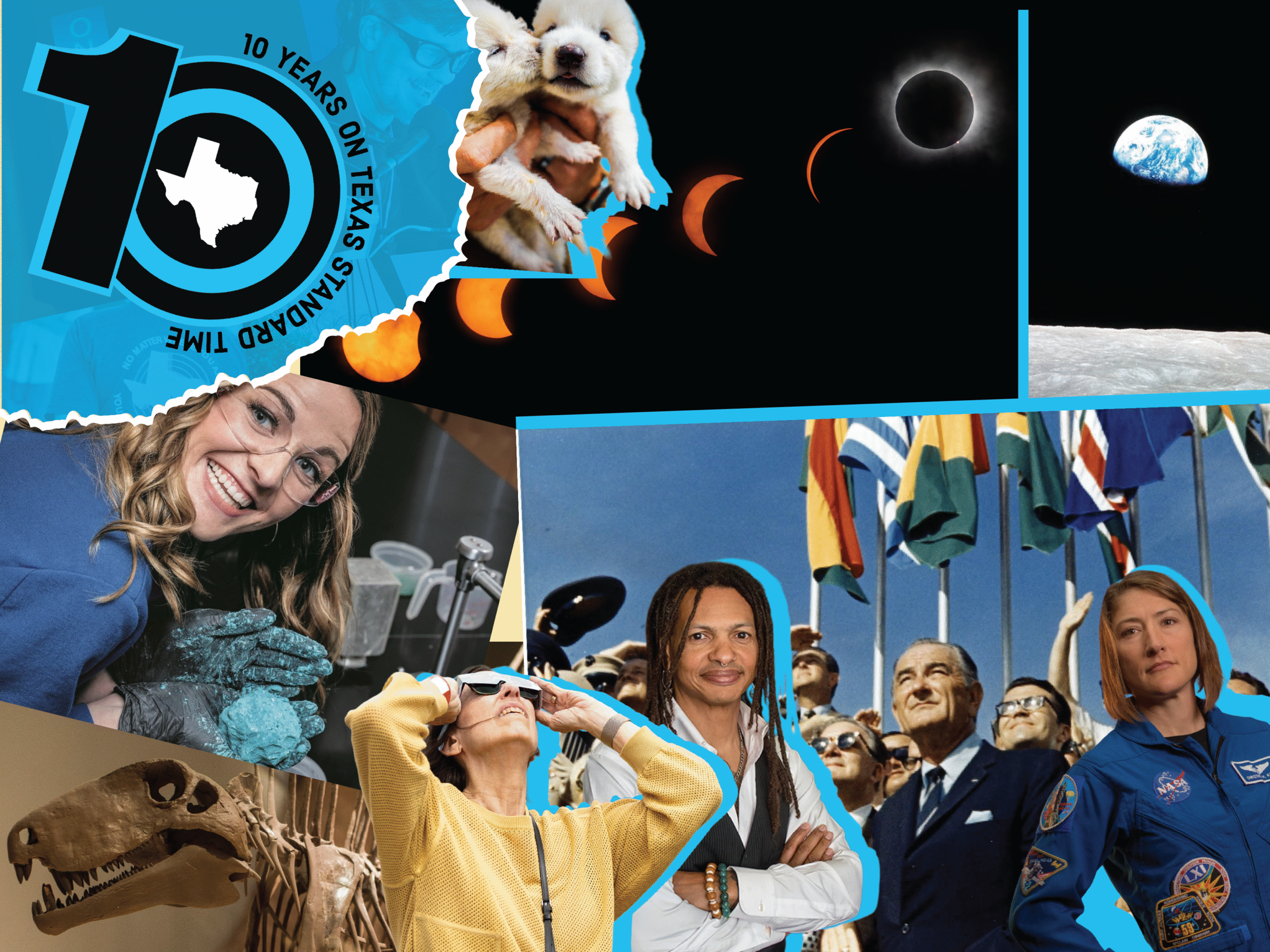
From stars to simulations, counting down our 10 favorite science stories

We’re celebrating Texas Standard’s 10th birthday with a year of Top 10 lists.

By Laura Rice & Raul AlonzoFebruary 3, 2026 10:10 am, ,

A place as big as Texas undoubtedly would also be a place where important strides have been made in the field of science.

From archaeological digs to the cosmos, Texans have had their hands in numerous discoveries and breakthroughs and, over the course of a decade, we’ve spoken to many who took the time to break down and share the complexities of their work with our audiences.

As part of our 10th birthday celebration, we rounded up 10 of our favorites from those interviews and feature stories.

One small caveat: Several of our special broadcasts have tackled topics in the realm of science – including a look at prehistoric Texas, a chronicle of Texas’ role in the Apollo moon mission, a special broadcast from Kerrville during the 2024 total solar eclipse and our most recent birthday remote broadcast from the McDonald Observatory. Because of the big, special nature of these shows, we’re leaving them off the top 10 in order to shed light on these smaller – but nonetheless – impactful pieces.

With that out of the way, let’s begin with T-minus ten…

10. They’re back: Bioengineered dire wolf-like pups walk the earth 10,000 years after extinction

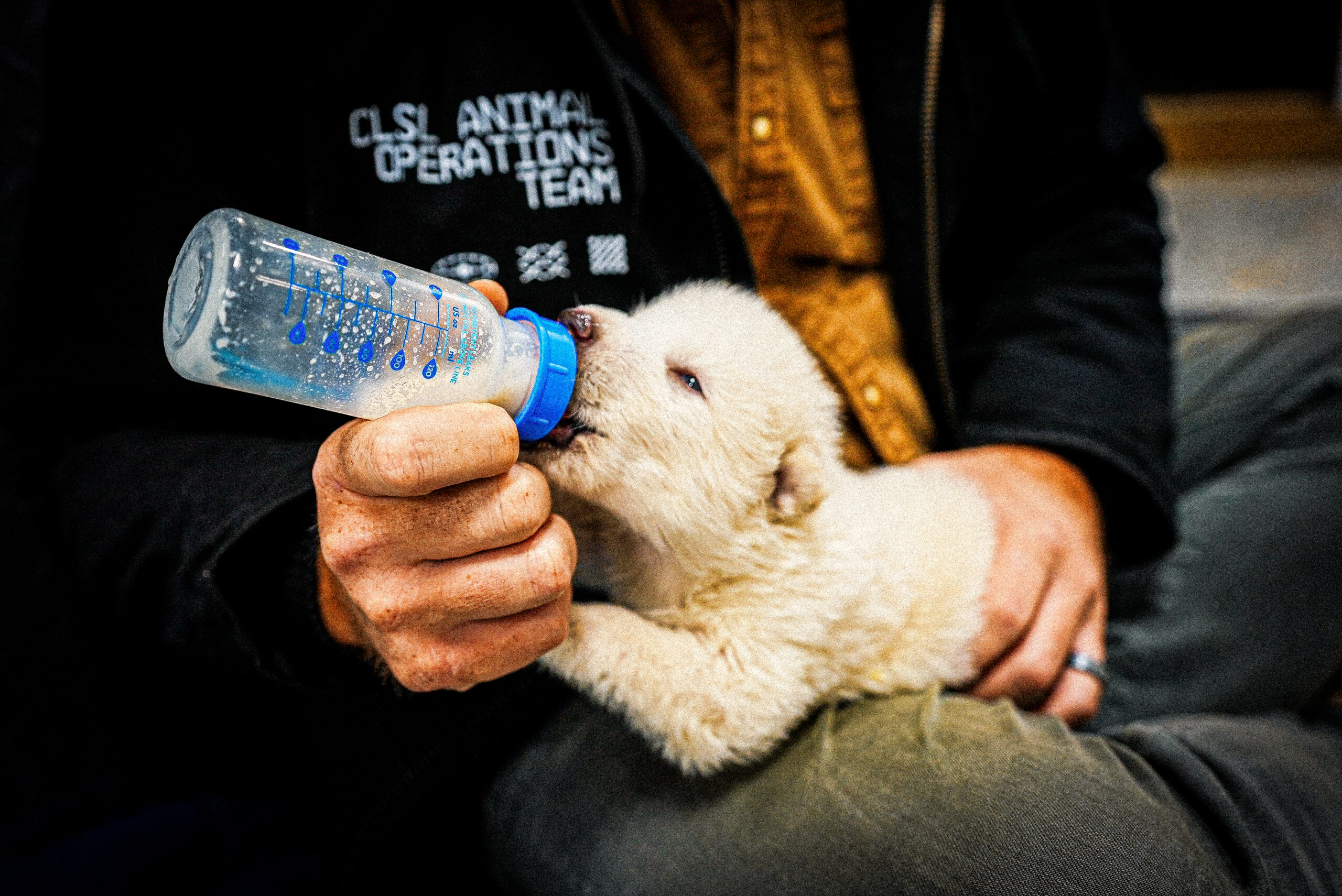
When Dallas-based Colossal Biosciences announced that they had altered gray wolf DNA to successfully breed a pair of bioengineered dire wolf pups in 2025, the news was met with a wave of interest over the prospect that long-extinct animals could perhaps be reintroduced to the modern world.

Colossal Biosciences co-founder Ben Lamm, Chief Animal Officer Matt James and Chief Science Officer Beth Shapiro all joined the Standard to explain just how they did it – and to tease which animal could perhaps be brought back next.
Courtesy of Colossal Biosciences

One of the bioengineered dire wolf pups.

9. Now properly classified, this tiny, translucent fish could help unlock our brains’ secrets

The tiny, translucent fish, Danionella cerebrum, wasn’t so much discovered as it was – finally – correctly classified by scientists. For years, researchers had used it to study the brain, but those researchers weren’t fish experts, and they didn’t realize they were working with a species previously unnamed by science. That is, until 2021. The Standard turned to an A&M researcher to delve into the story.

8. Remember Pluto? Well, it might be a planet after all

In 2006, new classifications officially demoted the celestial object Pluto from the solar system’s lineup of planets. But, 10 years later, scientists were still making their case for it to regain its planetary status. A few brought their arguments to the Texas Standard.

7. Here’s what happens when two black holes collide

Back in 2016, a small chirp confirmed Einstein’s Theory of Relativity for the second time in recorded history. That’s because the sound was that of two black holes colliding. One of the scientists who played a key role in the discovery joined the Standard to talk about it.
6. Where did complex life come from? A new discovery changes what we know
A team from the University of Texas at Austin had the opportunity to be part of a groundbreaking discovery involving microbes that advanced understandings around the origins of complex life. One of the scientists joined the show to give a breakdown of the report back in 2017.

5. Back on ‘Earth’: NASA investigates impacts of first-ever human Mars simulation

The red planet remains a fixture in the aspirations of space programs looking for the next stage of human space exploration. One team spent over a year isolated in a special, 3-D printed unit at the Johnson Space Center in Houston as part of a simulation of what Mars colonization might look like.

Photo by Dustin Meyer

4. A new podcast was ‘Seeking a Scientist.’ Texas’ Kate the Chemist was ‘here for it.’

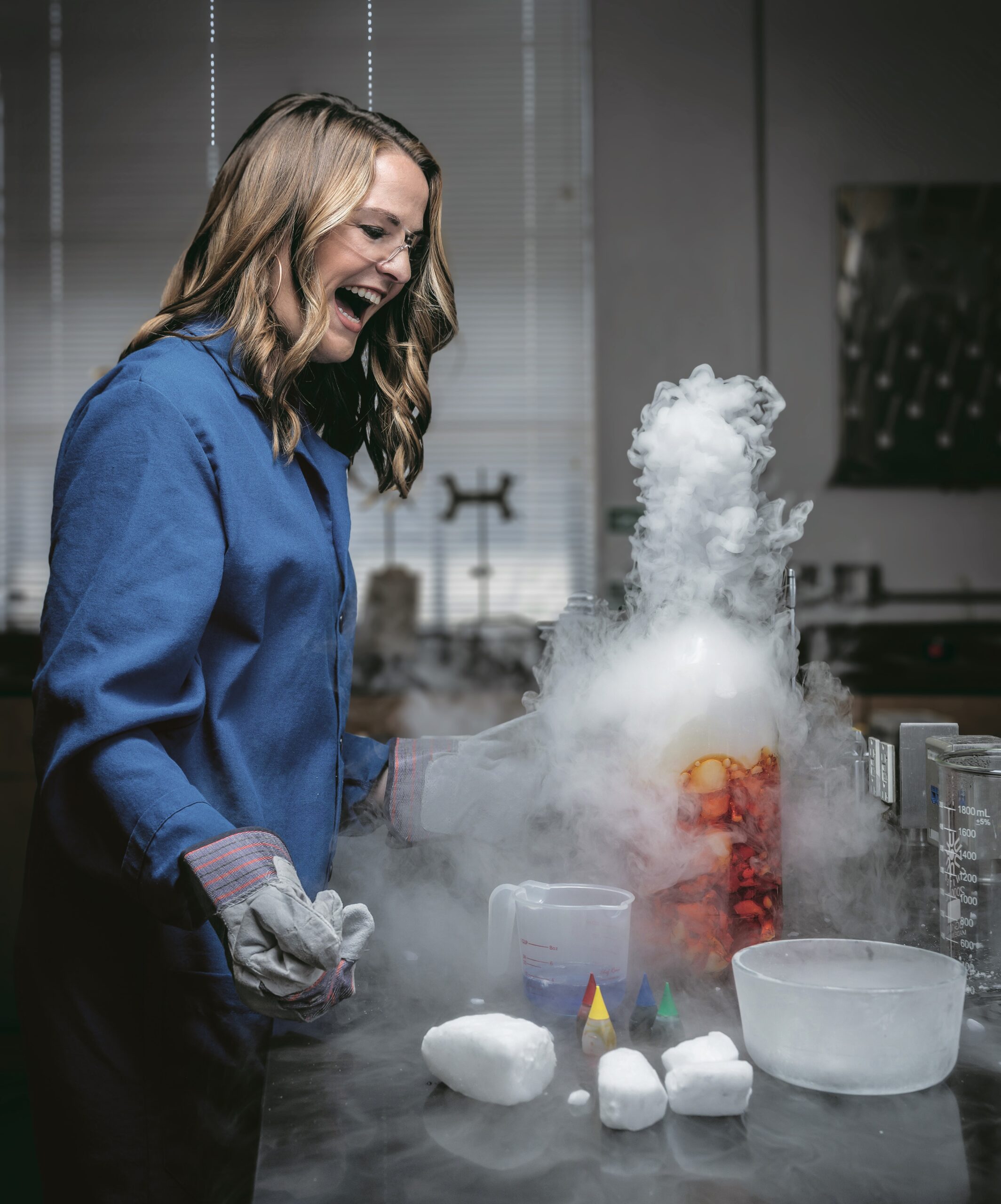
By the time she’d been tapped for a new NPR podcast, UT Austin professor Kate Biberdorf had already made a name for herself through her appearances on “The Late Show with Stephen Colbert” and “The Kelly Clarkson Show.”

Ahead of the premiere of “Seeking a Scientist,” she stopped by the Texas Standard studio for a chat, as well as to share an experiment or two.

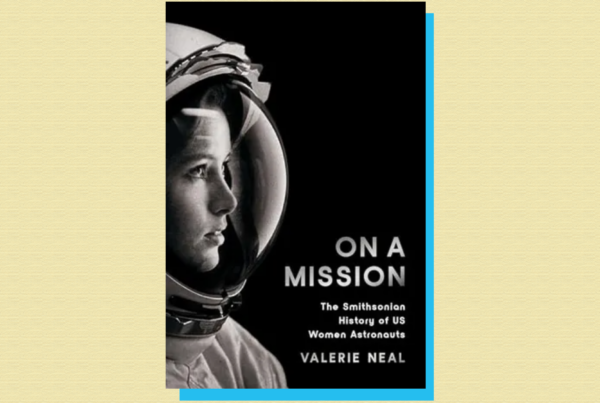
3. Astronaut Christina Koch is ‘answering humanity’s call to explore’

Artemis II is the planned NASA mission to the moon – the first since the early 1970s with a crew. Christina Koch, holder of the record for longest time spent in space by a woman and one of those who will be on board the mission, joined the show to talk about what inspires her.

2. UT aerospace researcher recognized for pioneering work in space junk

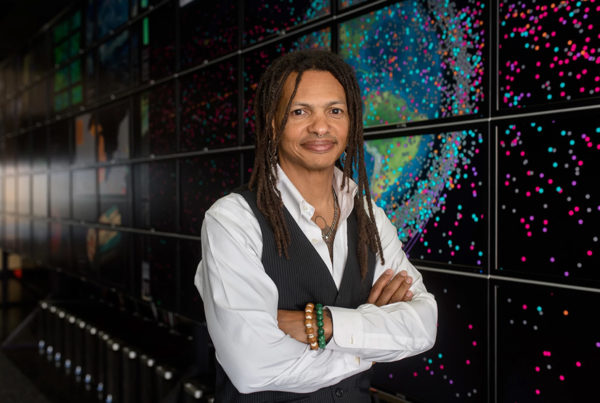
Thousands of satellites in Earth’s orbit control systems like GPS, voice and text communication, and the internet. They also are at risk of colliding with a growing problem of space junk – bits of debris and equipment humans have left behind. UT Austin professor and 2022 MacArthur Fellowhip recipient Moribah Jah has been tracking that space junk.

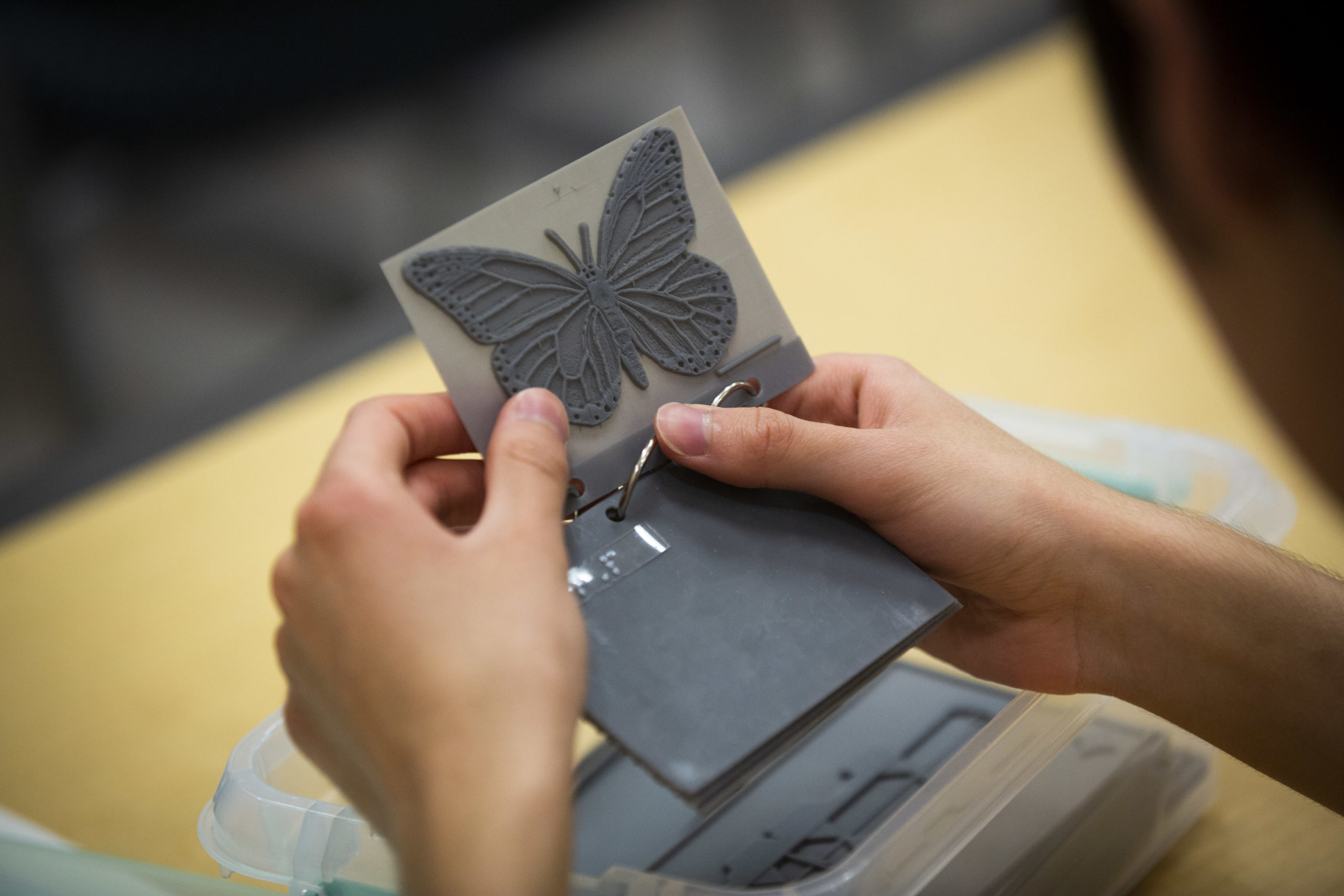
A closeup view of hands holding a 3D-printed model of an electron microscope image of a butterfly. The image of the butterfly is raised and textured so the hands can feel the image.

Gabriel C. Pérez / Texas Standard

A student at the Texas School for the Blind and Visually Impaired holds a 3D-printed model of an electron microscope image of a butterfly, feeling the shape with their fingers, as part of the In Your Element program teaching chemistry and hard sciences to visually impaired students. Students used 3D-printed materials and other tactile aids to understand processes and technology used in electron microscope imagery.

1. Science ‘on their fingertips’: Texas professor making chemistry available to blind students

For many blind students, apparent visual requirements can put the field of chemistry out of reach. But the Texas Standard’s Shelly Brisbin brought us this report in 2022 highlighting the work of one Baylor professor looking to make the field more accessible to the visually impaired.

If you found the reporting above valuable, please consider making a donation to support it here. Your gift helps pay for everything you find on texasstandard.org and KUT.org. Thanks for donating today.