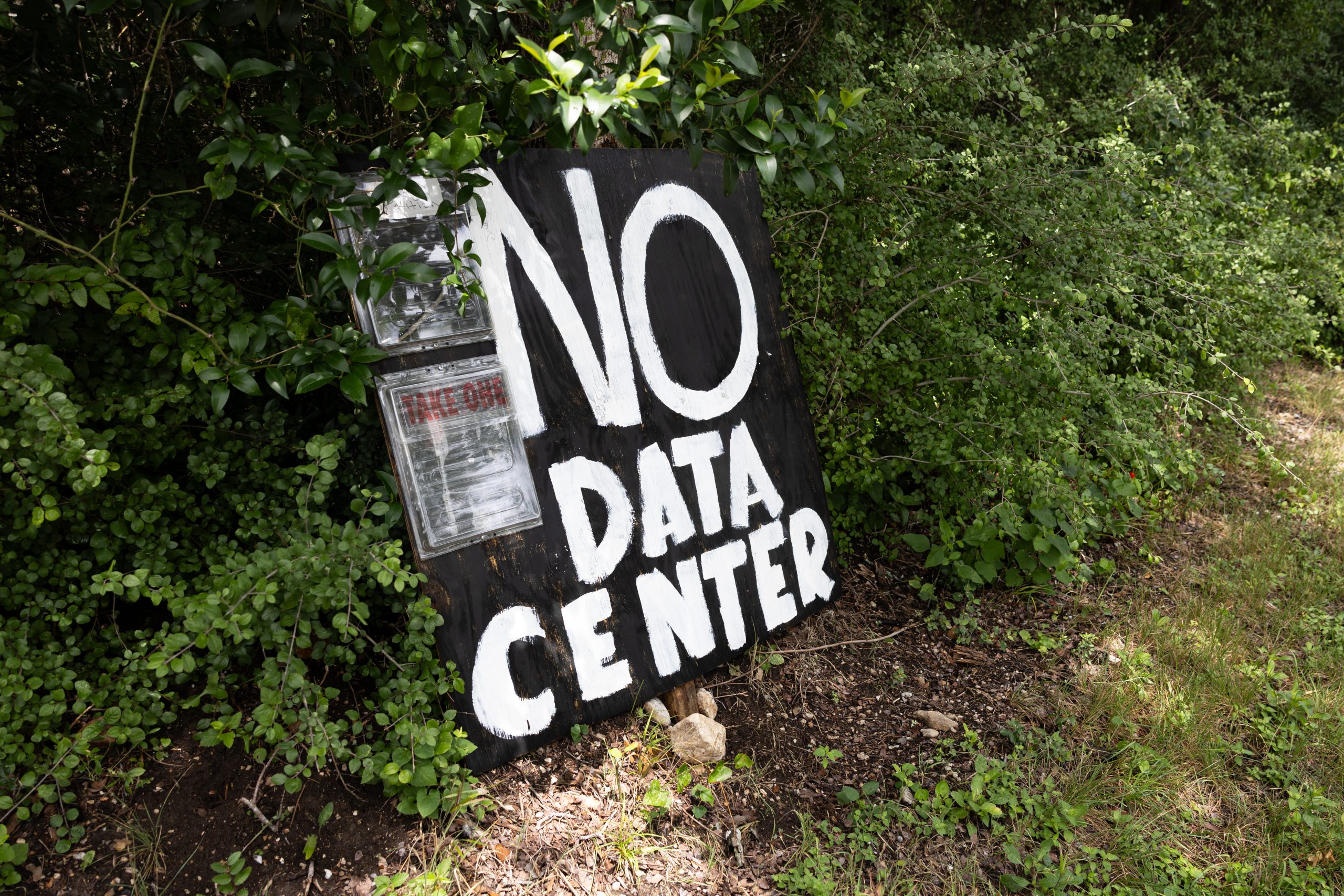
Texas is one of the country’s hottest spots for new data centers. These are massive computing warehouses that companies use to power technology like artificial intelligence and cloud storage.
Data center developers target Texas because of available power, land, and relatively few regulations. But some projects have been the target of backlash due to concerns over water and electricity usage.
The industry has a gold rush feel at the moment, with developers moving fast to claim the choicest spots in the state. But the commissioners court of Hill County, located between Dallas and Waco, recently moved to press pause on new data centers for a whole year.
Hill County Judge Shane Brassell spoke to Texas Standard about the rationale behind the pause. Listen to the interview in the player above or read the transcript below.
This transcript has been edited lightly for clarity:
Texas Standard: Well, the commissioners of Hill County, which is located roughly between Dallas and Waco, recently approved a one-year pause on data center development. Can you describe the level of interest the developers have shown in Hill County over the last year or so?
Shane Brassell: The amount of interest has been astounding.
We were not actually really sure because most of the data center companies projects do not talk to the commissioner’s court until they’ve already bought property, already putting in requests for permits from TECQ and the local water authorities. So many times, we don’t actually know how many are looking at our county at one time.
My guesstimation right now for Hill County is eight to 10 projects. The majority of them are around a thousand acres or more.
Why do you think Hill County is such an attractive spot for data centers?
Well, we are in a prime spot, and that is the problem. We’re on I-35. There is a lot of what they call “dark fiber” that was buried on I-35 back when it was cheap to put in fiber. Those are fiber lines that aren’t being used, hence “dark fiber,” and all they need to do is be plugged into, and they can run their data.
We’re also, and this is the key, a non-attainment zone. When you’re getting your car inspected, you don’t do smog testing here. So less emissions regulations, which is very attractive to them because they can speed up processing.
I’m sure it’s cheaper. But also, that’s one of the things that worries us, is there are less regulations. So therefore what could be pouring out into our communities.
» GET MORE NEWS FROM AROUND THE STATE: Sign up for Texas Standard’s weekly newsletters
You mentioned air quality concerns. What else have you heard from Hill County citizens that really struck you?
Well, the first — and I guess the biggest — is the water consumption. That’s our big worry.
We have many people with wells in the county that are already having to either re-dig or just not use their wells because the water table is already dropping. And so the reason for the year-long pause was to try to wrap our heads around real data, real numbers.
You know, every data center says they’re only going to use as much water as a toilet in your house. And then everybody against them says they’re going to use all the water.
There’s a truth somewhere in between there, but we don’t know what it is — no one does. And with eight to ten projects, 10- to 15,000 acres of Hill County being covered in data centers, even just the amount of them we don’t know the impact that they could have.
Well, you mentioned the county has been sort of the last ones to find out about these plans in some ways. What control do you have? What will this one-year pause allow you guys to do?
Well, we’re hoping twofold.
We’re hoping that we can get some real research done. There are other data centers in the state, so we could potentially get some actual research done as to what those projects have done.
The next portion of it is we’re hoping that the Legislature will step in and help out with this type of thing. There are very few regulations that the county can enforce.
And so this isn’t a rebellion against the state and the Legislature and the lawmakers. This is us pleading for help.
Well, speaking of that, I mean, are you concerned at all about legal challenges either from developers or even the state that really wants to position itself as business-friendly?
Yes, very. It’s a great question because every data center that has talked to us came in and said, hey, we’re here to be a good neighbor. We wanna take care of the people that live around these projects. We’re here for the community.
And then less than 24 hours, I received phone calls that are, “they’re gonna sue us over this and ask for damages.” I’ve received demand letters demanding that we rescind the moratorium.
So it leads me to believe that their intent was never to be a good neighbor if that’s what it is. If you were wanting to be good neighbor, I would expect that maybe you’d say, “hey, Hill County, what can we do to help you guys be more comfortable with these projects, get these studies done? How can we help do that?”
At least that’s what we would consider a good neighborhood in Hill County.