Lockheed Martin awarded $1B in military contracts as Iran war leads to buildup

Fort Worth-based defense companies are accelerating munitions production under new military agreements.

By Eric E. Garcia, Fort Worth ReportJune 4, 2026 9:15 am, ,

From Fort Worth Report:

Keeping America’s F-35 fighter jets stocked with missiles and other armaments is a crucial need as the nation’s war with Iran rages on.

That’s why Fort Worth-based Lockheed Martin Aeronautics Co. received an $879 million order from U.S. defense officials this month. The order is one of four major defense contracts — totaling more than $1 billion —- awarded to the company or its parent corporation in late May, months after U.S. and Israeli forces launched an attack on Iran on Feb. 28.

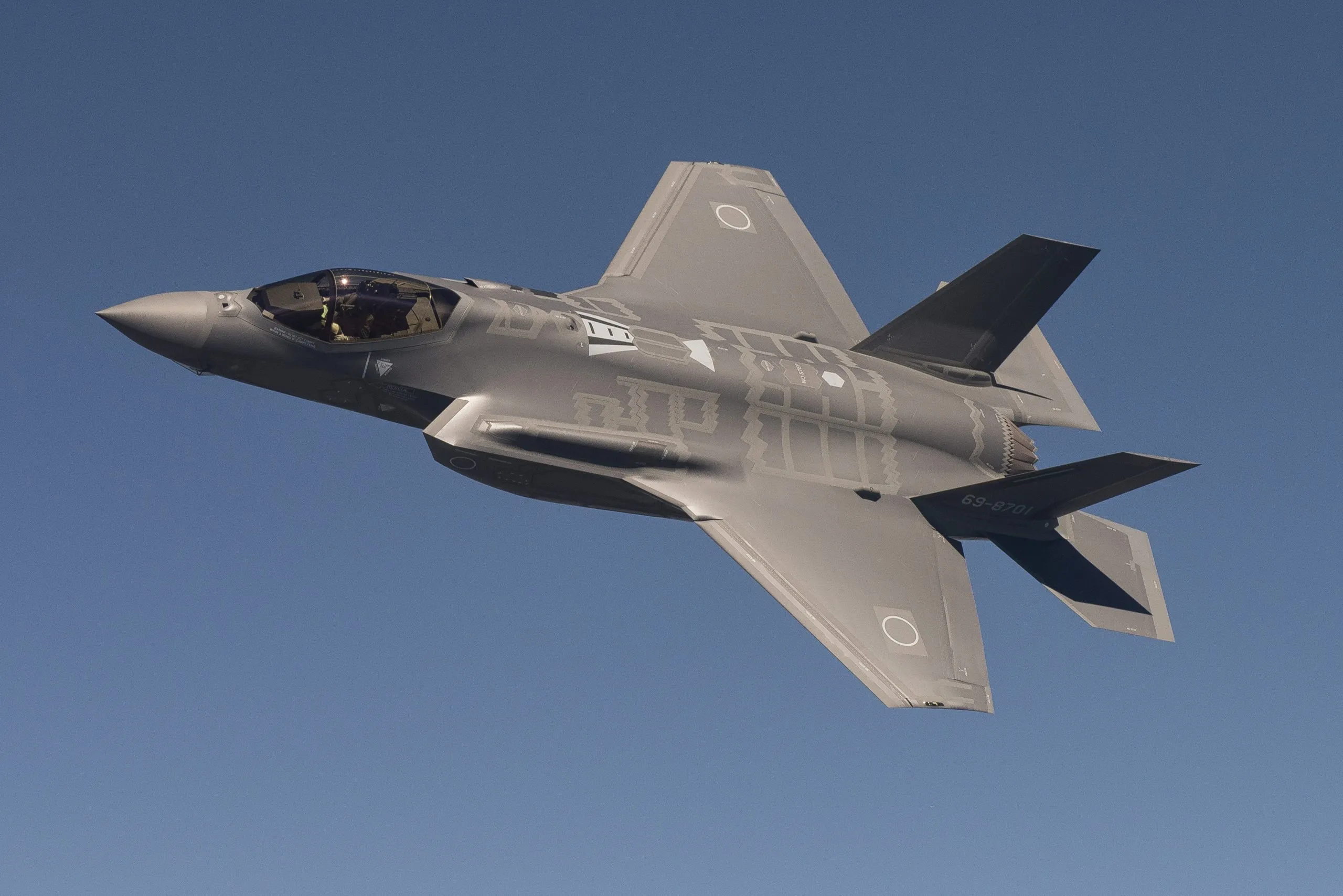
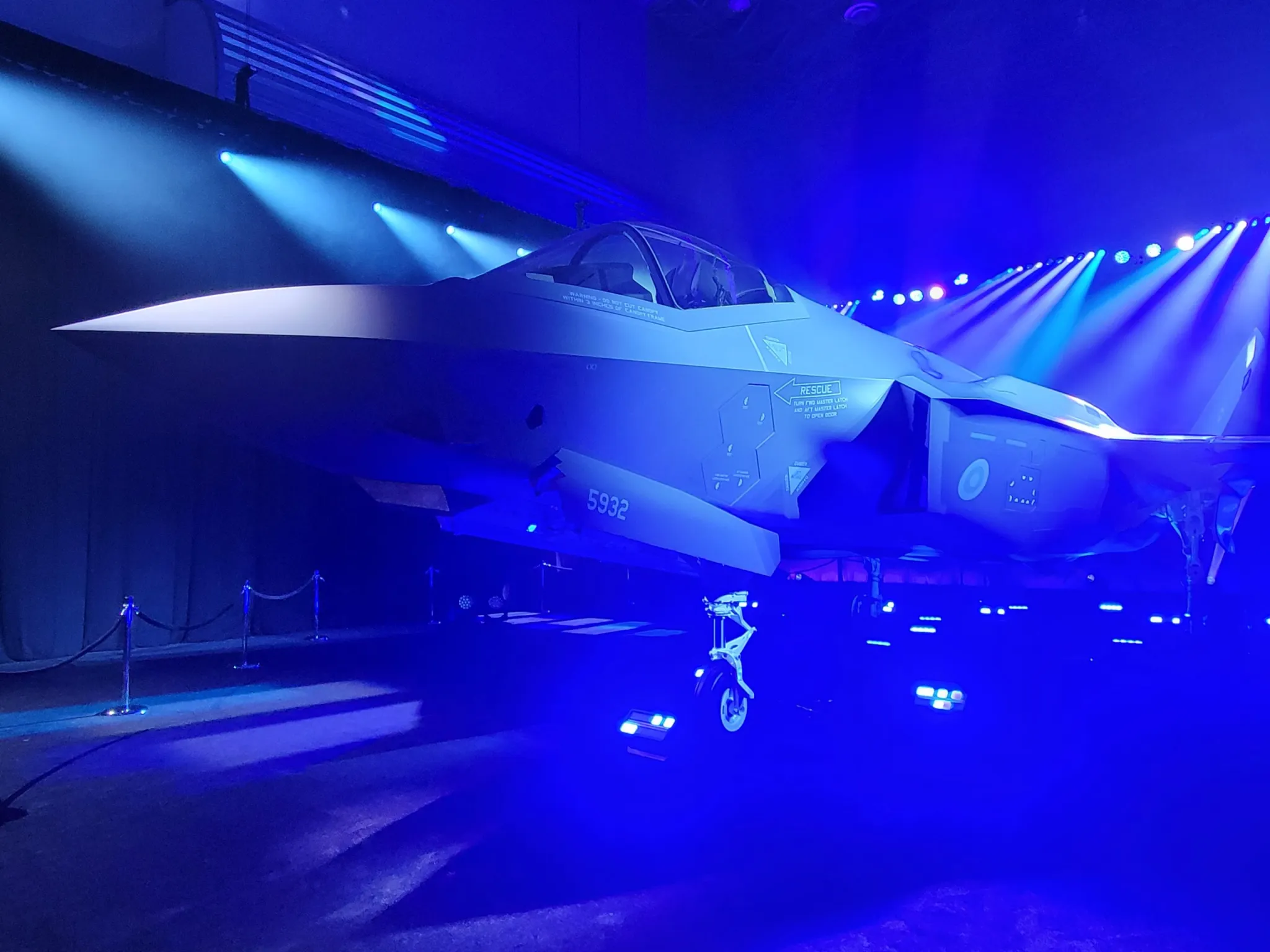
The aeronautics division received a firm-fixed-price contract with the Maryland-based Naval Air Systems Command, which was issued May 18 and replaced a previous order agreement. Under the new agreement, the delivery of Lockheed Martin’s Lot 18-19 of F-35 aircraft will include missile launchers, bomb racks, gun systems, pylons and adapters to ensure military readiness, according to the contract.

F-35 Lightning II jets, assembled at Naval Air Station Joint Reserve Base Fort Worth, are scheduled for delivery to the U.S. Navy, U.S. Air Force, U.S. Marine Corps, foreign military customers and other program participants. The armament work, to be performed in Fort Worth, is expected to be completed by February 2030.
The contract details available funding immediately obligated to Lockheed Martin, including money from the 2024, 2025 and 2026 fiscal years. Funding includes $207 million from the Navy, $199 million from the Air Force, $333.6 million from foreign allies and $139.1 from nondefense customers.

About $157.3 million is expected to expire at the end of September, the end of the 2026 fiscal year, according to the contract.

Accelerated munitions production

Officials with Lockheed Martin Corp., the aeronautics division’s parent company, broke ground on a new munitions production center in Troy, Alabama, on May 21.

The company plans to invest more than $9 billion through 2030 to add over 87,000 square feet of production space. About 4,000 new jobs will be added over the next three years, officials said. The facility, along with more than 20 other factories, supports the nation’s antiballistic missile defense system known as Terminal High Altitude Area Defense or THAAD.

Jim Taiclet, chairman, president and CEO of Lockheed Martin Corp., said the company is ready to “meet the urgent demand to expand production capacity.”

“We have already invested well over a billion dollars in this expansion, which directly strengthens deterrence and helps ensure our service members and allies have the capabilities they need when they need them,” he said in a statement.

Michael Duffey, who uses the title under secretary of war, said the partnership is “critical to surging our munitions capacity, and Lockheed Martin has leaned in aggressively.”

President Donald Trump calls the Department of Defense the Department of War, but Congress must amend such a title for it to be legal.

Lockheed Martin officials said the company was the first in the defense industry to accelerate munitions with a goal to quadruple production capacity of the combat-tested PAC-3 MSE interceptor, a defensive missile. The company uses more than 340,000 square feet for THAAD operations across nine states. Nearly 750 suppliers across 42 states support THAAD production, officials said.

Courtesy / Lockheed Martin Corp.

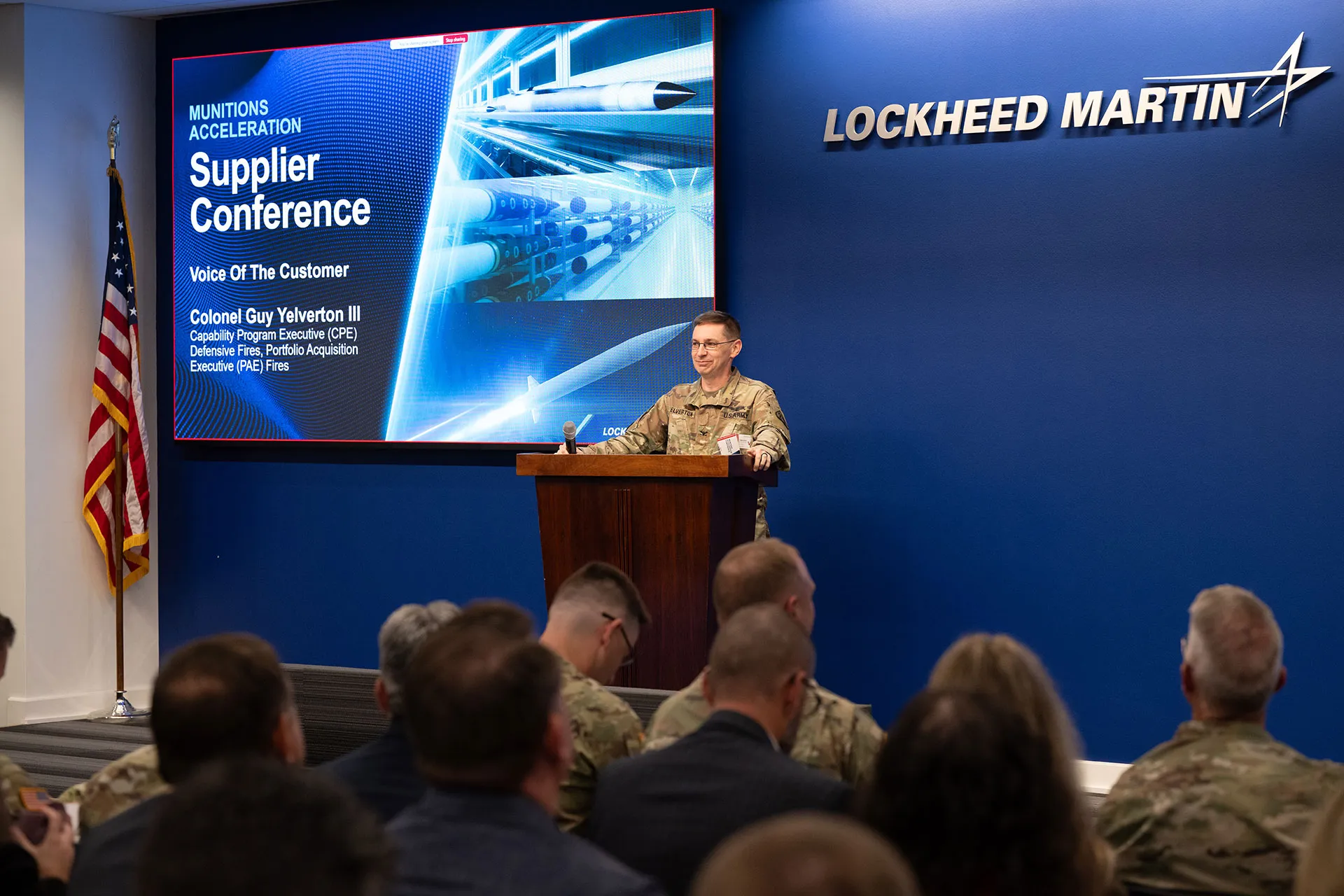
U.S. Army Col. Guy Yelverton III, a program manager at Redstone Arsenal in Huntsville, Alabama, speaks to military suppliers at a Dallas munitions acceleration conference in May.

More than two weeks ago, about 150 Lockheed Martin suppliers gathered in Dallas to collaborate with defense officials on how the industry can accelerate munitions deliveries. Officials said the initial Munitions Acceleration Supplier Conference was successful and talks will continue monthly.

On May 26, Lockheed Martin was awarded a $14.3 million contract modification for engineering services related to all production variants of the Multiple Launch Rocket System and related support equipment.

“The modification brings the total cumulative face value of the contract to $229,954,235,” the contract announcement states. “Work will be performed in Grand Prairie, Texas, with an estimated completion date of May 27, 2027.”

All funds for the contract were obligated at the time of the award. The contract was awarded by the Army Contracting Command at Redstone Arsenal in Huntsville, Alabama.

Other defense contracts

Spare parts are also needed for munitions acceleration and defense.

Lockheed Martin Aeronautics was awarded a $100.4 million contract for brake parts for F-35 aircraft.

That contract, awarded on May 26, calls for an order for 1,459 brake assembly heat sinks for the F-35A and F-35B jet variants.

“This effort supports resolution of existing thermal management constraints, ensures the reliability of critical avionics, and supports forecasted fleet requirements for serviceable brakes to sustain warfighter operational requirements” for U.S. forces and allies, according to the contract announcement.

That work will be performed in South Bend, Indiana, and is expected to be completed by March 2030.

Funds obligated at the time of the award include $43.7 million from the Air Force, $28.5 million from the Navy, $10.9 million from foreign military customers and $17.1 million from F-35 program partners. The contract was awarded by Naval Air Systems Command.

Earlier in May, the aeronautics company was awarded a $17.4 million contract modification for provisioning spare parts. The work, to be performed in Fort Worth, is expected to be completed by May 18, 2027, according to the contract.

The May 18 order involves an unnamed foreign partner with the total amount of funds obligated at the time of the award. That contract was awarded by the U.S. Air Force Life Cycle Management Center at Hill Air Force Base in Utah.