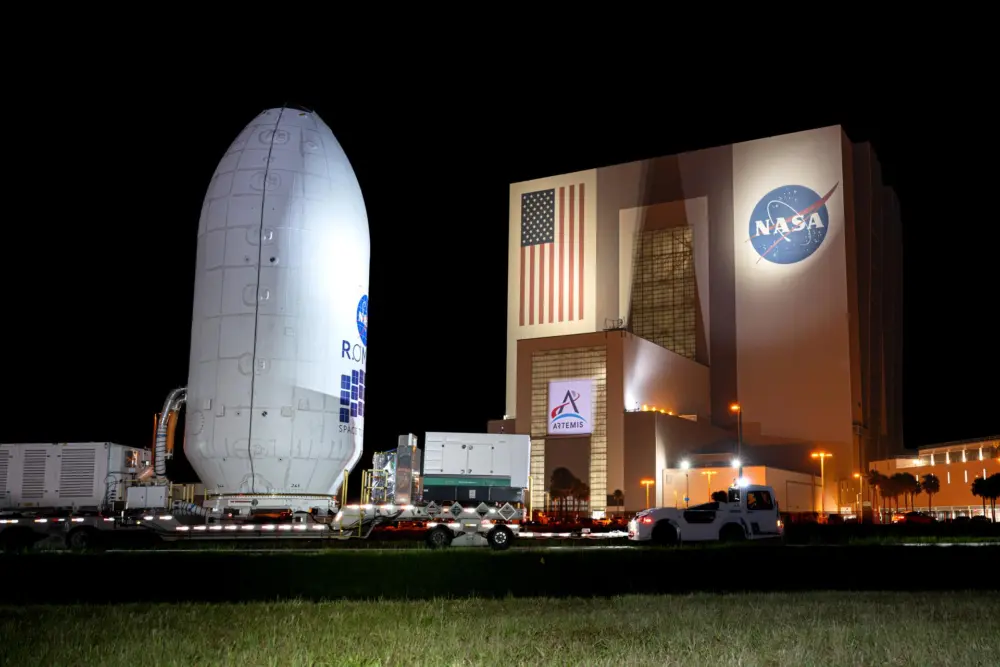
NASA launched one of its most powerful telescopes in history, the Nancy Grace Roman Space Telescope, on Sunday morning. Scientists say the telescope, which can capture a larger field of view than the Hubble telescope, will help study dark matter, dark energy, and exoplanets.
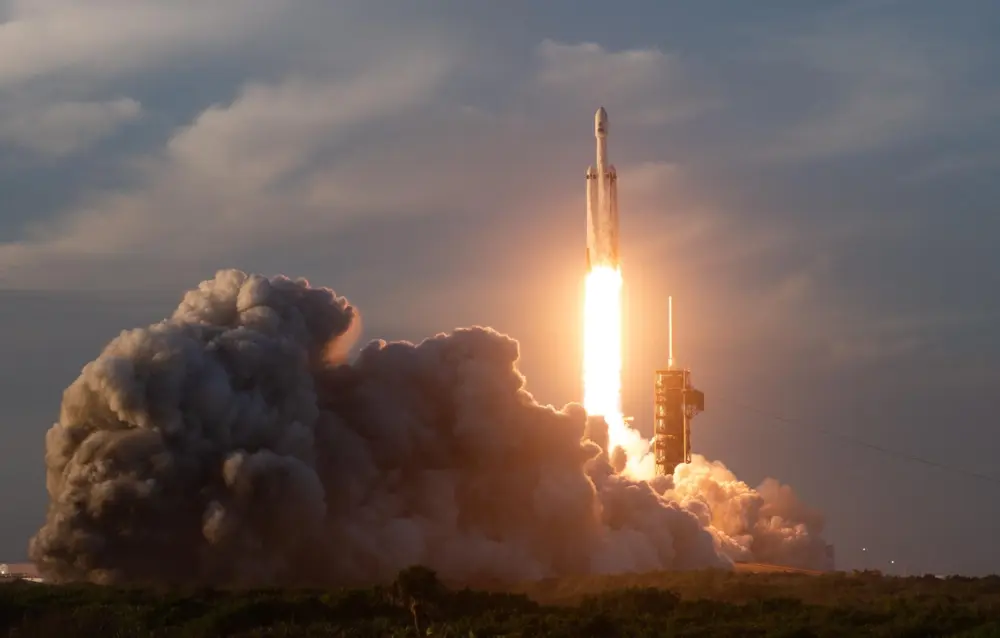
The telescope launched aboard a SpaceX Falcon Heavy rocket on Sunday at 6:26 a.m. CDT from the Kennedy Space Center in Cape Canaveral, Florida.
“Roman is exactly the kind of success story we want to see across NASA,” NASA Administrator Jared Isaacman said in a press release. “Delivered ahead of schedule and on budget, this mission reflects more than a decade of dedication from the NASA workforce and our industry partners. Now, Roman will give us a new atlas of the universe, push the boundaries of discovery, and demonstrate what is possible when America’s space program pairs bold ambition with disciplined execution.”
The Roman telescope is expected to spend five years in space, with the possibility of an additional five-year extension. It will orbit the Sun at a distance of one million miles away from the Earth, in a position that allows it to stay lined up with the blue planet.
NASA anticipates it will begin releasing new images from the Roman telescope by early 2027.
Roman, which is launching nine months earlier than had previously been anticipated, is expected to study some of the deepest mysteries of the universe, including dark matter and dark energy. In doing so, Julie McHenry, one of the scientists working on Roman, said the telescope’s findings could disrupt our understanding of the universe.
“We’re probably not going to confirm a standard model of how the universe works,” she said. “We’re very likely to demonstrate that our standard model is wrong and to set ourselves on a path to figuring out how does our universe really work?”
How does the Roman telescope work?
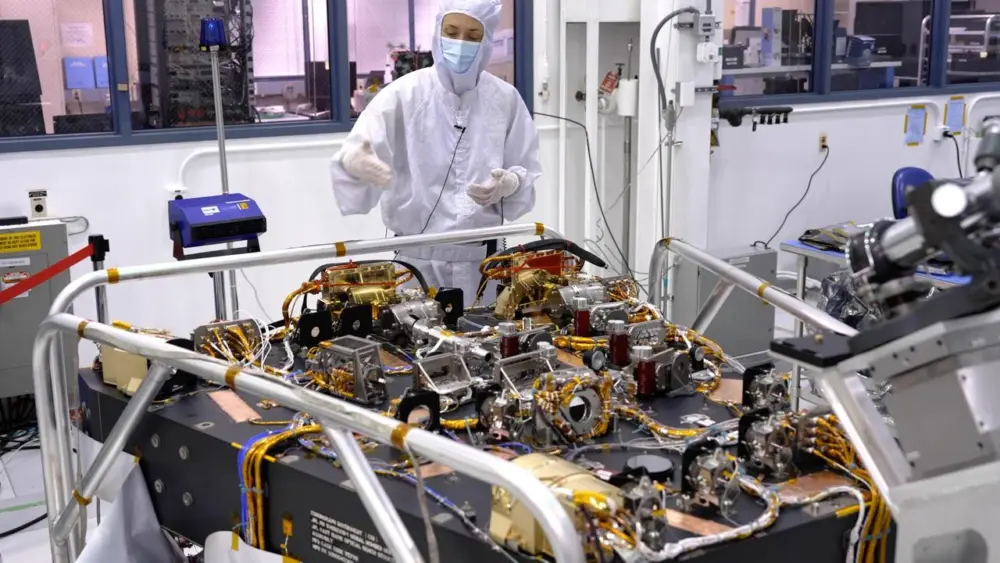
The Roman telescope is designed to take pictures with a wider field of vision than other telescopes. It’s equipped with a “Wide Field Instrument,” which, at 300 megapixels, has the same resolution as the Hubble telescope but has a field of view about 100 times larger. Roman is also equipped with a coronagraph, which will block the glare from stars, allowing for the photography of celestial bodies near them.