From a layman’s perspective, it always seems like Hollywood is going through some sort of change.
Right now, it’s a battle over AI. But there are often strikes and mergers and other big technological shifts that shake up entertainment. It can be hard to really pin down patterns or eras — unless you’re an expert.
Thomas Schatz is just that sort of expert. He’s a professor emeritus in the Department of Radio-Television-Film at UT Austin and he’s just published a new book about what he calls the Hollywood’s last golden age.
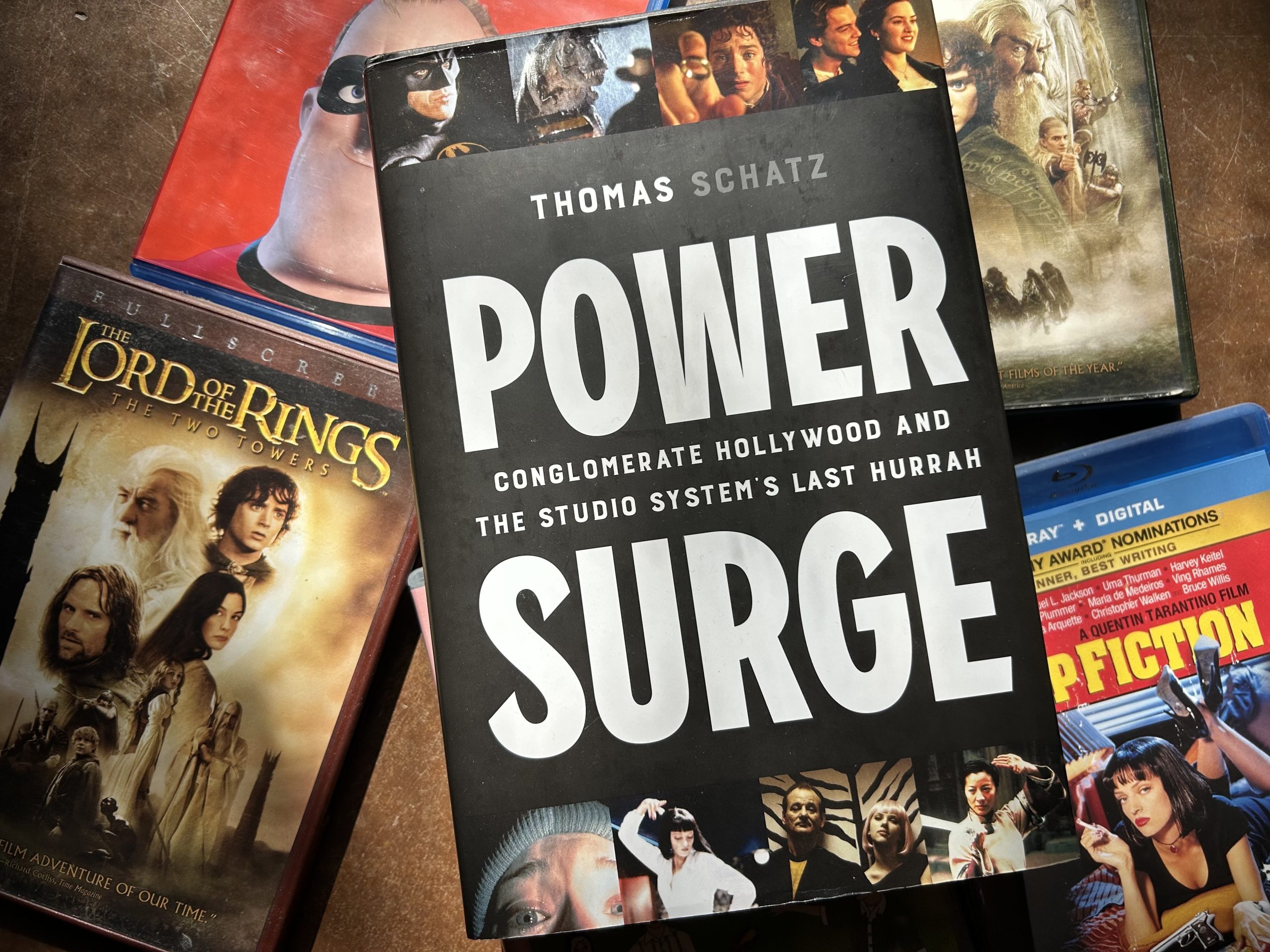
It’s called “Power Surge: Conglomerate Hollywood and the Studio System’s Last Hurrah.”
He joined the Standard to talk about his new book. Listen to the interview in the player above or read the transcript below.
This transcript has been edited lightly for clarity:
Texas Standard: You’ve written several books and are really considered an expert on the studio era. Your book, “The Genius of the System,” took us from the 1920s to the 1940s.
Here, you focus on much more recent Hollywood history: 1989 to 2004. Why?
Thomas Schatz: This “conglomerate era,” as I call it, began in 1989 with the Time Warner and Sony/Columbia mergers. Another Japanese company that would eventually become Panasonic bought Universal in 1990.
The ensuing 15 or so years just saw a series of merger and acquisitions. It saw all of the big studios, all of TV networks, almost all of cable networks, changing hands and realigning.
It eventually culminates in 2004 with NBCUniversal, and at that point, six companies owned all the major studios, all the TV networks, most of the cable networks, and that controlled publishing and other industries as well. But film and television was the secret to their considerable success during that era.
Well this was an era of huge blockbusters, but you write about how indie went mainstream. How did Hollywood balance those two very different types of films?
It was one of the real amazing peculiarities of that period. It was, in many ways, quite accidental.
1989 was the year of [Tim] Burton’s “Batman” and I think of that as the first really modern blockbuster because Time Warner controlled the, as they say, IP — the intellectual property. They owned DC, they owned Batman.