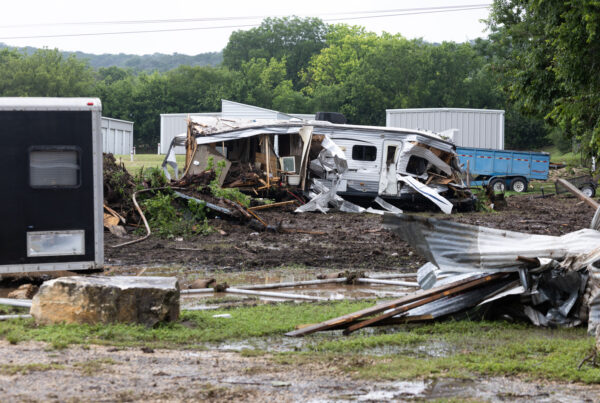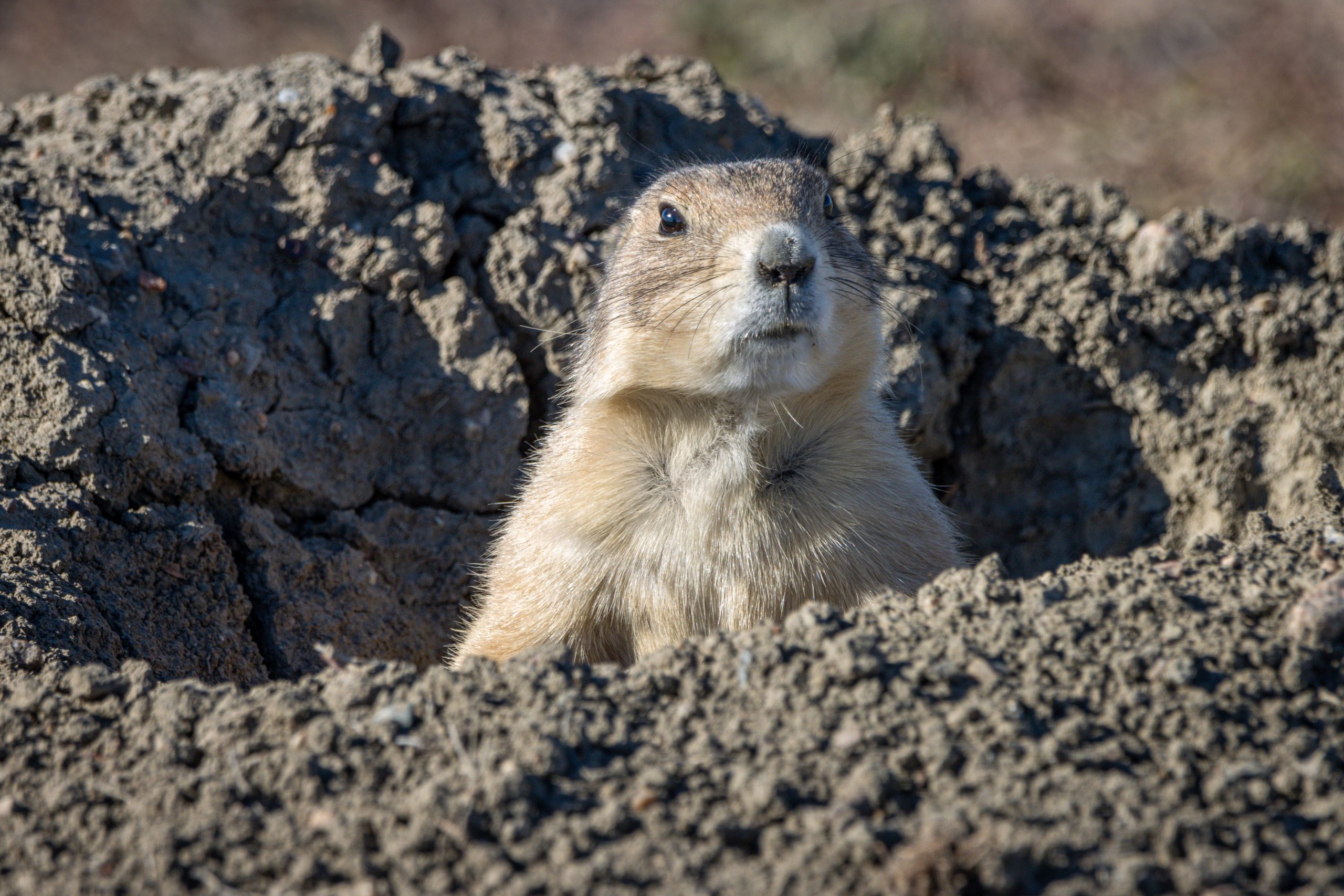
About a decade ago, one of the signature residents of the Fort Worth Nature Center and Refuge, the black-tailed prairie dog, disappeared when the refuge’s entire colony suddenly died out.
Now, after years of relocating prairie dogs and restoring their habitat, the refuge is celebrating the animal’s return with a new Prairie Dog Town viewing area and — perhaps more importantly — a new generation of prairie dog pups.
Jared Wood, manager of the Fort Worth Nature Center and Refuge, joined the Standard to discuss more. Listen to the interview in the player above or read the transcript below.
This transcript has been edited lightly for clarity:
Texas Standard: Tell me about what happened in 2015. The refuge’s entire prairie dog colony suddenly died out? What happened?
Jared Wood: No one at the time was 100% certain what happened. They never did any specific testing. It was more of a gradual decline in the population instead of one just big loss.
Now prairie dog colonies across the country tend to mysteriously just go away. A lot of that is attributed to the plague. But in an isolated population like what we have, I don’t think the plague would have been an issue.
Now that was a really wet year and a bit cold. Prairie dogs, they don’t love wet and cold at the same time. So it’s possible that they came down with some type of respiratory illness. We just don’t know.
Well, I’m sorry, you said something about a plague. Is there a prairie dog plague that I’m unfamiliar with here?
The bubonic plague actually affects prairie dog populations, and it’s carried by fleas. So we actually take precautions now to give our prairie dogs a grain that has a flea medication attached to it to hopefully keep those flea loads down.
So people don’t have to be worried about this bubonic plague; that’s not an issue for people?
No, not the way this works with the fleas. It’s really not an issue for people. It’s specific to these prairie dogs.
You’ve rebuilt the colony, rescuing prairie dogs from places where they’re gonna be eradicated. What did all that involve, and how difficult was it to get them established where you are?
It was a lot of work, knowing that we had lost a prairie dog colony and knowing that we’re on the extreme eastern edge of their range, we knew that it wasn’t a hundred percent ideal situation to bring prairie dogs into this area.
So with that, we were very intentional about selecting colonies in need of rescue, because we knew that prairie dogs could thrive here. But we wanted to focus on prairie dogs that need to be rescued, that had no other options.
So it took a while to identify two colonies. We found one at the site of a housing development in West Texas where they’re actively bulldozing the area. Then another was a private ranch that wanted them gone.
We worked with the owners to go to those sites and then extract prairie dogs, which is a bit of a rodeo in itself, and bring them back to Fort Worth.
These prairie dogs you mentioned have a reputation as pests. You mentioned the ranch; they wanted them gone. But as I understand it, biologists describe them as a kind of keystone species.
What role do they play in the Texas prairie ecosystem?
Prairie dogs are a keystone species; they’re also an ecosystem engineer.
They engineer their habitat. So by digging their burrows, they’re basically creating aerated systems so rainfall can penetrate underground. They’re taking nutrients from above ground and transferring those between above and below the surface.
By clipping vegetation continuously, they actually increase vegetation growth and diversity. Bison, in particular, will seek out prairie dog colonies to feed them.
So for us, they work really well with our bison herd, because bison and prairie dogs have evolved to have a mutualistic relationship over the years.
Sounds like a kind of co-adaptation almost.
Absolutely. The bison keep the grass grazed down, which also helps with clear sight lines for the prairie dogs so they can avoid predators, and it works really well for our prairie restoration initiatives.
Well, something that came to our attention was that the refuge just opened its new Prairie Dog Town boardwalk and viewing area. Paint us a picture: What will visitors see and why is this a better way to experience the colony?
So when you come to the refuge, you have the option to go to the Oak Motte Overlook, and that’s where one of the two prairie dog colonies is located. So there’s a two-level deck there that’s ADA accessible, and you can walk up to either level.
At one level, you can be very close to the prairie dogs as they’re going about and showing all their neat behaviors. They’re very vocal animals, very animated.
I often see kids and families there just taking photos and laughing and checking them out.
That’s very cool. Beyond the prairie dogs, what does their return tell you about the health of the refuge? Are you already seeing other wildlife or signs that the rest of the ecosystem is responding, or is it too early yet?
No, we have actually restored close to 200 acres with private partners. We’re working on 300 acres now, with a goal of 1,600. We’ve already seen a return of bird species that are adapted to prairies. That’s been the most obvious… More plant diversity, more insect diversity.
Obviously, with the prairie dogs, their presence and having them stay there and reproduce is a great sign. Then also our bison just look healthier.
How long has this been in the works?
We got right to work upon my arrival and my team about two and a half years ago. So we started clearing invasive brush from the prairies, working on private fundraising, which included the prairie dog rescue.
You basically pump water down into the burrows, the prairie dogs run out, and you catch them and then put them in a cage as fast as you can. Then they have to go to quarantine and have disease testing and screening, and then you’ve got to get them back out into the environment.
But the overall project has been continuous for about two and a half years, but two and a half years of fun and work.