Long before he ever immortalized him in song, Frutty Villarreal first stepped into the McAllen record shop of Don Ramiro Cavazos because he wanted music to be more than a hobby.
It was the 1980s, he’d been playing for a few years, and the R y N Music Store was the place to be if you wanted to rub shoulders with popular musicians. Ruben Vela, Joe Lopez and Jimmy Gonzalez are just a few names that stepped through those doors.
“All the musicians would hang around in that place,” Villarreal said.
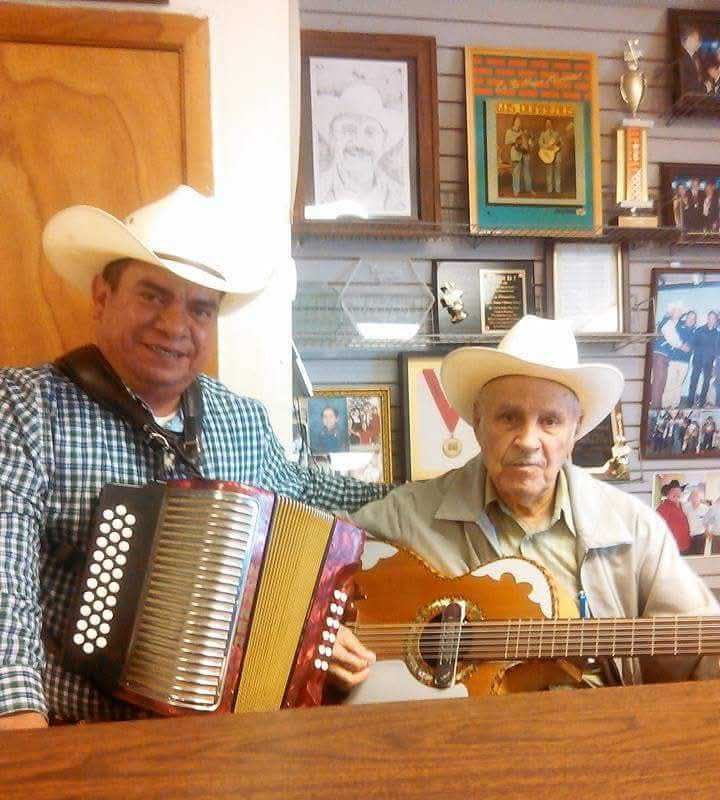
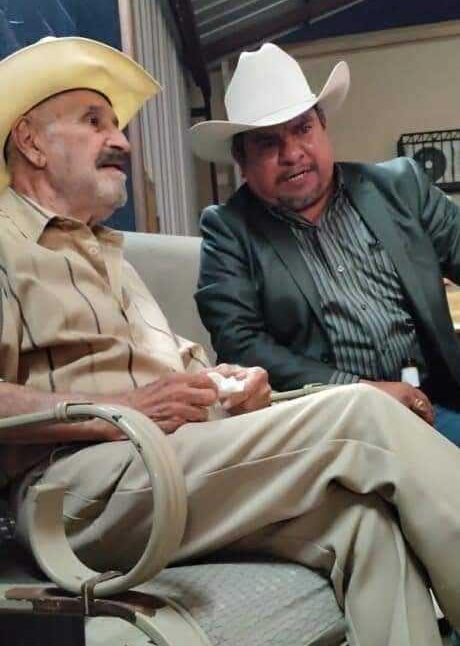
Frutty Villarreal, left, with Ramiro Cavazos. The two played together for decades after Villarreal first recorded in Cavazos’ studio. Photo courtesy of Frutty Villarreal
And then, of course, there was Don Ramiro.
“He was a legend already by then,” Villarreal said. “And he was one of the first ones to bring a recording studio to the Valley.”
What transpired was a lifelong friendship between the two. Cavazos showed Villarreal the ropes, offered him advice and played alongside him. Villarreal said Cavazos became something of a father figure.
It was a friendship that lasted all the way up until Cavazos — who the Arhoolie Foundation described as the “last link in a chain” to the early days of norteño music — died on July 2 at the age of 99.
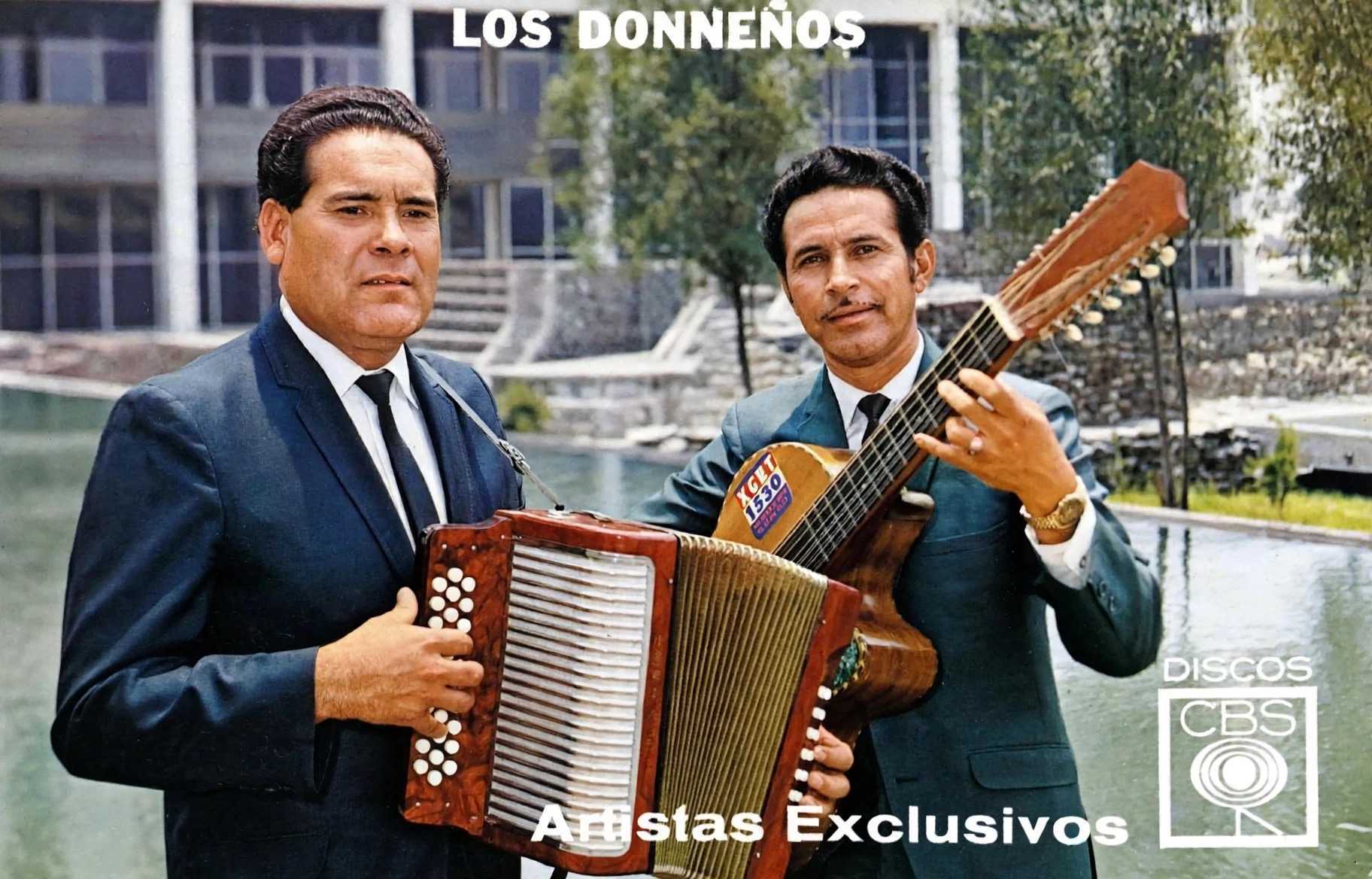
Los Donneños
In his song “Homenaje a las Leyendas,” Villarreal includes Cavazos among the pantheon of norteño, conjunto and Tejano music’s pioneers:
En 1946, en la ciudad de Donna, Tejas
se unen dos de las grandes
eslabones pilares de la música norteña
Los Donneños: Don Mario Montes
y Don Ramiro Cavazos
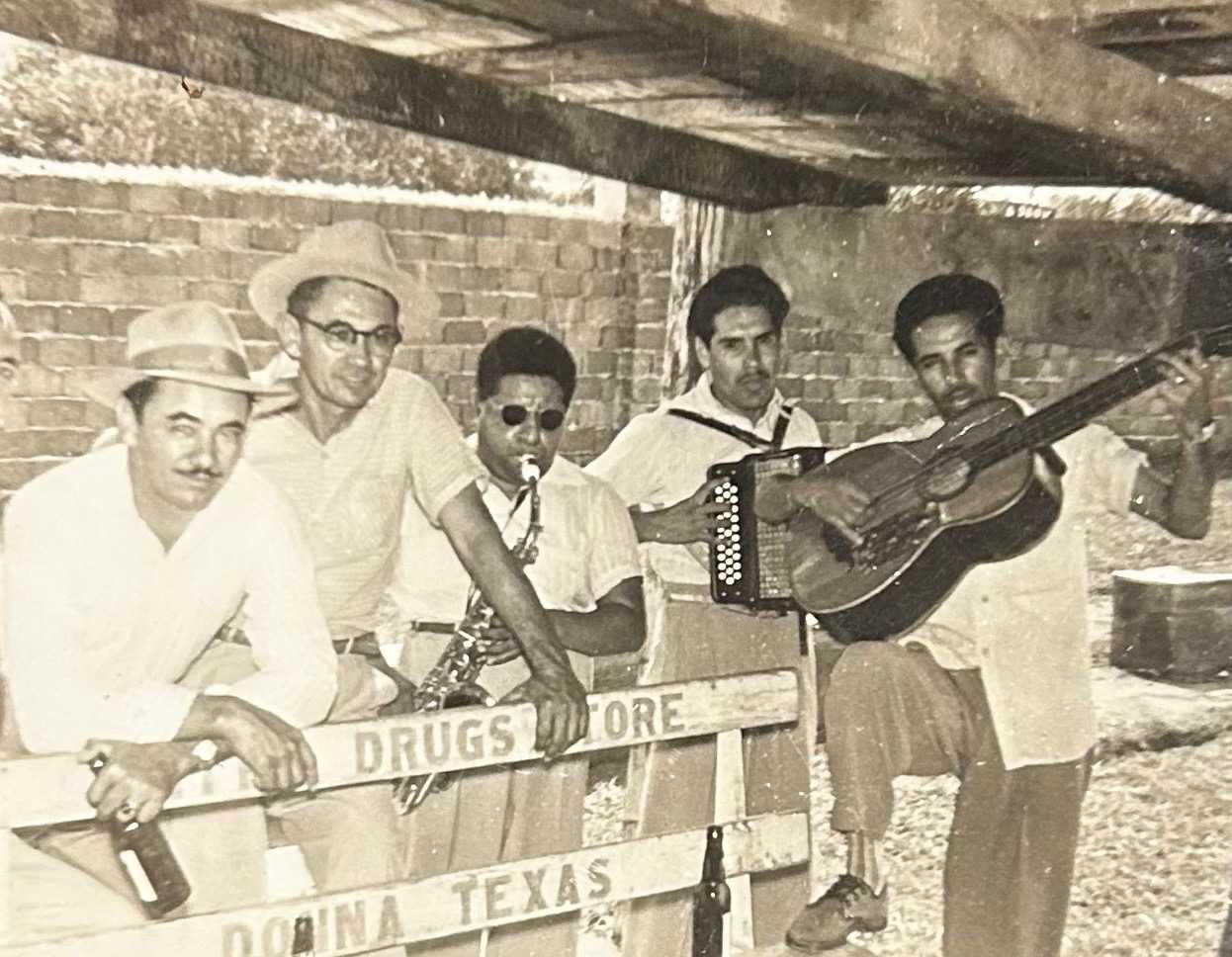
Los Donneños (Mario Montes and Ramiro Cavazos at right) during their early days. Photo courtesy of Juan Cavazos
Indeed, the duo of Los Donneños formed under humble circumstances.
Cavazos and Montes had both immigrated separately to the U.S. at a time when segregation was still prominent in Donna. They worked day jobs in fruit fields or restaurants to support themselves.
A chance encounter between Cavazos and Montes led to a friendship and musical partnership between the two, who formed Los Donneños — named for the town where they were founded — and made their first recordings for Discos Falcon in 1947.
With Cavazos on the bajo sexto and Montes on the accordion, the duo, along with Mexico’s Los Alegres de Terán, became early pioneers of norteño music.
“Back then the music was not divided like into norteño, conjunto, and Tejano,” Villarreal said. “So conjunto evolved from that norteño music. And then apart from that, he was the first one to take norteño music to the airwaves because of his recording studio.”
The songs of Los Donneños then carried through the airwaves of the Valley, eventually reaching the ears and inspiring musicians like Ramon Ayala and Juan Villarreal.
But it wasn’t just the radio waves that carried their music. Los Donneños soon found themselves on the silver screen when they caught the attention of Mexican actor Eulalio González, known widely as “El Piporro.”
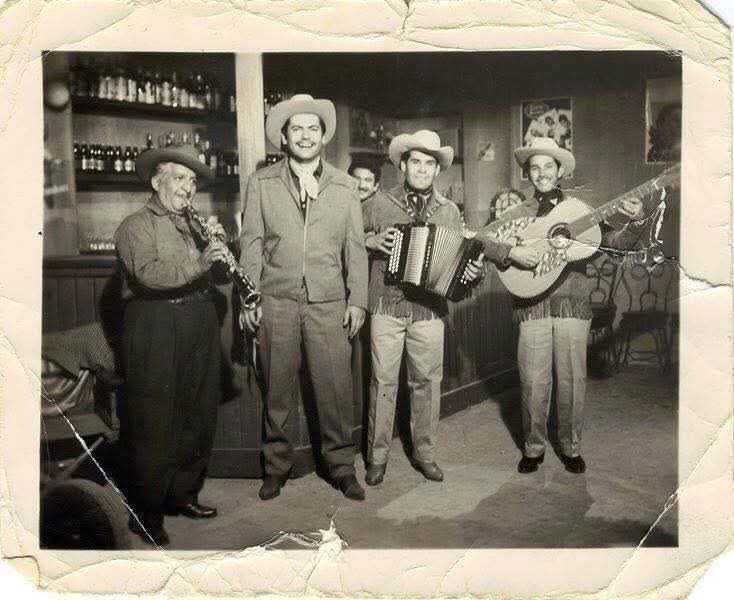
Los Donneños (on the right, with Ramiro Cavazos on bajo sexto and Mario Montes on accordion) starred in five films with Mexican movie star Eulalio “El Piporro” González (second from the left). Photo courtesy of Frutty Villarreal
Piporro had gotten his own start starring alongside Pedro Infante, a legendary figure of the golden age of Mexican cinema.
Villarreal says Infante popularized mariachi music in his films, but when El Piporro struck out on his own, he sought to put norteño music on the map — and he enlisted the help of Los Donneños to do just that.
“He needed some musicians that would play the norteño music, and both Ramiro and Mario were the ones that said yes,” Villarreal said. “That’s what made them internationally known in the United States, too, because those movies were part of the golden era and they accompanied El Piporro for more than 30 years.”
Los Donneños appeared in five films alongside El Piporro, backing the actor as he sung comedic numbers in films like “Dos Corazones Y Un Cielo.” Piporro also took them on tour throughout the U.S., Venezuela and Cuba.
Starring roles didn’t end for Cavazos there, however. He would later appear in the Les Blank documentary “Chulas Fronteras,” performing alongside Conjunto Tamaulipas in the film’s opening sequence.