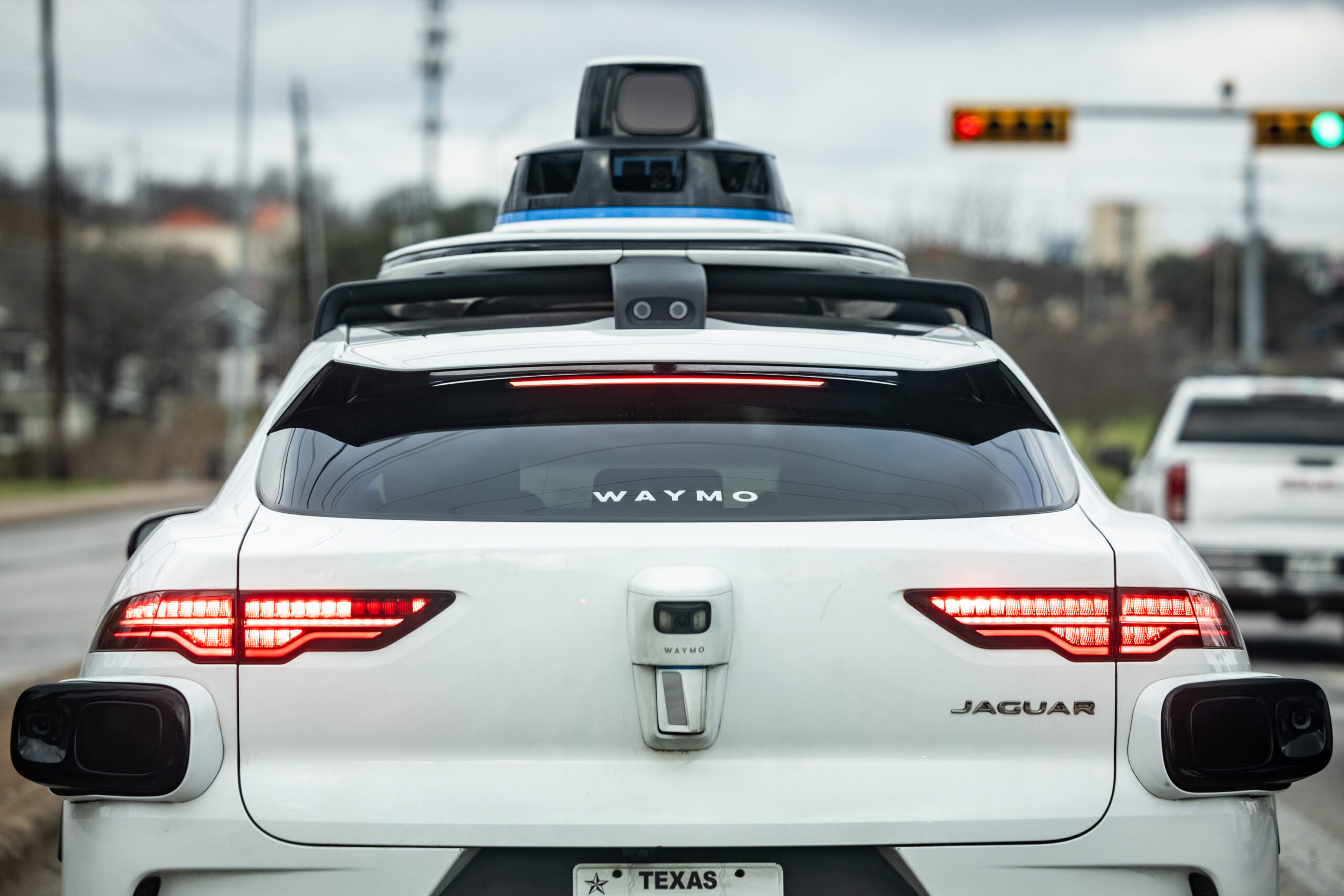
As autonomous vehicles, sometimes called robotaxis, proliferate in major Texas cities, local officials and safety experts are expressing concern about traffic safety.
Autonomous vehicles in Austin have passed unloading school buses, blocked emergency vehicles, and even killed a duck near a local park.
But robotaxi operators continue to expand in the capital city — as well as Dallas, Houston and San Antonio, making Texas a major test bed, even with paying customers aboard.
Nicole Cobler is a reporter for Axios Austin and she’s been covering the growth of robotaxis in Texas. She joined Texas Standard for a discussion. Listen to the interview in the player above or read the transcript below.
This transcript has been edited lightly for clarity:
Texas Standard: Do we know how many autonomous robotaxis are currently on the streets of Austin and other Texas cities?
Nicole Cobler: Well, there’s a lot. I know that at least in Austin, Waymo has about 300 robotaxis here. This was their latest count that they told me. So, many more than that.
The state does have regulations that applies to robotaxis. What are they and are they the only rules that apply?
Yeah, that’s right.
[Edit: There’s actually some new rules that go into effect May 28, 2026]
And that requires all of these autonomous companies to be, you know, authorized by the Texas DMV. That means that they need to prove that they have things like cameras inside the vehicle, they have a first-responder plan and things like that.
And that’s the thing is that Texas state authority really preempts local authority. So local officials in places like Austin don’t have much of a say over what goes on with these companies in our town.
You mentioned these brand new rules. Where did those come from?
That was from the Texas Legislature past this last session. And as of [edit: May 28, 2026], all of these AV companies need to be authorized by the DMV.
» GET MORE NEWS FROM AROUND THE STATE: Sign up for Texas Standard’s weekly newsletters
Okay, so that was just the deadline set when the Legislature made their decision. So you spoke to officials and transportation experts who say we need more rules. What did they tell you specifically ought to be addressed?
Yeah, the big theme was this dynamic safety certification. UT researchers at the Center for Autonomy have been looking into how we can better evaluate these vehicles for safety, and especially in rare, unpredictable situations.
Like in Austin, last month we had this mass shooting. A Waymo robotaxi blocked an ambulance briefly. And researchers say a dynamic safety check would actually allow us to make a more ongoing effort to see how these cars are performing in unpredictable situations rather than just a one-time certification.
OK, so the deadline or the new rules from the Legislature are one thing that happened this week. Another thing happening this week is a public meeting involving Waymo that officials don’t plan to attend. Can you tell us a little bit more about that?
Right. Yeah, that meeting is a joint committee meeting between Austin City Council’s public safety and mobility committees. A few city council members have invited autonomous vehicle companies to come to this public meeting and they especially want to hear from Waymo in this public setting to discuss this ambulance incident.
But Waymo officials say we’ve had, in the month that followed, private meetings with city and state officials, including the governor regarding this incident. And we feel that’s the best way to have conversations about this.
What’s your sense of the regular people? I mean, they’re on the roads with these autonomous vehicles. Some are comfortable enough to take a ride in one.
Have you heard from regular folks about what they feel and whether they feel like the rules in place are enough?
Yeah, I mean, anecdotally in Austin, I feel like I hear people are pretty excited about this technology. You know, I have plenty of friends that feel fine and safe in these vehicles and say they seem to perform better than a human driver.
Of course, there’s certainly concerns and these incidents, I think, need to be scrutinized and should be publicly scrutinized in this public meeting today.
Editor’s note: This story originally misstated the date when new rules for autonomous vehicles go into effect in Texas. The date is May 28, 2026. The erroneous information has been denoted and replaced in the text version of this story.