Before Artemis II, a look back to Apollo 8, when astronauts first went around the moon and back

In Greek mythology, Artemis is the twin sister of Apollo. In NASA history, the Apollo 8 mission laid much of the groundwork for the upcoming Artemis II mission.

By Michael Adkison, Houston Public MediaMarch 31, 2026 2:13 pm, ,

From Houston Public Media:

For a moment, as many as a billion people fixed their gaze upon the moon. For the first time in human history, three astronauts had traveled to the moon, felt the pull of lunar gravity and broadcast it back to the Earth.

Apollo 8 was by far the most complicated mission NASA had ever undertaken by the time it launched in December 1968. Its goal, simply put, was to travel to the moon and back — the first time a spacecraft had ever left Earth’s orbit. An estimated 1 billion people across five continents watched the astronauts’ broadcast on Christmas Eve.

“Two of my brothers and I were in our mom’s bedroom because she had the only color TV in the house. The other TVs were all black and white,” Jeffrey Kluger, an editor-at-large at Time magazine, said of that broadcast. “So, we were sitting on the floor in her bedroom, and she was perched on the bed, and we were watching this mission. And just hearing those voices and being able to fathom that — Jim Lovell’s voice, Frank Borman’s voice, Bill Anders’ voice — they were coming from 250,000 miles away in orbit around the moon was just transformative for me.”
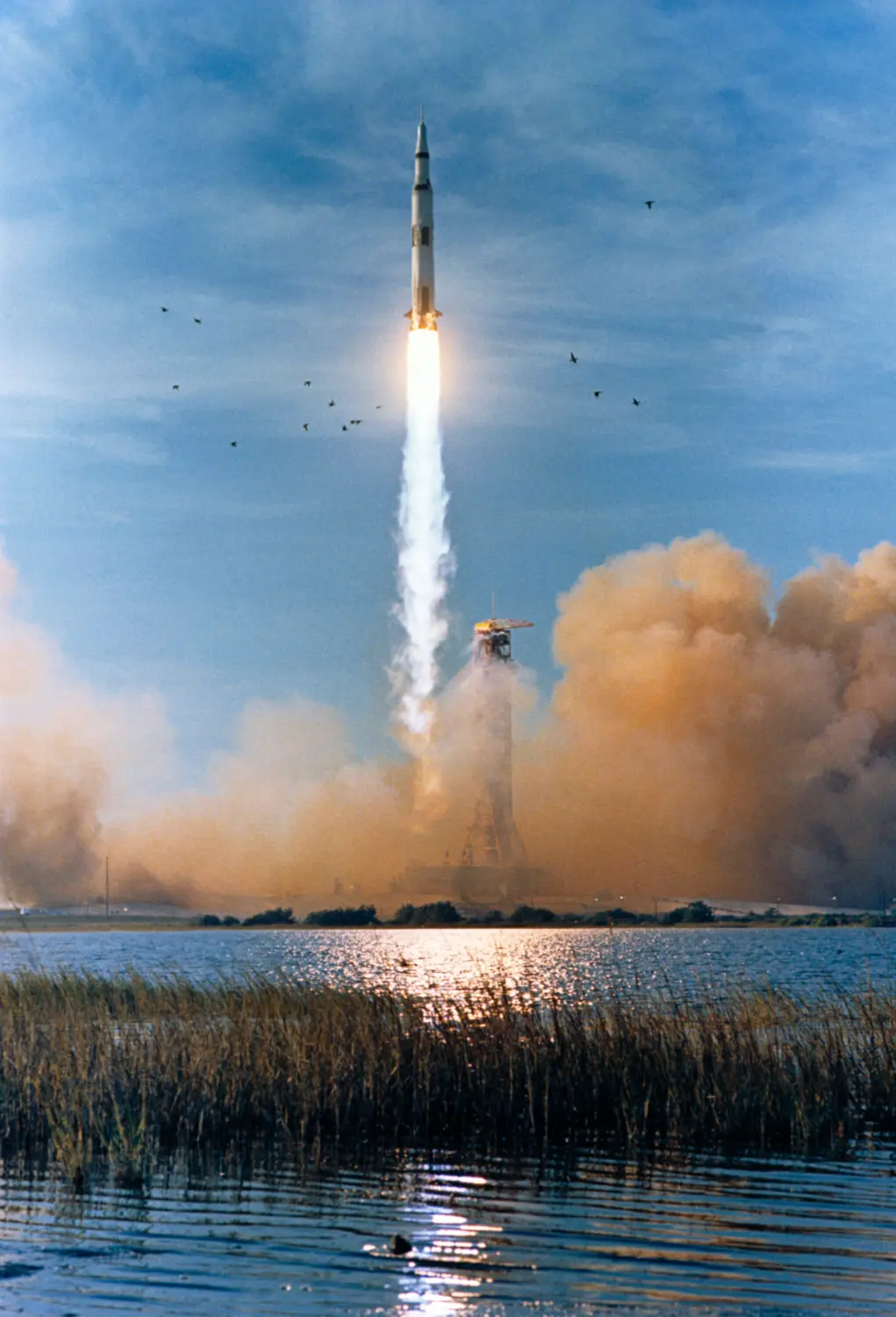
The Apollo 8 space vehicle is launched from Pad A, Launch Complex 39, Kennedy Space Center, Dec. 21, 1968. NASA photo

This week, NASA plans to tread similar territory with its Artemis II mission. The four-person crewed mission is set to leave the Earth’s orbit for the first time since the Apollo program ended in 1972 and fly to the moon, around it and back. Though the two missions have their differences, NASA is hoping to recapture the magic from that moment when the world watched Apollo 8.

“1968 of course, as we all know, was a deeply tragic year,” Kluger said. “There were assassinations in the US. There were riots in cities in the U.S. — cities burned. [That] year began with the Tet Offensive in Vietnam. In August, Soviet tanks rolled into Prague that same month. There were riots at the Democratic Convention in Chicago. So, it was a really bloody and terrible year.”

As Kluger writes in “Apollo 8: The Thrilling Story of the First Mission to the Moon,” Apollo 8 marked a chance to unite the divided world in a dismal year. The mission marked the first time any humans had ever left the Earth’s orbit and felt the pull of the moon’s gravity, called the lunar sphere of influence. The astronauts — William Anders, Frank Borman and Jim Lovell — left the Earth on Dec. 21, 1968.

The mission had two potential trajectories, Kluger writes: a safer option, and a scarier option.

“The safer trajectory involved going out to the moon and simply whipping around the far side, just once, not going into lunar orbit, and allowing the gravity of the moon to flip the spacecraft back to Earth,” Kluger said in an interview with Houston Public Media.

That’s the plan in place for Artemis II, which will use the moon’s gravity to fly by in something of a figure-eight formation.

Apollo 8, however, went with the so-called scarier option.

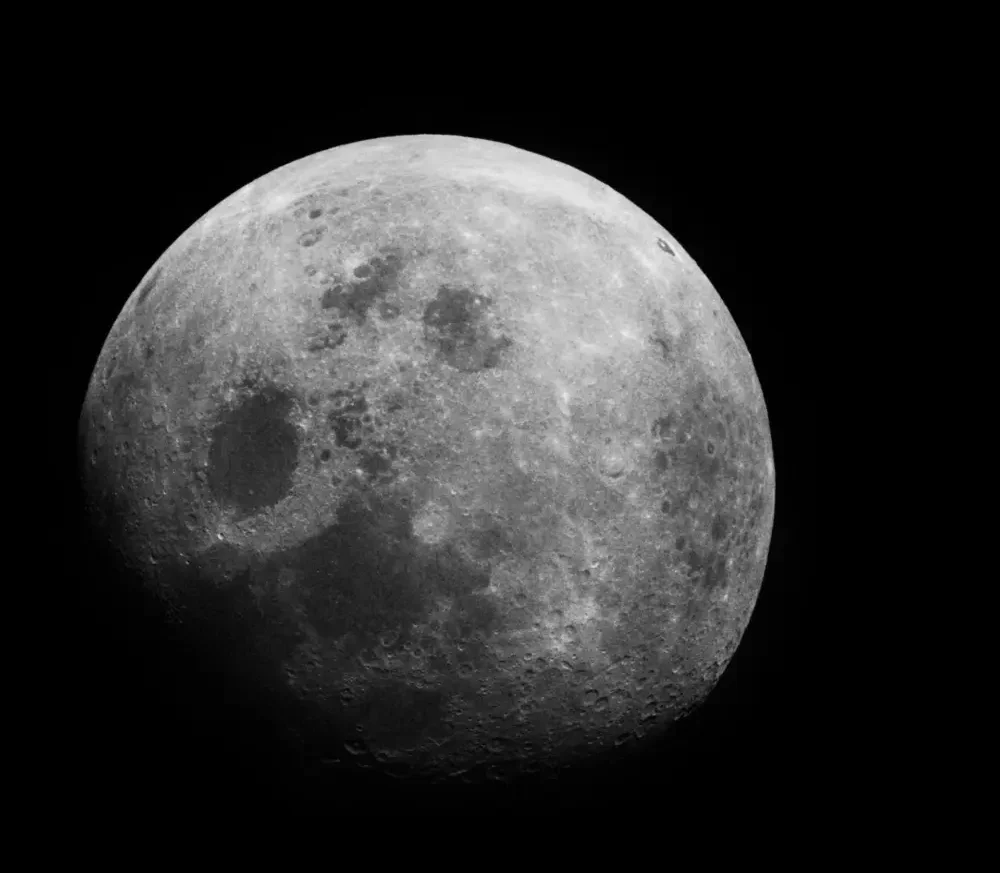
“The scarier trajectory was to go out to the moon to fire the service module engine attached to the command module and descend into lunar orbit just 60 miles above the lunar surface; to orbit the moon 10 times; take photos and come home,” Kluger said. “The biggest fear about the scary trajectory was that the engine would fire once to get the astronauts into lunar orbit and would fail to fire a second time to get them out of lunar orbit.”
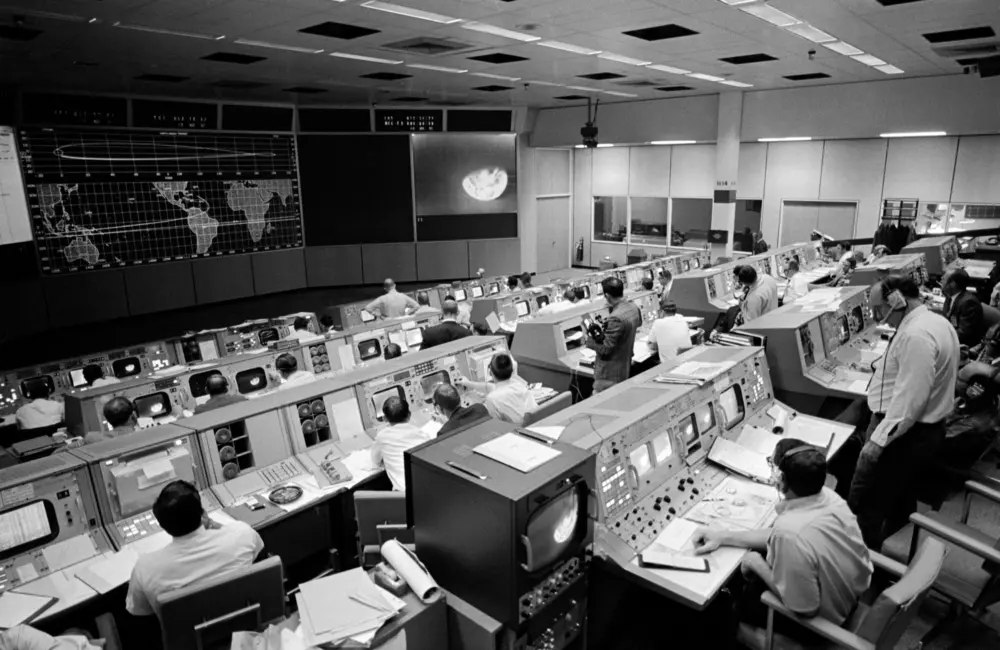
NASA

Overall view of the Mission Operations Control Room in the Mission Control Center, Building 30, on the third day of the Apollo 8 lunar orbit mission.

In other words, the astronauts risked being stuck in lunar orbit. Susan Borman, the wife of astronaut Frank Borman, even warned NASA’s director of flight operations Christopher Kraft about the risk, according to Kluger. She argued that if the astronauts failed to leave the moon’s orbit, this mission would ruin the moon for everyone on Earth, who would look up at the moon and only think of the mission’s failure.

The mission, however, was a success. And its legacy reverberates through NASA’s history — all the way through Artemis II.

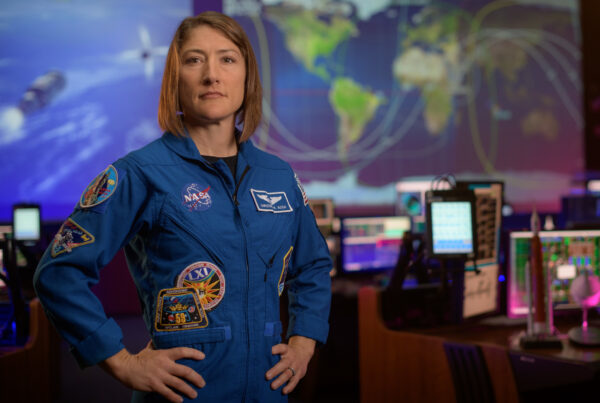
“It is a mission that sort of mirrors our own,” Artemis II mission specialist Christina Koch said during a news conference on Friday, “and we’ve incorporated it into our mission patch, and also our ethos and values as a crew.”

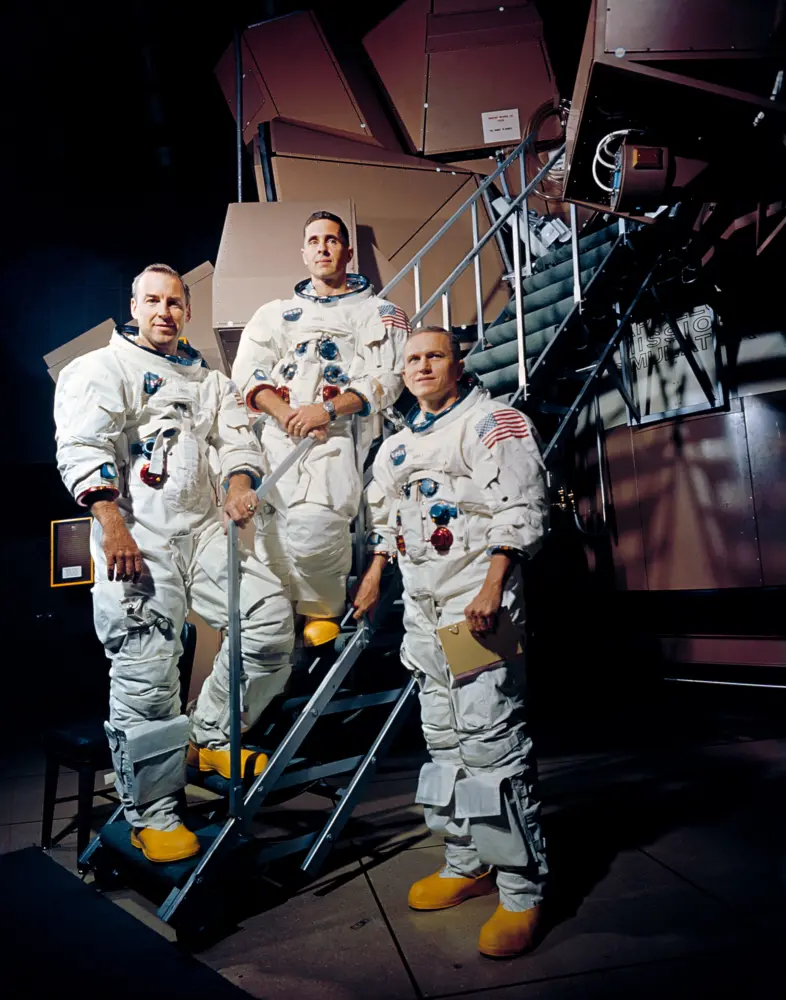
The Apollo 8 crew, left to right, were James A. Lovell Jr., command module pilot; William A. Anders, lunar module pilot; and Frank Borman, commander. NASA photo

The Artemis II mission patch, designed and worn by crew members, includes a reference to “Earthrise” a photo taken by Anders which has gone down as one of the most iconic pieces of NASA history. The photograph features the surface of the moon in the foreground, with the Earth hovering like a blue marble enveloped in a sea of black, empty space.

Today, Apollo 8 is inseparable from the Earthrise photograph, just as it is with its Christmas Eve broadcast.

“We are now approaching lunar sunrise, and for all the people back on Earth, the crew of Apollo 8 has a message that we would like to send to you,” Anders, the lunar module pilot on the Apollo 8 mission, said during the broadcast on Christmas Eve, 1968.

To mark the occasion, the crew of the Apollo 8 decided to turn their own gaze toward the celestial.

“In the beginning, God created the heaven and the Earth,” Anders said, reading from the beginning of the Book of Genesis in the Old Testament. “And the Earth was without form and void, and darkness was upon the face of the deep. And the spirit of God moved upon the face of the waters. And God said, ‘Let there be light.'”

As Anders read from Genesis, the Apollo 8 broadcast showed black-and-white video along the surface of the moon. Today, the image looks grainy, but in the 1960s it was a breathtaking view — and a remarkable moment in science and exploration.

“And from the crew of Apollo 8,” Borman said, after reading several verses, “we close with good night, good luck, a Merry Christmas, and God bless all of you — all of you on the good Earth.”

“It was a magnificent experience,” Kluger said. “I was a 14-year-old boy at the time. I got chills watching it. And you know, when they got back, they received tens of thousands of telegrams and letters and cards. And the one that affected them most was from a woman whose name is now lost to history, who simply wrote, ‘Thank you. You saved 1968.'”

If you found the reporting above valuable, please consider making a donation to support it here. Your gift helps pay for everything you find on texasstandard.org and houstonpublicmedia.org. Thanks for donating today.