Texans navigate higher gas prices, as future of US-Iran ceasefire remains uncertain

The city’s residents spend more of their income on transportation than residents of any other major metropolitan area.

By Natalie Weber, Houston Public MediaApril 10, 2026 10:00 am, ,

From Houston Public Media:

At a Buc-ee’s in Katy, Mijung Holladay filled up the tank of her green Corolla Cross last week.

While gas prices have spiked amidst the U.S. and Israel’s war with Iran, Holladay feels she’s been shielded from the costs. The flight attendant lives in Spring and said she only commutes a couple of times a week to the airport.

“We live in Texas, the heart of gas, right?” she said. “I used to live in the Bay Area in San Francisco, and it’s almost double. So yeah, this is such a better place to live in, economically.”

Others, however, haven’t been as fortunate.

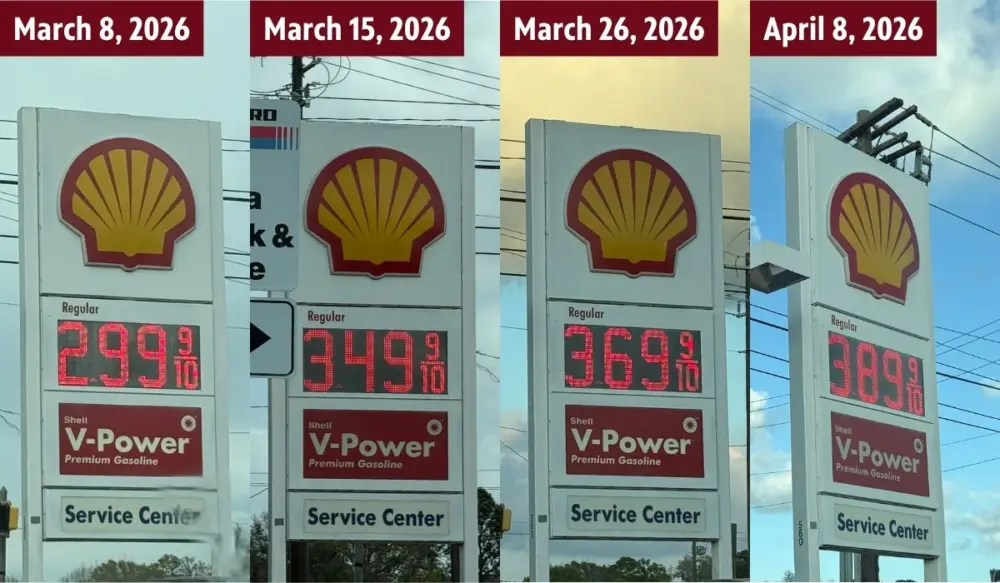
A gallon of gas in Texas costs about one dollar more than it did last year.

Oil prices have become volatile during the U.S. and Israel’s war with Iran, as uncertainty remains over the reopening of the Strait of Hormuz. About a fifth of the global oil supply passes through the strait, which Iran closed last month due to the war. Though a ceasefire has been called, it remains fragile.

John Steiger has to refill his gas tank about twice a week. That’s because he owns a sales business working with companies across Texas, Oklahoma, Louisiana and Arkansas.

Last week, he topped off his gas tank at Buc-ee’s on the way to San Antonio.

“I probably don’t do as far of trips as I normally do,” he said. “I mean, I still hit the towns, but I don’t go far, or as often, right, as I should.”

Still, he remains optimistic.

“I still think it’s short-term,” he said. “I don’t think it’s a long-term deal, so I’m willing to suffer through it.”
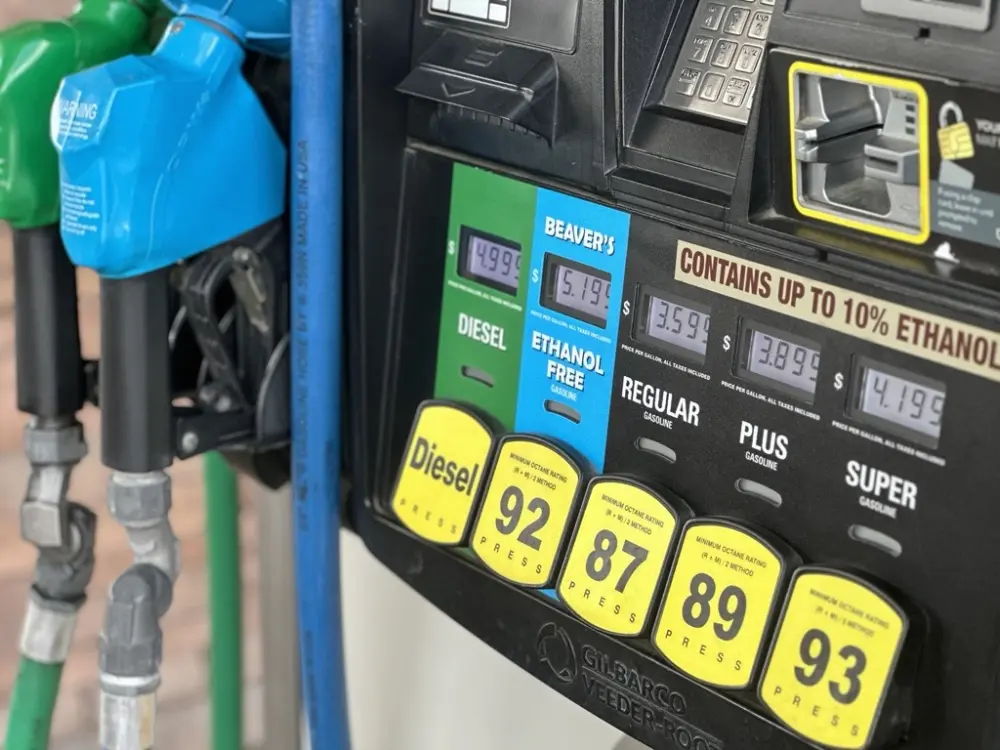

Natalie Weber / Houston Public Media

A gas pump at a Buc-ee’s in Katy on March 31, 2026.

Patrick De Haan is the head of Petroleum Analysis at GasBuddy, which tracks gas prices across the country.

He said lower gas prices are contingent on ships being able to pass through the Strait of Hormuz again.

“That is when oil prices may start to go down — when the market starts to gain confidence that that is going to be the new norm,” he said.

While gas prices in Texas are lower than in many other states, Houstonians spend more of their budgets on transportation than residents of any other major U.S. city, according to the U.S. Bureau of Labor Statistics.

Robyn Egbert is the travel demand management supervisor at the Houston-Galveston Area Council, an association of local governments.

“The average Houston household allocates about 17,000 (dollars) annually to transportation costs, with roughly 4,200 of that going directly to fuel, and that was before the fuel price jump,” she said.

She said Houstonians use public transit less often than people in other cities. And the city is one of the most congested in the country.

With rising fuel costs, Egbert estimates that the average Houston household is spending an additional $100 per month on gas. But she said there are steps residents can take to rein in their transportation costs.

“I would tell commuters to explore and understand where their nearest park and ride is, where their nearest commuting transit service is, to try a new ride,” she said. “But if that’s not an option, we’d also encourage carpooling or vanpooling.”

Back at the Buc-ee’s in Katy, Yolanda Johnson pumped gas into her red Chevrolet pickup truck. She lives in Weimar, about 90 miles outside of Houston, and commutes into the city to run errands.

Right now, she estimates that it costs about $70 to $75 to fuel her car.

“I mean, you know, it costs more, but we manage,” she said. “You just gotta balance.”

On this particular day, she stopped the pump just before it hit $65.

If you found the reporting above valuable, please consider making a donation to support it here. Your gift helps pay for everything you find on texasstandard.org and houstonpublicmedia.org. Thanks for donating today.