Kerr County has new flood sirens, but the activation plan is a ‘work in progress’

Leaders promised a lot of change after floodwaters tore through Kerr County in 2025, killing more than 100 people. A year later, where do things stand?

By Neena Satija, Sarah Grunau, The Texas NewsroomJuly 2, 2026 10:47 am,

From The Texas Newsroom:

After more than 100 people were swept away by floodwaters in Kerr County last July, Texas leaders were clear: The area known as “Flash Flood Alley” needs a flood warning system.

“There should have been sirens here,” Republican Lt. Gov. Dan Patrick told Fox News last July. He added that if local officials couldn’t afford it, “then the state will step up, and we need to have these in place by next summer.”

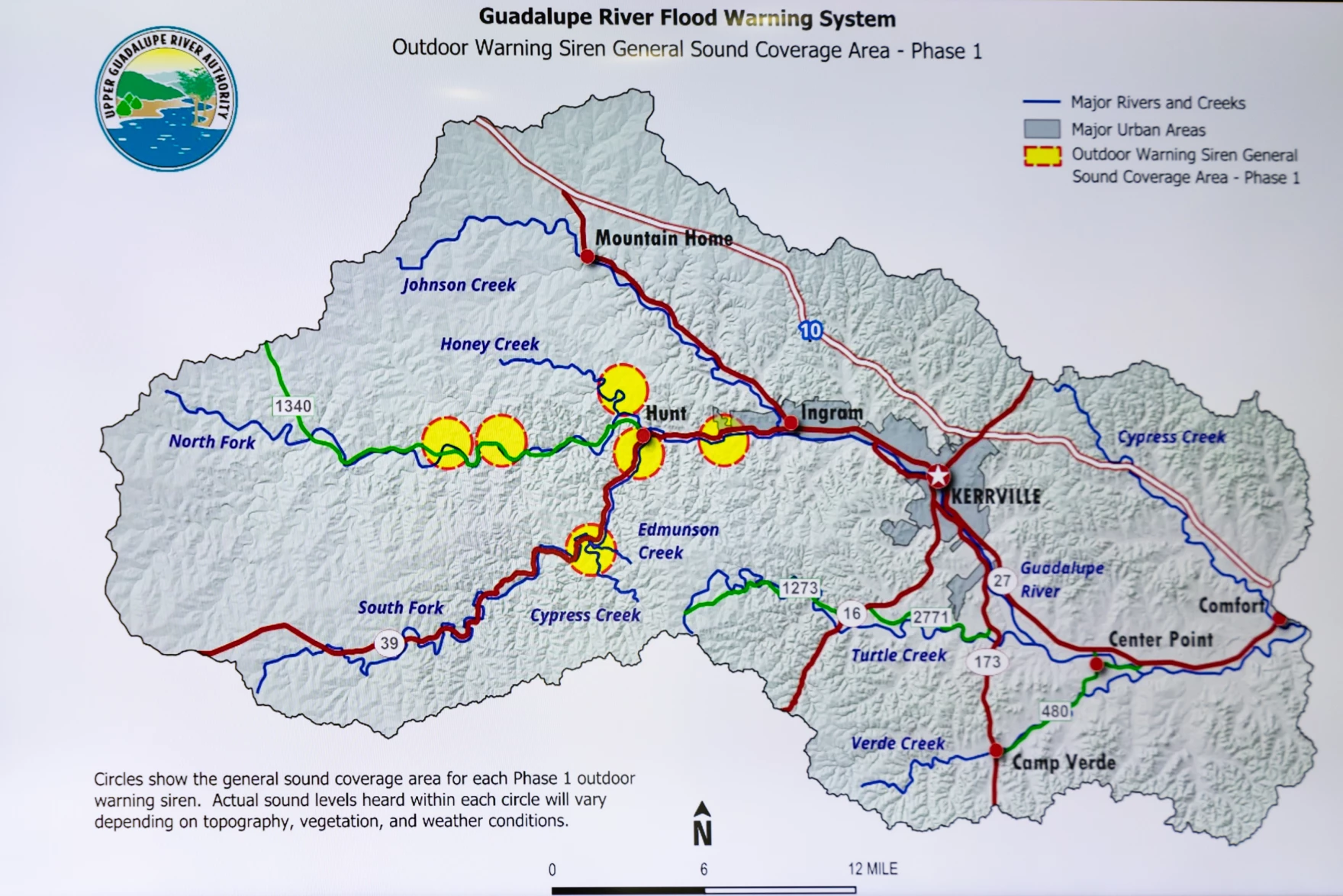
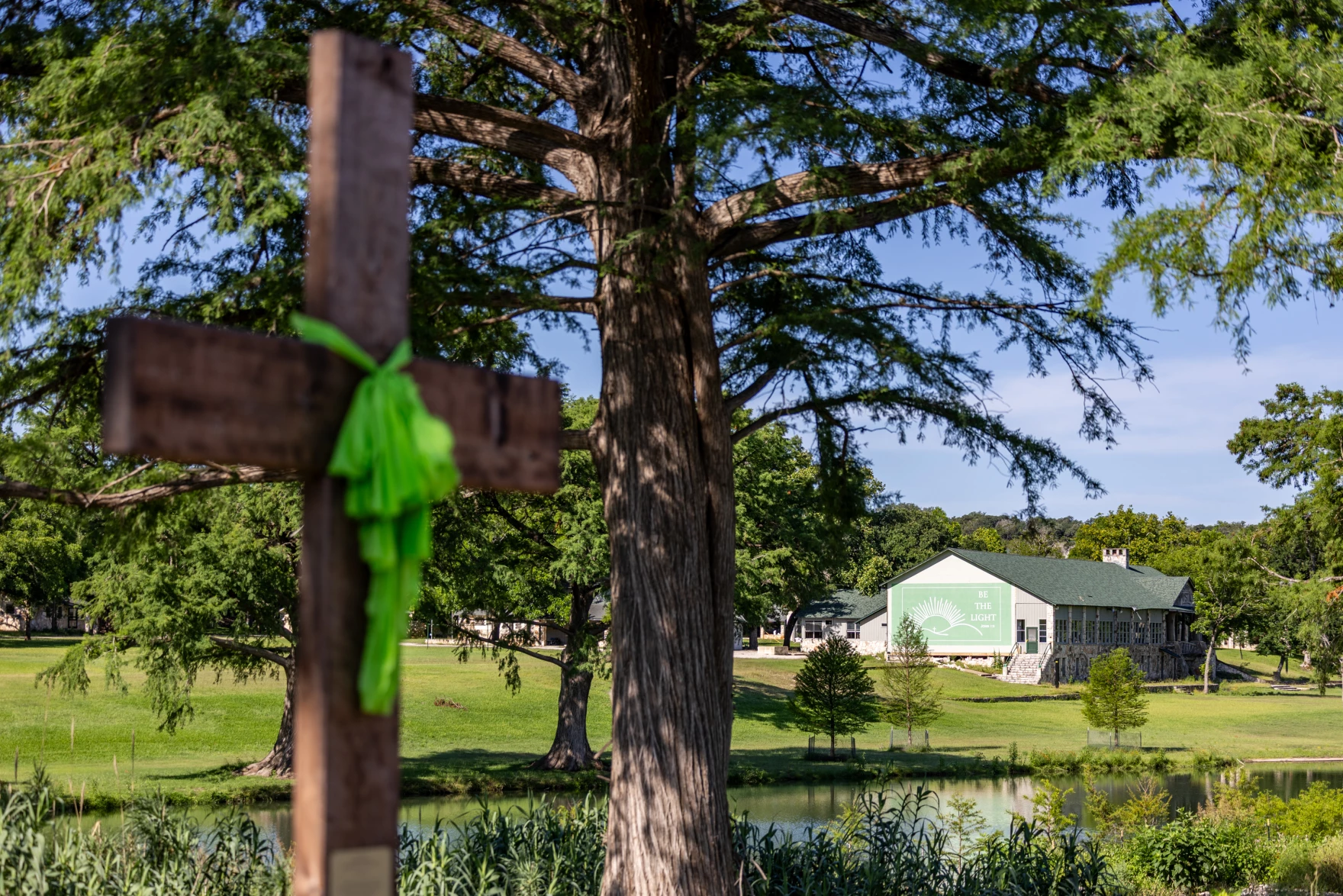
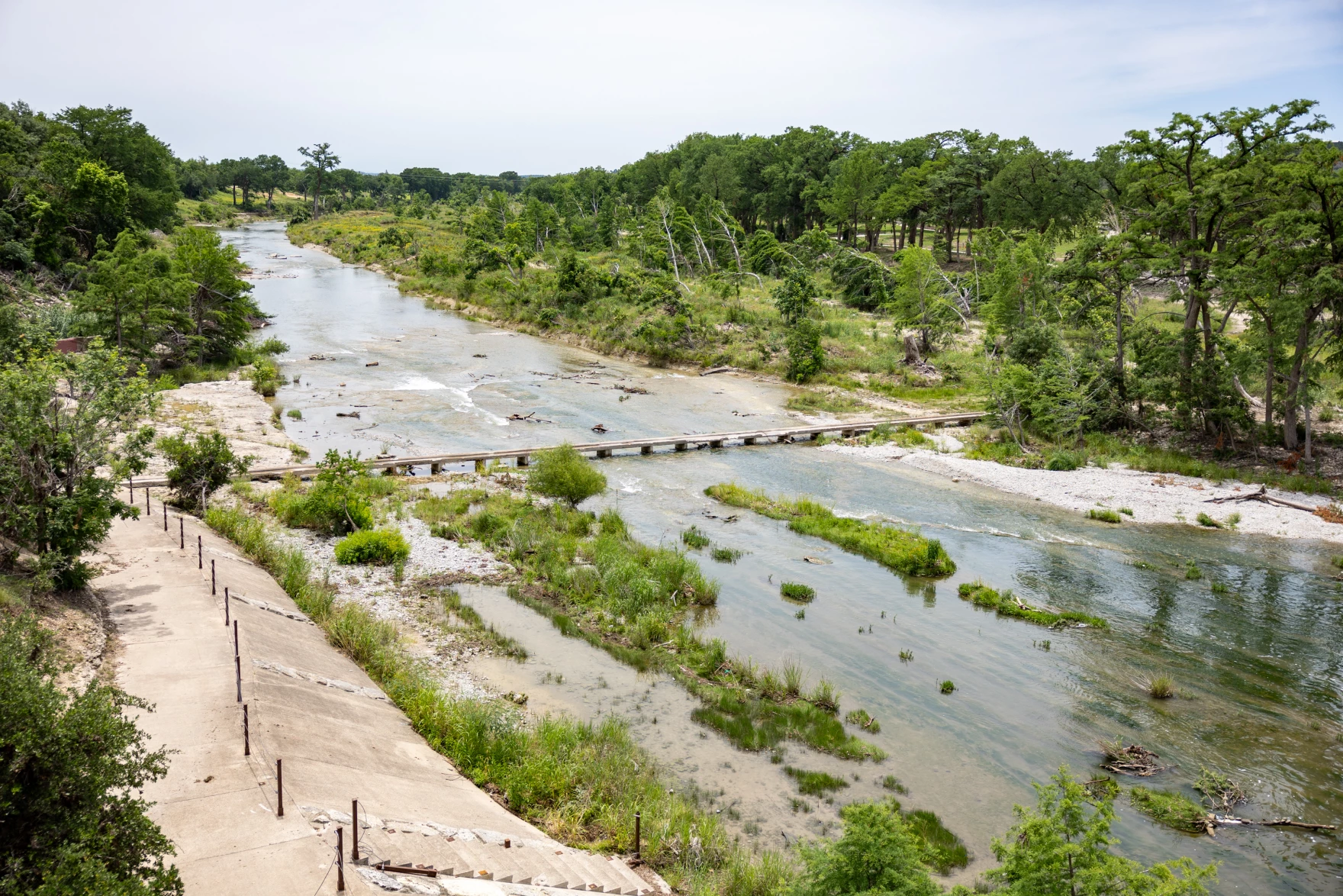
Almost a year after the tragedy, half a dozen sirens are now located on the banks of the Guadalupe River in Kerr County. Sitting atop 50-foot poles, they are clustered in the western portion of the county near some popular youth camps, including Camp Mystic, where 27 campers and counselors and the co-owner died during last year’s floods.

But local officials have repeatedly evaded questions about how they plan to activate the sirens or take any other emergency measures in the event of another catastrophe.

Patricia Lim / KUT News

A flood-warning siren in Ingram, Texas.

What amount of rainfall or river levels would cause the sirens to go off? What other methods beyond sirens might be used to warn people about impending flooding? And what should people do if they hear the sirens?

Kerr County’s emergency management division is in charge of answering those questions, but Shorey Harmon, who leads the department and is the sole employee listed on that office’s website, did not respond to multiple requests for comment. The five elected members of the county’s governing body, the Kerr County Commissioners’ Court, did not respond to queries either.

“I think they’re working on it, as best we can determine,” said Paul Bettencourt, a Republican state senator from Houston who co-authored flood preparedness legislation last year in response to the Hill Country flooding. “The fact that we’ve got any sirens up in less than a year after the bill passed is a pretty rapid process for multi-layered government.”

Speaking to members of the public at a community meeting in Kerrville last week, Harmon said he has “full capability and confidence to activate all completed outdoor warning sirens” and that he was working closely with other emergency management officials in the county.

He added that he would decide to activate the sirens based on National Weather Service reports as well as measurements from various rainfall and river-level gauges across the county, whose readings are now available on a new public website.

Patricia Lim / KUT News

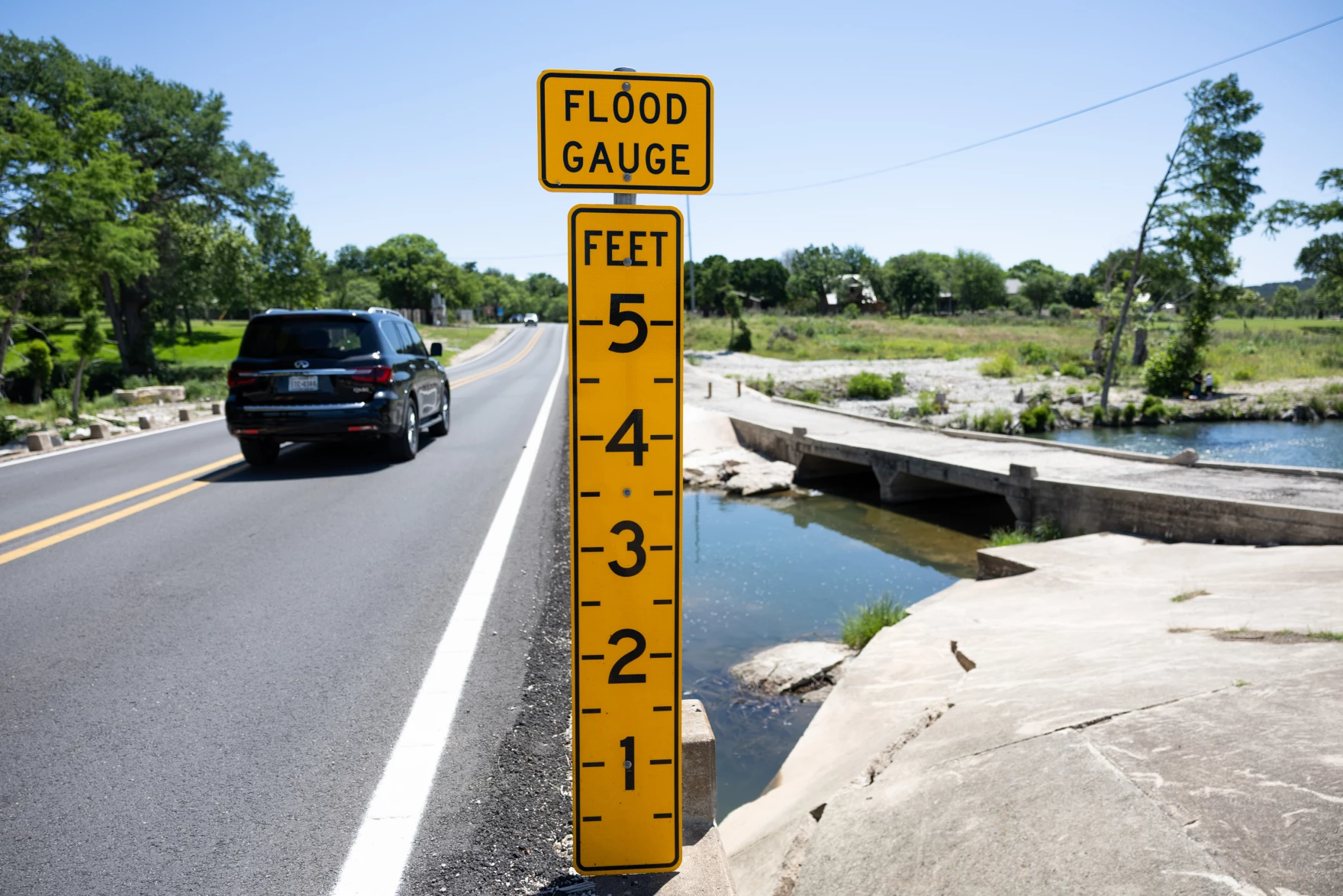
A flood gauge along the Guadalupe River in Kerr County.

But there’s limited data to pull from. Only nine gauges currently measure the levels of the Guadalupe River across Kerr County, a number Bettencourt described as “pretty de minimis.” Just one is on the river’s North Fork and another is on its South Fork — the two tributaries that make up the river’s headwaters — even though those two bodies of water combined are more than 40 miles long.

Harmon also acknowledged during the meeting in Kerrville that the exact protocols for activating the sirens, along with an updated emergency action plan for the county, were still a “work in progress.” He declined an interview request following his public remarks.

The Texas Newsroom requested a copy of the emergency action plan from the county but has not received a response. Martin Greenwell, public information officer for the city of Kerrville, declined to provide a copy.

“While we appreciate the continued interest and concern, our county government officials and leaders have made the voluntary decision to respectfully decline interview requests at this time,” Lisa Walter, the spokeswoman for Kerr County, wrote in response to a detailed list of questions from The Texas Newsroom on Tuesday. She added, “in the coming weeks, I do expect to release further information.”

In public events and press releases, local officials say they’ve made astonishing progress for a county that has just 54,000 people and is geographically almost the same size as its urban neighbor, Bexar County, which is home to San Antonio.

But some have also presented sobering accounts of just how far the region has to go.

Patricia Lim / KUT News

A map showing flood warning sirens around Kerr County presented by Tara Bushnoe, general manager of Upper Guadalupe River Authority, during a board meeting at the UGRA building in Kerrville on May 27, 2026.

In one presentation to Kerrville City Council last month, officials estimated they would need at least $14 million to pay for a flood warning system that includes more sirens as well as “warnings on roadways, rain gauges and river gauges.”

That’s a far cry from what the Texas Legislature pumped into the effort last year.

Lawmakers allocated a total of $50 million for a group of 30 counties, including Kerr, to install “flood warning sirens, flood gauges and related equipment.”

The presentation to Kerrville City Council also noted that the county would need millions to build out a true emergency operations center. There was no discussion of any plan to fund such efforts locally.

Mark Rose spearheaded the development of a much larger flood warning system along a portion of the Colorado River that runs through Texas. He said the limited progress in Kerr County demonstrates that state leaders didn’t adequately address the problems that helped contribute to the many deaths last year.

“The Legislature needs to establish very clearly who is responsible for flood warning on our riverways, and what are their responsibilities, and then fund it,” said Rose, former general manager of the Lower Colorado River Authority. “If all of the rest of this work isn’t done, your legacy of sirens is going to bite you in the butt someday.”

What has changed

Though many Kerr County officials have insisted that they couldn’t have done anything to prevent what happened last year, legislative hearings and reporting by news outlets made clear that a flood warning system and better emergency management protocols would have helped.

For instance, the three main county officials who were supposed to be in charge during emergency situations were all out of town or asleep when waters started rising in the early morning hours of July 4. Dispatchers were also delayed in sending out emergency alerts because they were waiting for a supervisor’s approval, The Texas Newsroom reported at the time.

On top of that, there was no easy way to determine how quickly the river was rising across the county. A warning system put in place decades ago by the Upper Guadalupe River Authority, a government agency that manages the river within Kerr County’s boundaries, had fallen into disrepair long before last July 4.

As a result, even though the National Weather Service sent out serious flash flood warnings early that morning, there was no way of knowing the real-time conditions on the river. There were no working stream gauges anywhere near Camp Mystic, which is located near the river’s headwaters.

Patricia Lim / KUT News

Twenty eight people died at Camp Mystic during last year's flood.

Experts say that portion of the Guadalupe is where such data — along with tools like sirens — is the most crucial, because it’s where the river levels would rise the fastest. It’s also in one of the more remote portions of Kerr County where internet and cell service are scarce.

“It is astonishing that there were no monitoring systems where the camps were,” Rose said.

Today, the situation has improved. There’s a new gauge at the headwaters of the Guadalupe, and all the gauges appear on a website called RiverHub that anyone can access. A multimillion-dollar state grant for broadband improvements will also help ensure that the gauges’ latest measurements are transmitted to the website every few minutes.

Local officials speak highly of Harmon, who started his job as Kerr County’s emergency management coordinator in May. He replaced William “Dub” Thomas, who told state lawmakers last year that he was out sick when the floods occurred. At the time, no one had been appointed to serve as his backup.

“Shorey [Harmon] is hands down going to make things better, and he already has,” said Stuart Gross, code enforcement officer in Ingram, a city of less than 2,000 people in Kerr County. “He’ll take a call. And very rarely do I have to go to his voicemail.”

Still, Gross said he wished the flood warning system could be automated rather than dependent on individuals.

“I think if they do it with somebody who actually has to push the button, I don’t think it’s any good,” Gross said.

Other aspects of the region’s emergency protocols, which also came under fire last year, have yet to see substantial changes. That includes Kerr County’s text-based mass notification system, known as Code Red. Though county leaders approved a contract for a new system last month and said it could start to be used immediately, they haven’t rolled out a plan for encouraging members of the public to sign up for revamped emergency alerts.

Nor is there any money to add more gauges. Tara Bushnoe, executive director of the Upper Guadalupe River Authority, wrote in an email that she hopes to triple the number of gauges measuring river levels across the county — “subject to available funding.”

Patricia Lim / KUT News

Two of six new flood warning siren poles in Kerrville on May 28, 2026.

The river authority spent $1 million of its reserve funds on the new sirens, and Bushnoe said it’s waiting to be reimbursed by the funds the Legislature allocated. But that won’t happen until the state approves the river authority’s overall plan for the flood warning system, which it only recently submitted, on June 12.

The Texas Water Development Board is still reviewing that plan, according to a report the agency provided to Bettencourt on Tuesday that he shared with The Texas Newsroom. Meanwhile, the report says, the water development board has already approved project plans in nine other counties in the Hill Country.

‘We need to know who’s going to own what’

Discussion at a Kerr County Commissioners Court meeting this week made clear how much work has yet to be done on the flood warning system.

During the meeting, officials announced that they’d only just figured out how to divide up responsibility for the system’s various components between the county and the Upper Guadalupe River Authority.

“We all agreed that we’re going to have sirens,” County Judge Rob Kelly, the top elected official in the area, said during the meeting. “We agreed we’re going to do these gauges in the river. We’re going to have a dashboard system. But at the end of the day, we need to know who’s going to own what and be responsible for operating and maintaining what.”

Commissioner Tom Jones responded that Kerr County had agreed to take charge of maintaining the newly installed sirens, as well as adding 26 more across the region.

Commissioner Rich Paces pointed out that sirens were only one component of the system that local leaders had committed to building.

Patricia Lim / KUT News

A new siren gauge stands by the entrance of Canyon Spring Ranch in Ingram along the Guadalupe River.

“You only talked about sirens. You didn’t talk about the flashing lights or the arms or anything,” said Paces, who served on the county’s Flood Warning System Project Team, an advisory committee created last year. He was referring to lights and gates that could prevent people from driving across flooded bridges.

Jones said that equipment wasn’t on the table for discussion because the Legislature didn’t allocate any money for it last year when it passed Senate Bill 3 or Senate Bill 5, the two main laws aimed at future flood preparedness.

“Senate Bill 3 directs us toward the sirens and a certain number of gauges,” he explained, adding, “let’s try to move our momentum and shift it a little more towards the sirens.”

He noted that the county needs millions more dollars just to install more sirens, but it has yet to submit an application for that funding to the state.

“Let’s get our request in for what we need for sirens, even if it’s only sirens,” he said. “Because there’s no guarantee that money will be there if these other counties get ahead of us.”

Experts are wary about whether focusing so much on sirens is really the best approach.

“Is that the optimal way to do the project? No, it’s not,” said Tom Moser, a former Kerr County commissioner who led the Flood Warning System Project team. “Don’t put the sirens in, then figure out how to wrap everything around it. But that’s what the Legislature wants, so we’re going to do that.”

Wes Virdell, who represents Kerr County in the Texas House of Representatives, said he wasn’t happy with how much emphasis the Legislature placed on sirens in the aftermath of the floods.

Still, he said he agreed to sponsor Senate Bill 3 anyway because “If I just go against everything all the time … it makes you look ineffective or makes it look like you don’t care, which is not true.”

Virdell said that he felt that the private sector, rather than government, would do a better job improving flood preparedness, and that people living or vacationing on the water need to take responsibility for their own safety.

“I’m not against the state providing funding for the sirens,” Virdell, a Republican, said. “Just, in my heart, I don’t think it’s the best solution.”

Texas Public Radio’s Saile Aranda and Houston Public Media’s Dominic Anthony Walsh contributed to this story.

If you found the reporting above valuable, please consider making a donation to support it here. Your gift helps pay for everything you find on texasstandard.org and KUT.org. Thanks for donating today.