From Inside Climate News:
IMPERIAL, Texas—Many residents of this small town drive long distances to buy bottled water instead of opening up the tap.
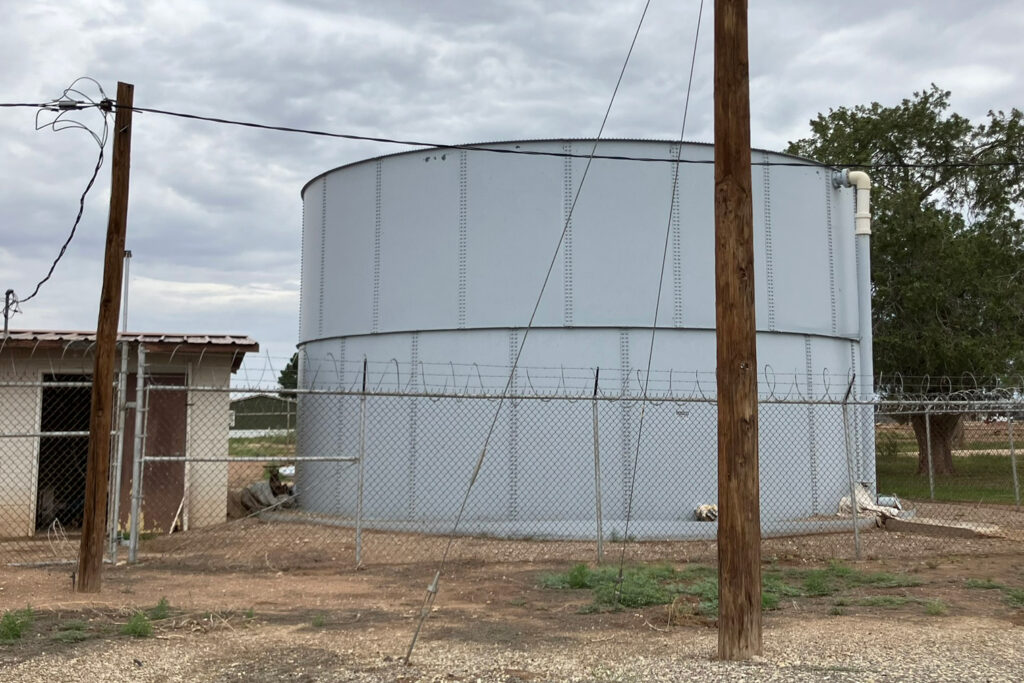
Pecos County Fresh Water, a county-operated utility, provides drinking water for 800 people in Imperial and the surrounding area. The utility routinely violates safe drinking water standards set by the Environmental Protection Agency for “combined radium” and “gross alpha,” two metrics of radioactivity in water. The culprit is naturally occurring radioactive material in the aquifer.
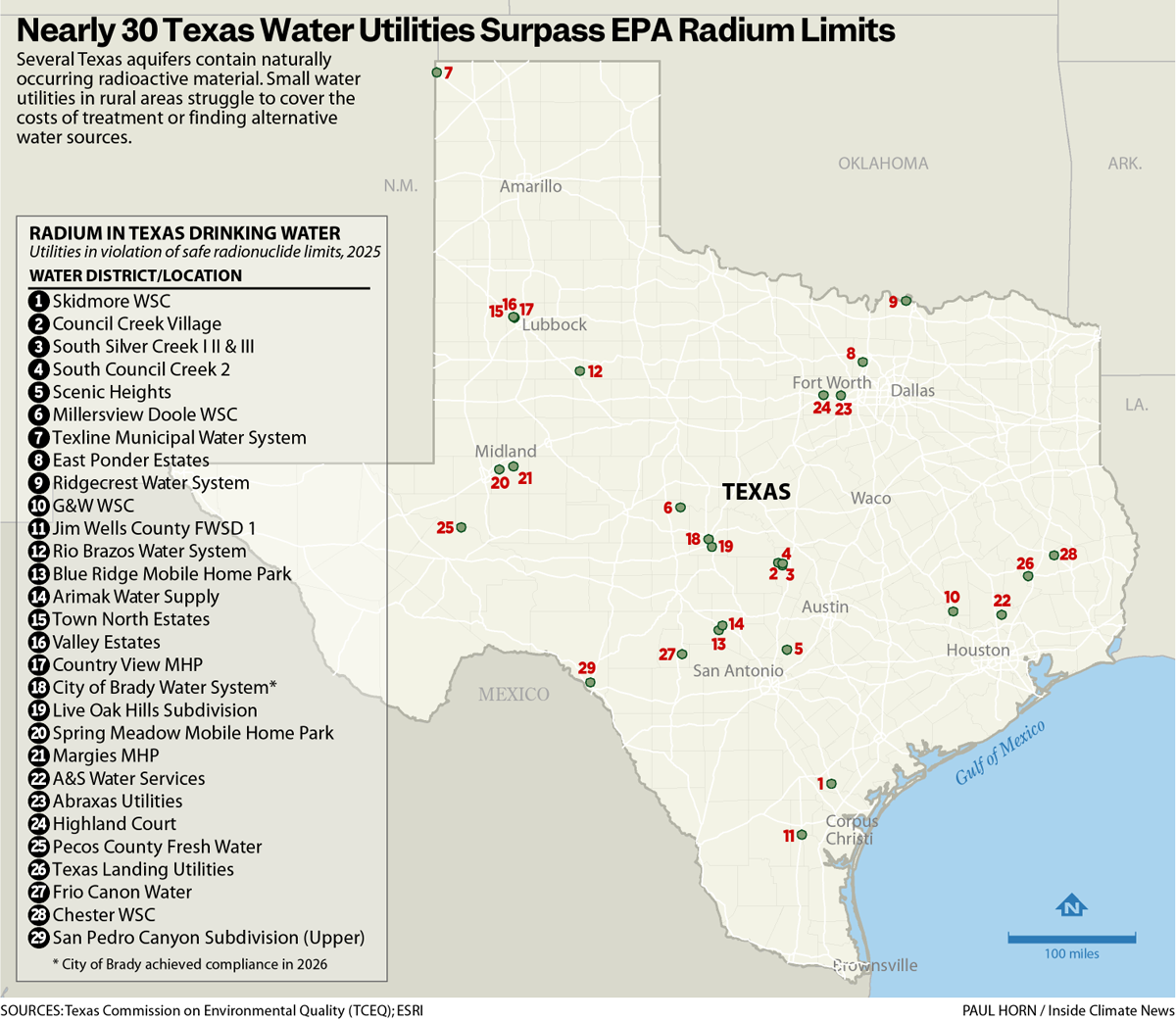
Imperial is one of many rural communities in Texas where deposits of radioactive materials dissolve into the groundwater. But small communities often struggle to pay for costly treatment technology or alternative water sources that could fix the problem. During 2025, 29 public water systems that serve more than 22,000 people in Texas violated maximum levels of radionuclides. That’s down slightly from 2018, when a report by the non-profit Environmental Working Group found that 38 Texas utilities exceeded legal limits for radionuclides.
“It needs to be fixed,” said Pecos County Commissioner Nathan Reeves, who represents Imperial. “It’s a problem that should have been dealt with a long time ago.”
Reeves said the county has been rejected for several grants to address the problem, but recently obtained some funding. Pecos County is evaluating alternatives including blending with another water source or drilling a new well. In the meantime, residents rely on purchasing drinking water 30 miles away in Fort Stockton.
“[Radiation] is especially an issue for these smaller systems that only have a limited number of wells they can rely on,” said Tasha Stoiber, an environmental chemist and senior scientist at the Environmental Working Group. “It’s a huge inequity and disparity of who is being exposed more.”
‘This Is Not an Emergency’
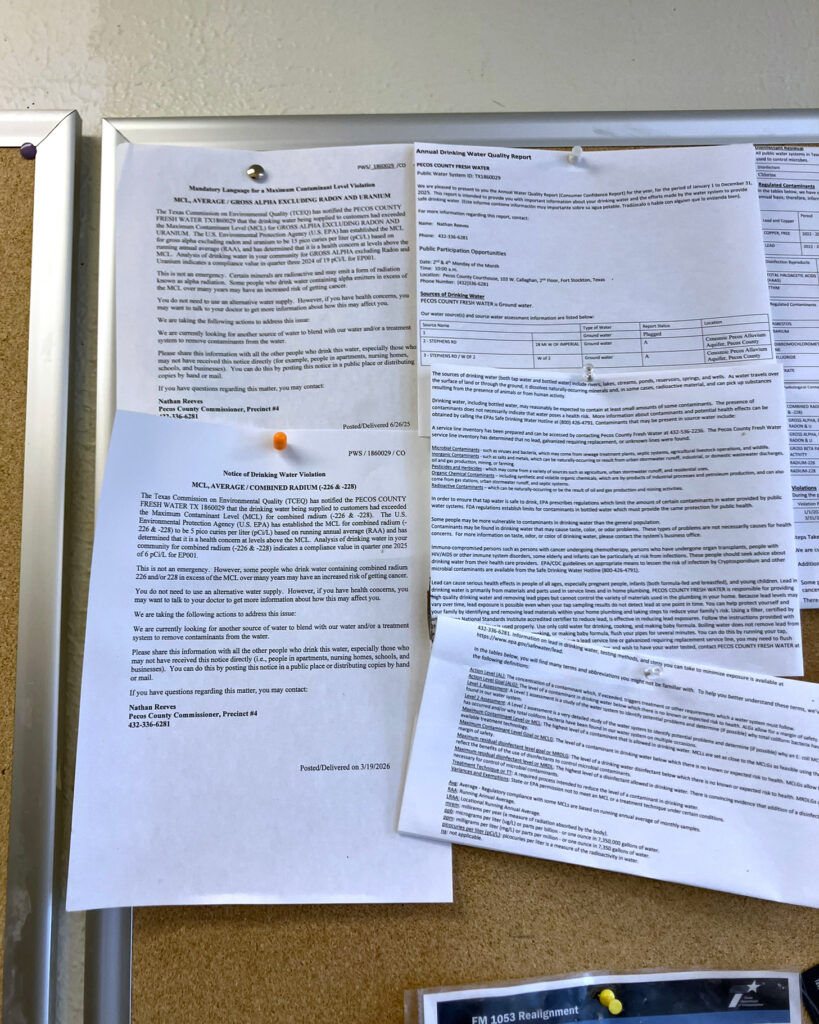
In August 2025, Pecos County Fresh Water once again notified its customers that the utility had exceeded the EPA’s maximum level for radionuclides in drinking water.
“This is not an emergency,” the notice pinned in the Imperial post office and mailed to water customers declared, explaining that some radioactive minerals in water emit alpha radiation. “Some people who drink water containing alpha emitters in excess of the [Maximum Contaminant Limit] over many years may have an increased risk of getting cancer.”
To comply with the Safe Drinking Water Act, utilities that violate drinking water standards must inform their customers with standard language. While Texas officials say Imperial’s water does not pose an immediate health risk, many Imperial residents have stopped drinking it and buy bottled water for drinking and cooking.
Claudia Pinedo serves burritos and tacos at Panchita’s Mexican Restaurant in Imperial. Much of her business comes from oilfield workers who drive through Imperial on their way to work.