As we all learned during the pandemic, washing your hands and washing them well is kind of Germ Spread Prevention 101. But that always wasn’t well known.
It took Hungarian doctor Ignaz Semmelweis’ observation, concern, and then a strong commitment to spreading the news of discovery, despite resistance, to make hand-washing a now common medical practice.
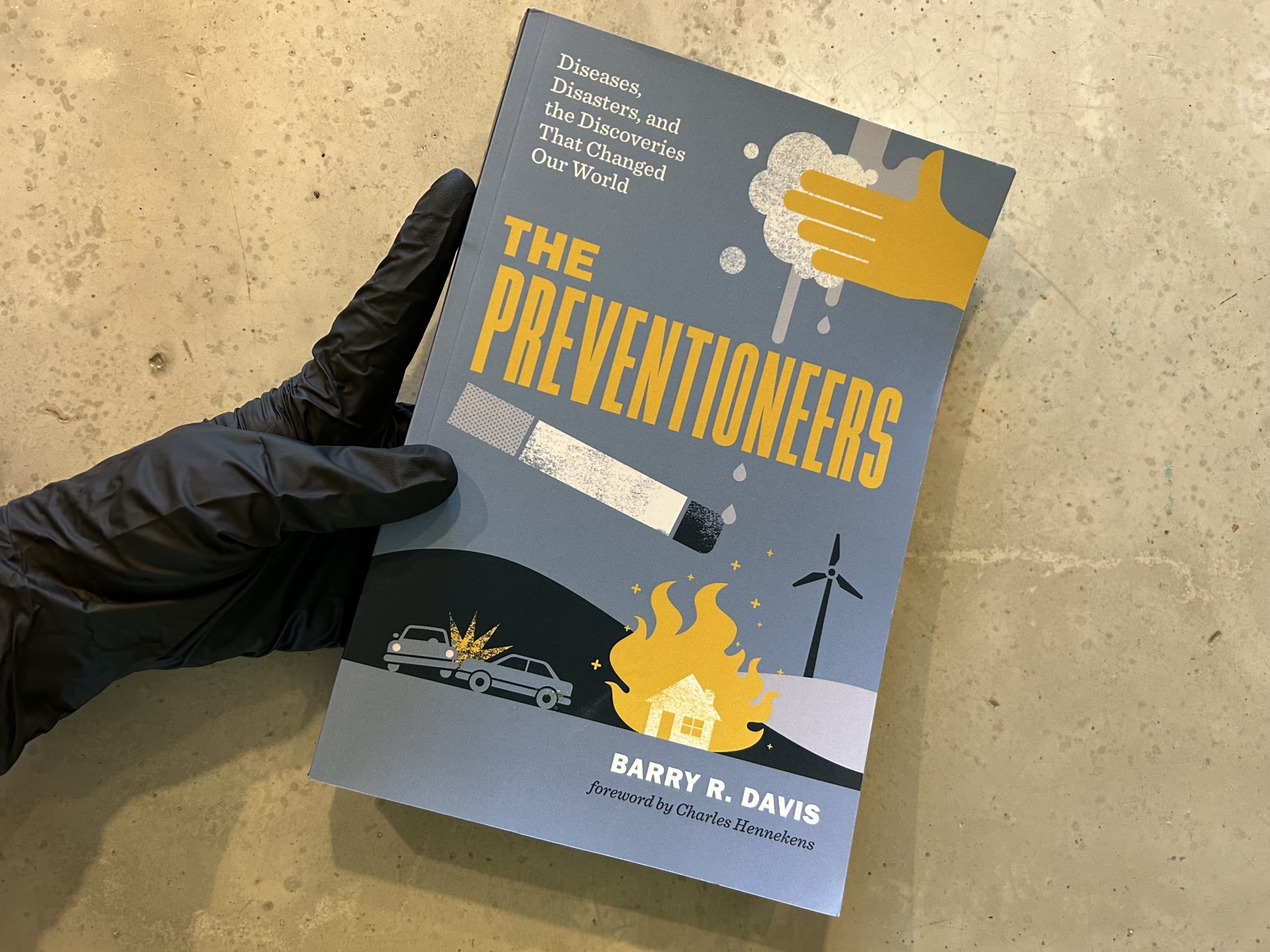
It’s one example of many in a new book by a Texas doctor called “The Preventioneers: Diseases, Disasters, and the Discoveries that Changed Our World.”
The book’s author, UT Health Houston Professor Emeritus Barry Davis wants not just to educate us about the past, but to inspire future change. He joined the Standard for a discussion. Listen to the interview in the player above or read the transcript below.
This transcript has been edited lightly for clarity:
Texas Standard: Tell me about the impetus of this book. I know your work has included clinical trials in cardiovascular disease prevention. Why did you want to go back and highlight these big moments of prevention of the past?
Barry Davis: I wrote it because prevention is one of the most powerful ideas in public health. And after decades in medicine, public health and clinical trials, I kept coming back to one question: Why do we so often wait to prevent harm until after the losses are undeniable?
Again and again, people see danger early — whether it be fire, infection, unsafe cars, smoking, high blood pressure, climate change — and try to warn society before the damage becomes overwhelming.
And I decided to write a book about the people who did something about that and about the gap that I call between warning and action.
Well, I mentioned the hand-washing example and you alluded to. Your book explores eight preventions, each in its own chapter. Is there one that you were especially passionate about highlighting?
Well, probably the first one, because that’s where I began, and the reason I began there is because of the famous phrase “an ounce of prevention is worth a pound of cure.”
Most people have heard that phrase. Some people know it’s Benjamin Franklin, but very few people know that he was talking about fire prevention and not medicine.
So it’s a very interesting story, actually starting when he was about age five. Fire destroyed most of the city of Boston, at least the central part of it. And it came within a block of where he lived.
He lived in Philadelphia and he published a newspaper called the Pennsylvania Gazette. There was a huge fire in Pennsylvania, and he decided to take all this knowledge that he had learned over the years from Boston and from living in London and he wrote himself an anonymous letter. Franklin did that all the time.
And in that letter, he used the phrase, “an ounce of prevention is worth a pound of cure.” But he also laid out, in that letter, ways to prevent fires and to suppress fires.
He started something called the Union Fire Company, which was one of the first fire companies in the United States. He actually became a fireman himself.
He invented the Franklin stove and the lightning rod, which would help to prevent fire in their own ways. So he became very committed.
» RELATED: Former CDC director’s new book aims to put forth strategy to defend against the next pandemic
Well, your book comes out as some have decried a sort of war on science as federal health policy and funding has changed under the new Trump administration. Is that a coincidence in timing?
No. One of the other inspirations was at the beginning of the pandemic when I realized that there were so many things that needed to be done even though we didn’t have a vaccine yet. And people were meeting resistance about it. I couldn’t understand that.
I realized there’s this pattern across history when people are these crusaders or pioneers of prevention, they see a preventable harm and then they to try to find a solution and translate that solution into something actionable.
You know, I could see somebody arguing back that science has been wrong in the past. I can think about something like phrenology, which was focused on skull shape, or even more recently something like blood splatter analysis, which is just not nearly as accurate as DNA.
Is it healthy to sometimes have skepticism or to demand more evidence?
Of course. That’s what science is all about. Skepticism, that’s how science progresses. But there’s a point where the science, the evidence becomes overwhelming. And it’s a question of whether you act on the evidence or you keep on waiting for more evidence.
And yeah, I present many stories in the book where people wouldn’t act on evidence right away.
In the case you brought up, Semmelweis, he’s now known for that, but actually, yeah, the handwashing, most of the story isn’t well-known, in that although he did institute that, people didn’t want to follow it, because it went against the grain of what they believed. It was causing the disease, and also because it implied that the doctors were not clean, they had dirty hands, and they didn’t like that.
But also, I mean, I talk about the tobacco and smoking. Many, many years, incredible resistance to do something about it. And people persisted and persisted and persisted and finally things happened.
It’s the same with the cars, I talk about cars too, the design of cars. Many people fought for changes in the design of cars for years, and it took a long time before something was done about it. And even today, there’s problems. People don’t do things that they should.
I mean, Texas, where you’ve spent so much of your career, I think maybe has a reputation of doing things its own way sometimes. Do you think that makes this state more ready to drive a path towards radical action in prevention, or less so?
Probably, I can answer the question is yes and no. I wouldn’t necessarily use the term “radical action.” I mean, prevention doesn’t call for radical action. It calls for just change, at least change in outlook and then maybe change in doing something.
It doesn’t have to occur immediately. It can occur over a period of time. But there are many things that occur in Texas that we have to be aware of.
Obviously, the climate, whether we have hurricanes or floods or heat, we’re aware of that and we try to do things. Sometimes it’s slow in trying to deal with it, whether we have like wildfires or stress on the electric grid.
These are things where you gotta go back and think about what can be done so that this won’t happen again. But there should also be a mindset that before it happens, what can we do? And I think Texans have a lot of spirit and they can do these kinds of things.
I could see people with science backgrounds being especially interested in this book, but who do you really hope will read it?
I hope more people will read it. First of all, the way I wrote the book, I didn’t really have much in the way of figures and graphs. It’s just chock full of stories, very interesting stories, dramatic stories.
But it also has a message to it, obviously, that prevention is, as I said, one of the most powerful ideas in public health. But its success is invisible.
You know, you don’t see the fire that didn’t happen or the stroke that didn’t happen or injuries from a car crash that didn’t happen… But people, if they have sort of a prevention mindset — maybe even not necessarily on the large scale that I’m talking about, but even in their own lives — they can think of things that they can do which would prevent bad things from happening.