Vibrant reminders: Texas Hill Country flood victim left glowing legacy in Houston’s art scene

Tim Walker, who operated the Neon Gallery for more than 40 years, died July 4, 2025, while vacationing with his family.

By Bianca Seward, Houston Public MediaJuly 7, 2026 11:32 am, , ,

From Houston Public Media:

For more than 40 years, the drive down West Alabama Street in Montrose featured a small but eyecatching shop. Passing by at night you might catch the glowing green outline of the Houston skyline, a row of vibrant pink flamingos or the silhouette of a woman in a bright red swimsuit – frozen mid-dive.

It was called the Neon Gallery and early on in its tenure became a staple of the neighborhood.

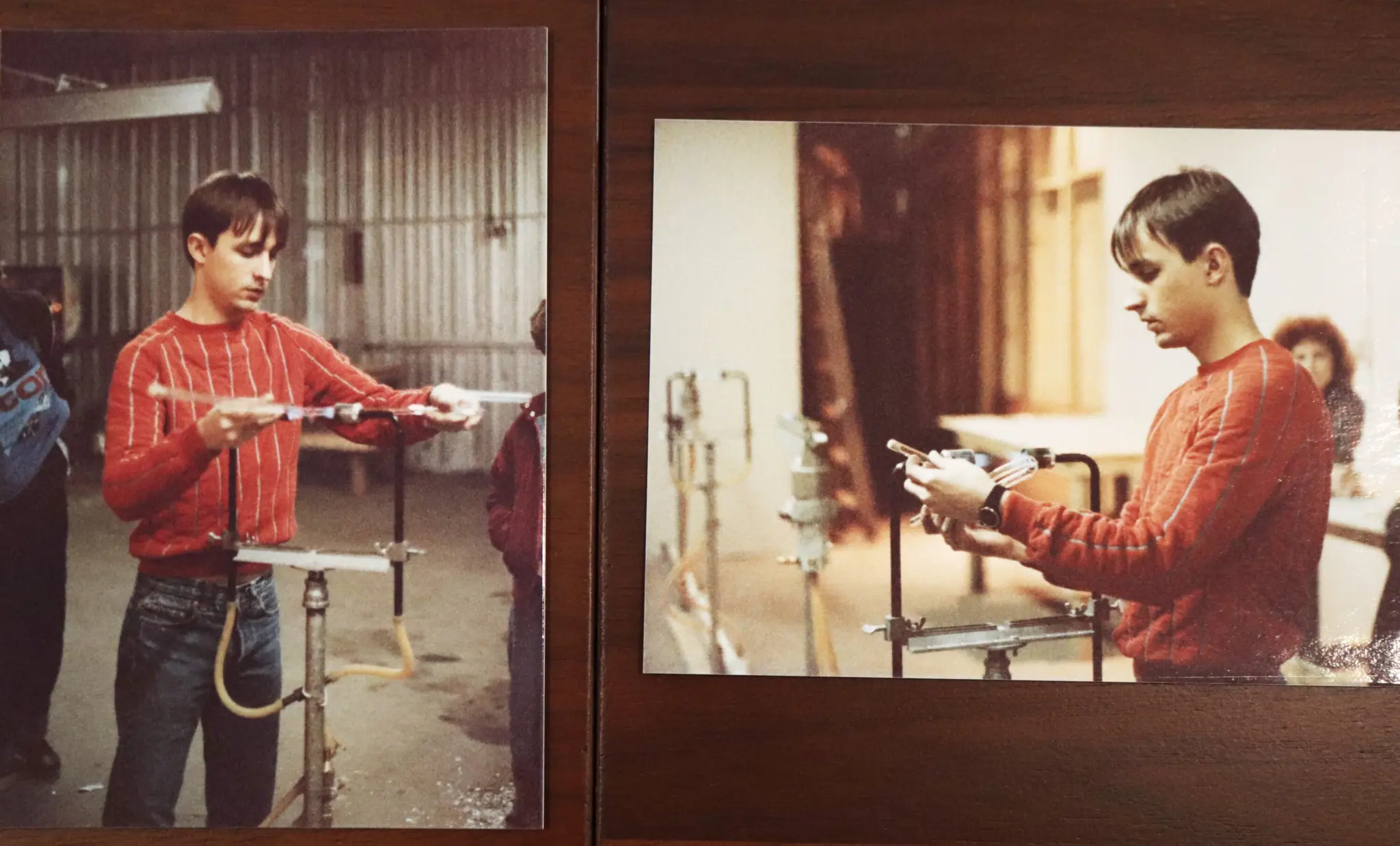
Each piece was carefully crafted by longtime Houstonian and self-taught neon artist Tim Walker. Before customers would collect their orders he would hang them in the window for the neighborhood to enjoy. He sculpted the pieces through a complex process by using extreme heat to bend glass tubes and then precisely filling the tubes with neon gas.

His daughter, Bronwyn Walker, spent years growing up in the gallery and says she loved watching her father work in the back, blaring ‘80s music and getting lost in his craft.

“He would just blast really fun music and, like, get in – I don’t know if he would call it this – but get into, like, his flow state and just do his thing,” Bronwyn said.
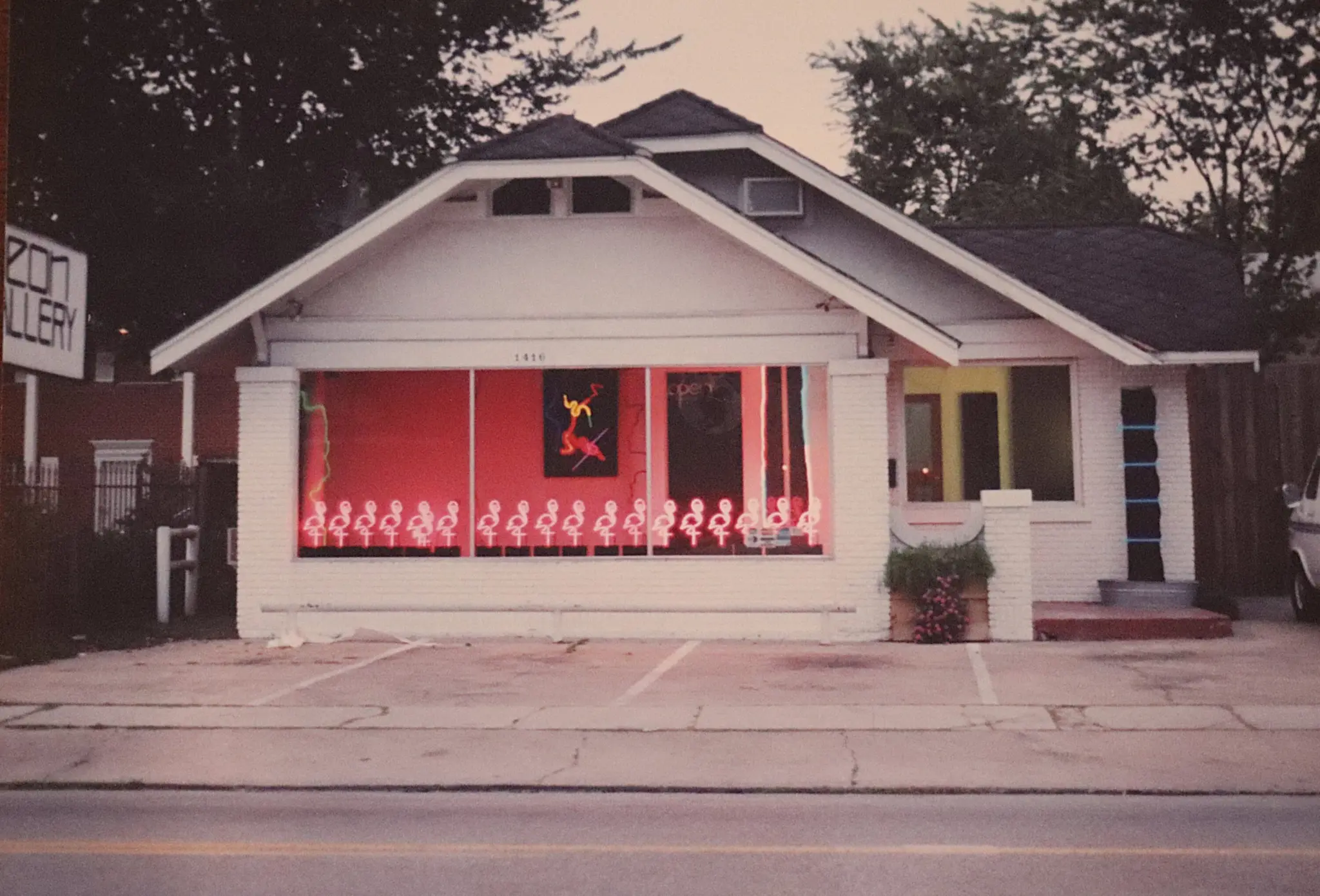
The Neon Gallery photographed in the early 1990s. Before clients picked up commissioned works, Tim Walker would hang the pieces in the windows for the neighborhood to enjoy.

Jeff Davison, a fellow neon artist and close friend to Tim Walker, says he was in a league of his own.

“Nobody better,” Davison said. “He could just make the neon dance inside of itself.”

Walker was well known for his talent. When Houston native and global pop star Beyonce Knowles needed custom neon pieces for a music video she was producing and filming in the city, Walker was the man her team called.

But last fall, the shop went dark. Now when Davison passes by, the familiar glow is gone and the gallery blends into the rest of the block.

“I don’t really notice it much,” Davison said. “You know, we still look for Tim. He’s not there.”

Walker died at age 63 last summer in the deadly Texas Hill Country flooding. His family explored options for keeping his open and looked to hire other artists who might be able to carry on Walker’s work.

But after two months, they decided to permanently close.

“The reality is nobody could really do what he did,” Bronwyn said.

‘I think he’d be at peace’

On July 4, 2025, when the Guadalupe River began to flood the Hill Country, the Walker family and some friends were asleep in their river home in Hunt, Texas. At about 3 a.m., the rain pelted hard onto their tin roof, waking Bronwyn. She says within minutes, others in the house were awake and escaping through a single window they’d broken open.

Their pillows, lamps and furniture were all floating around them.

“It was almost like an optical illusion looking out the window because it was so dark and so rainy it took us a while to understand that our windows were underwater,” Bronwyn said.

Moments after they escaped, Bronwyn says she heard the house implode. For hours they battled the deadly flood waters, with some clinging to trees and others stranded on roof tops. Slowly, Bronwyn, her son Walker, her brother Stewart and mother Suzette were rescued.

Tim was still missing. Stewart immediately joined ground search operations. Bronwyn spent her time calling hospitals, morgues and shelters, desperate for news.

On July 8, four long days after the flooding began, the Walker family received a call that Tim’s body had been found.

“We didn’t know how he’d be identified,” Bronwyn said. “But we thought that he had his wedding ring on and he did. We have it. My mom has it.”

For Bronwyn, the past year has been complicated as she grapples with grief and survivor’s guilt.

“Although I was devastated at the loss of my dad, I was genuinely surprised to be alive and so it was balancing the seesaw of your emotions,” Bronwyn said. “I think he would be at peace with how everything happened. I think he would prefer that it was him who passed over anyone else in the home.”

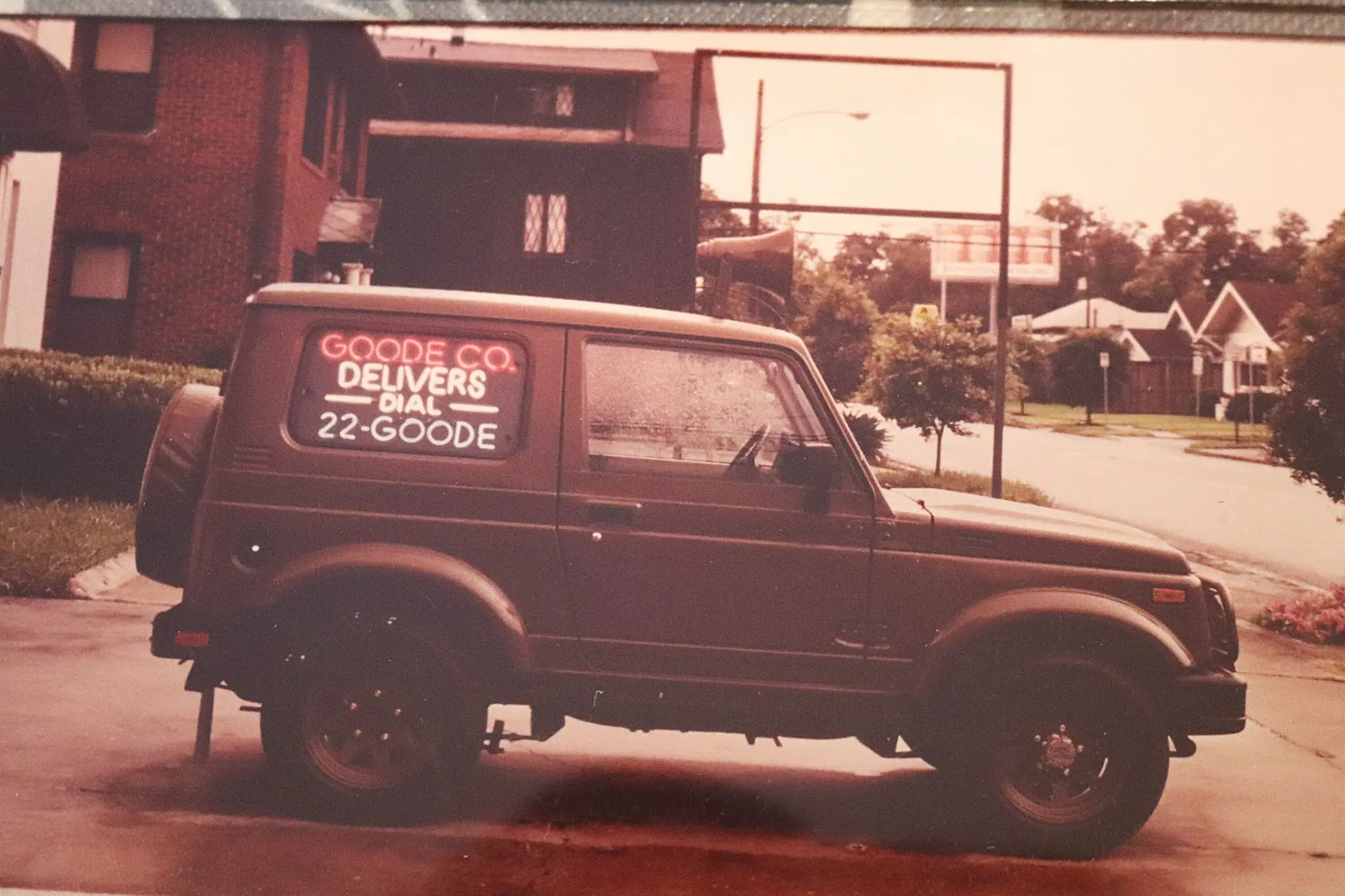
The Goode Co. Seafood restaurant was an early client of Tim Walker’s.

‘Extraordinary and unique talent’

Bronwyn describes her father as a generous and creative man who could fix anything. A man who loved drawing, designing and working with his hands. Fittingly, he was self-taught.

“What he didn’t like to do was go to school so he spent like a semester at [University of Houston] and was like, ‘Pass. No thank you,'” Bronwyn said.

That sentiment was echoed by Walker himself in an interview with Houston Public Media in 2014.

“College was not for me,” he said at the time. “I took some advice from my father that said, ‘Pick something you love and be better than anybody else.’ ”

Walker opened his shop in 1983 at 21 years old. He first took his designs to professionals to be constructed through a process called fabricating neon. He watched for about a year before deciding to tackle the craft himself.

The work is as technical as it is artistic. It involves heating, bending and shaping glass tubes at temperatures of roughly 1,200 degrees Fahrenheit before carefully filling them with neon gas to create the signature vibrant glow of the pieces. Bronwyn says her father’s arms and hands frequently had burns.

Expertise in the art form is increasingly rare.

Michelle White is a senior curator for the Menil Collection. When a massive neon sculpture was being prepared for display at the museum, they tapped Tim Walker to help them project the piece, learn how to keep it lit, and asked him what to do if something went wrong.

“He really did have an extraordinary and unique talent,” White said. “His loss only reveals how rare this skill is in our contemporary moment.”

White says Walker came many times to the museum for different projects to help consult them on best practices or fixes.

“The fact that he was across the street was pretty extraordinary,” White said. “Even more so thinking about the craft of neon within a global sense of how few shops and teams and artisans are trained in this discipline.”

Bianca Seward / Houston Public Media

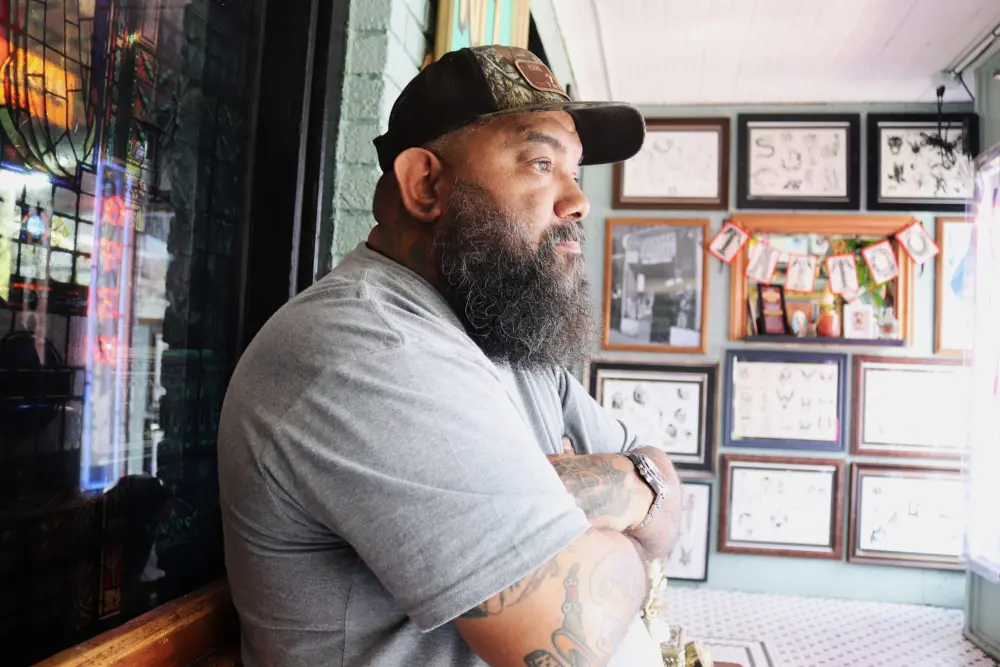
713 Tattoo owner Homer Saenz first met Tim Walker 20 years ago. He commissioned his iconic storefront neon signs from Walker.

Neighborhood landmark

Walker hired his wife, Suzette, to work with him in the shop in 1985, and they married the next year. She previously worked at the retail shop Tootsie’s and brought her own sense of design and artistic style to the gallery. Together they made the business a neighborhood landmark.

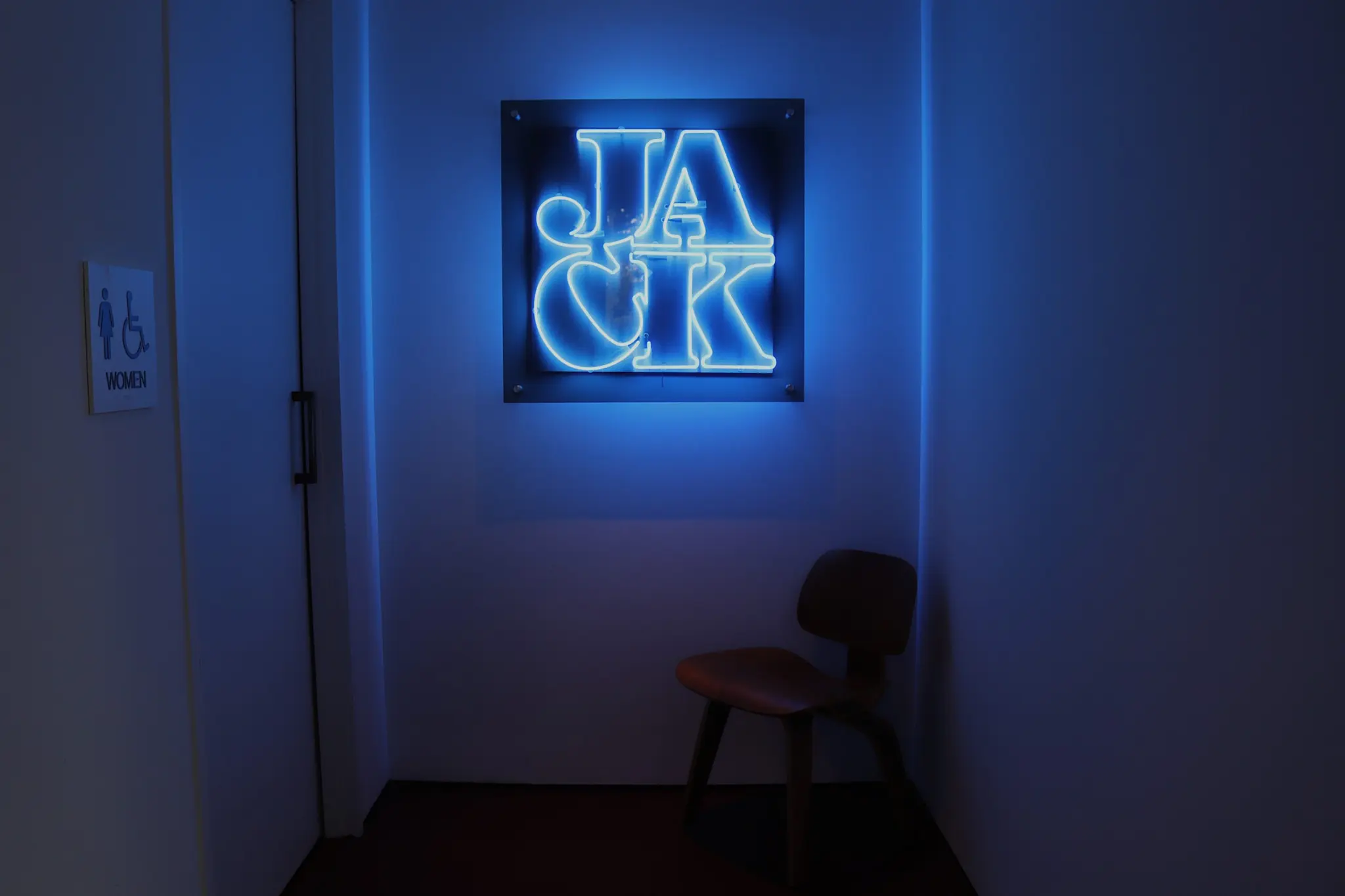
Today you can still spot Tim Walker’s signs all over the city: in Cherry Bar downtown, at the Chroma Restaurant at the Menil, inside Numbers nightclub, in the front windows of Nancy’s Hustle and Tiny Champions.

Bronwyn says she still loves to drive by the 713 Tattoo shop at the corner of Westheimer and Mandell. The parlor’s front windows are covered and outlined in her father’s work.

Homer Saenz is the owner of the shop and says he still remembers when he first asked Tim to make his signs nearly 20 years ago. Saenz says when he learned of Tim’s passing, he drove over to the shop and began to cry, standing in the glow of the neon art.

Over the years, Saenz commissioned multiple pieces from Tim. Just two days before the floods, he sent Tim a sketch for a new sign he hoped Tim would build for him.

“It’s a big loss because this area of town is kind of dying out, you know, with the art that came with this part of town,” Saenz said. “I’m glad that I still have this stuff. You know, I’ll never get rid of it.”

He hasn’t looked for another artist to complete the work. He says there is no one that can do it quite like Tim Walker.

Walker’s close friend and colleague, Davison, agrees. When Walker passed he had several pieces still in production for the Kirby Ice House.

Finishing them fell to Davison, who says the responsibility carried a heavy weight.

“Pressure,” Davison said. “A lot of pressure. I tried to make it look good for his sake. It was definitely more than I was used to handling.”

Most of the pieces Tim made were commissioned and shipped to clients when completed, so the family has limited pieces still in their possession.

Though Bronwyn says sometimes it can be painful for her to see her father’s work around the city, she’s mostly grateful for the reminders.

“I’m lucky to have so many opportunities to be reminded of my dad and his work,” she said. “It makes me smile when I see it.”

Bianca Seward / Houston Public Media

Tucked in a corner at the Chroma restaurant at the Menil is a custom Tim Walker piece. Walker created the piece for the owner’s son. It was recently hung in the restaurant for public display.

If you found the reporting above valuable, please consider making a donation to support it here. Your gift helps pay for everything you find on texasstandard.org and houstonpublicmedia.org. Thanks for donating today.