From KUT News:
Tommy Minyard remembers University of Texas at Austin officials laughing at him when his team requested more space for their data center on campus back in 2005. He needed 15,000 square feet and 10 megawatts of electricity — enough energy to power roughly 5,000 single-family homes.
“They said, ‘No, no, no, we’re gonna give you one megawatt of power and 5,000 square feet,’” said Minyard, the director of advanced computing systems at the Texas Advanced Computing Center (TACC). “We filled up the one megawatt of power the next year.”
More than 20 years later, TACC is expanding its footprint again. Minyard’s team is constructing a new data center in Round Rock, which he said will be like going from a block of homes to a small city.
Data centers — facilities that house massive computers used for things like data storage and artificial intelligence processing — are popping up everywhere. The TACC’s new facility is one of nearly 250 being planned for the state, according to an analysis from The Texas Tribune. Even if they don’t all pan out, Texas could surpass Virginia as the state with the most data centers in the U.S., according to a report from real estate firm JLL.
AI data center proposals have sparked uproar in city council meetings and door-to-door neighborhood protests. A recent Texas Politics Project poll found 42% of Texans “strongly oppose” data centers.
This led KUT News to ask some questions. What actually is a data center? Why are so many of them coming to Texas?
To find out, we requested tours of several data centers in Hays, Travis and Williamson counties. Most companies either declined or did not respond. But the TACC let us peek behind the curtain.
But first … a brief history
Data centers are getting bigger and more powerful, but they aren’t anything new.
The first data center in the country was built by the U.S. Army in 1946 for military defense projects. In the late ‘90s and early 2000s, they started popping up all over the country, including in Texas, to support cloud computing as the world shifted from relying on jump drives and floppy disks to remote servers on the internet.
Data centers have also been built to support complex science, but for years, a primary function of data centers has been to store information — everything from bank transactions to medical records to memes shared on social media.
But there’s a reason why you might just be learning about data centers now. More companies are investing in data centers that support artificial intelligence, which demand more land, power and water.
Inside a data center
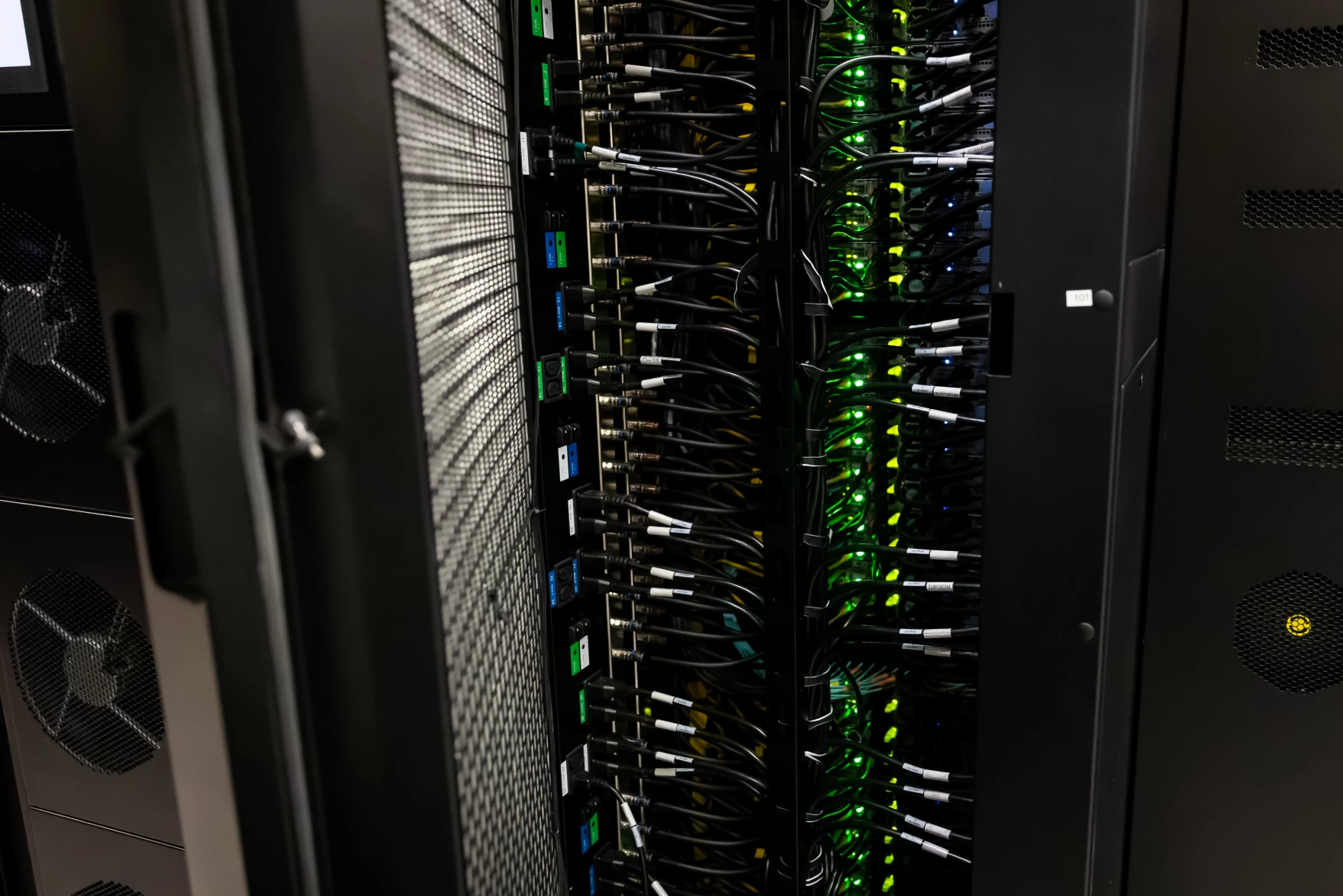
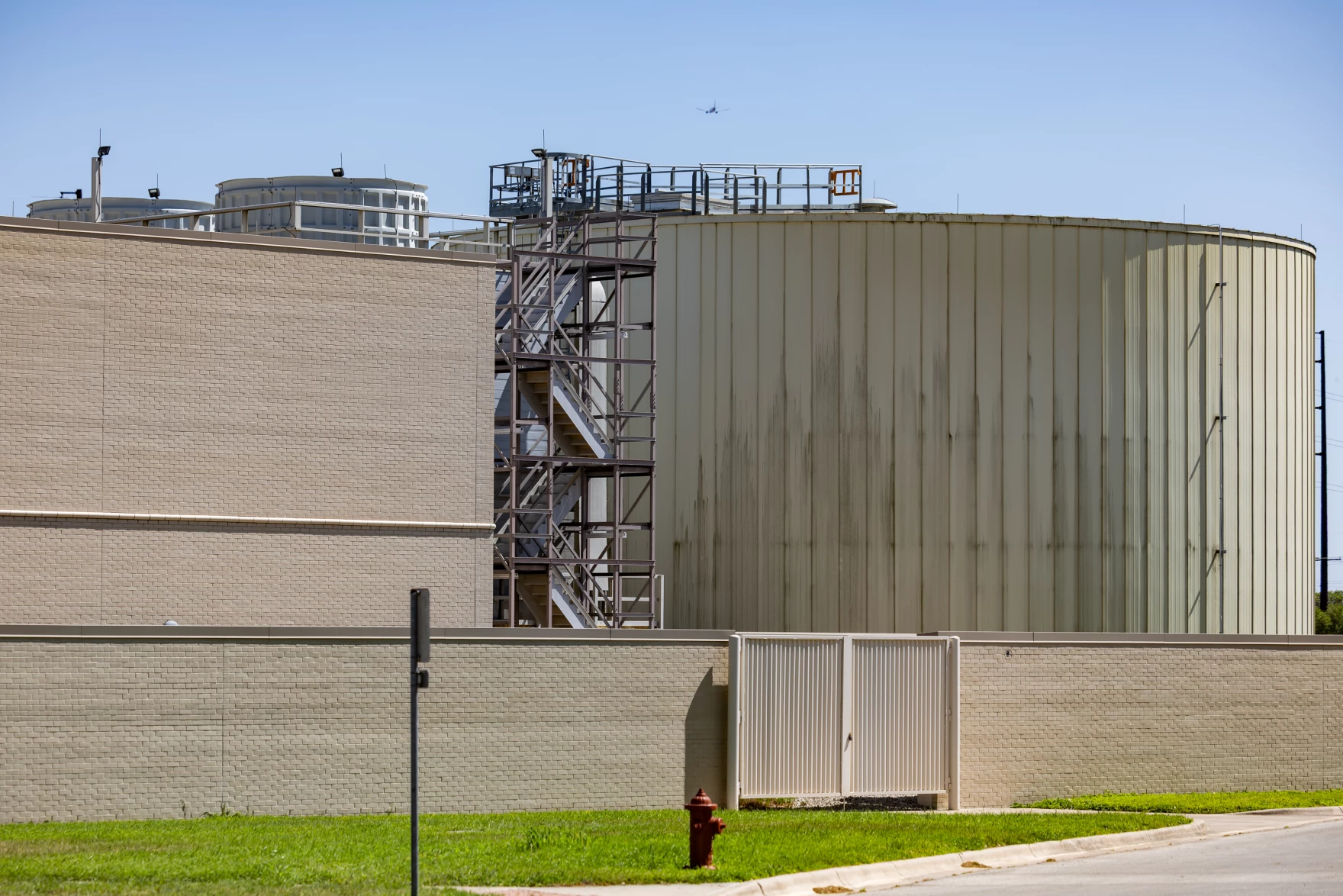
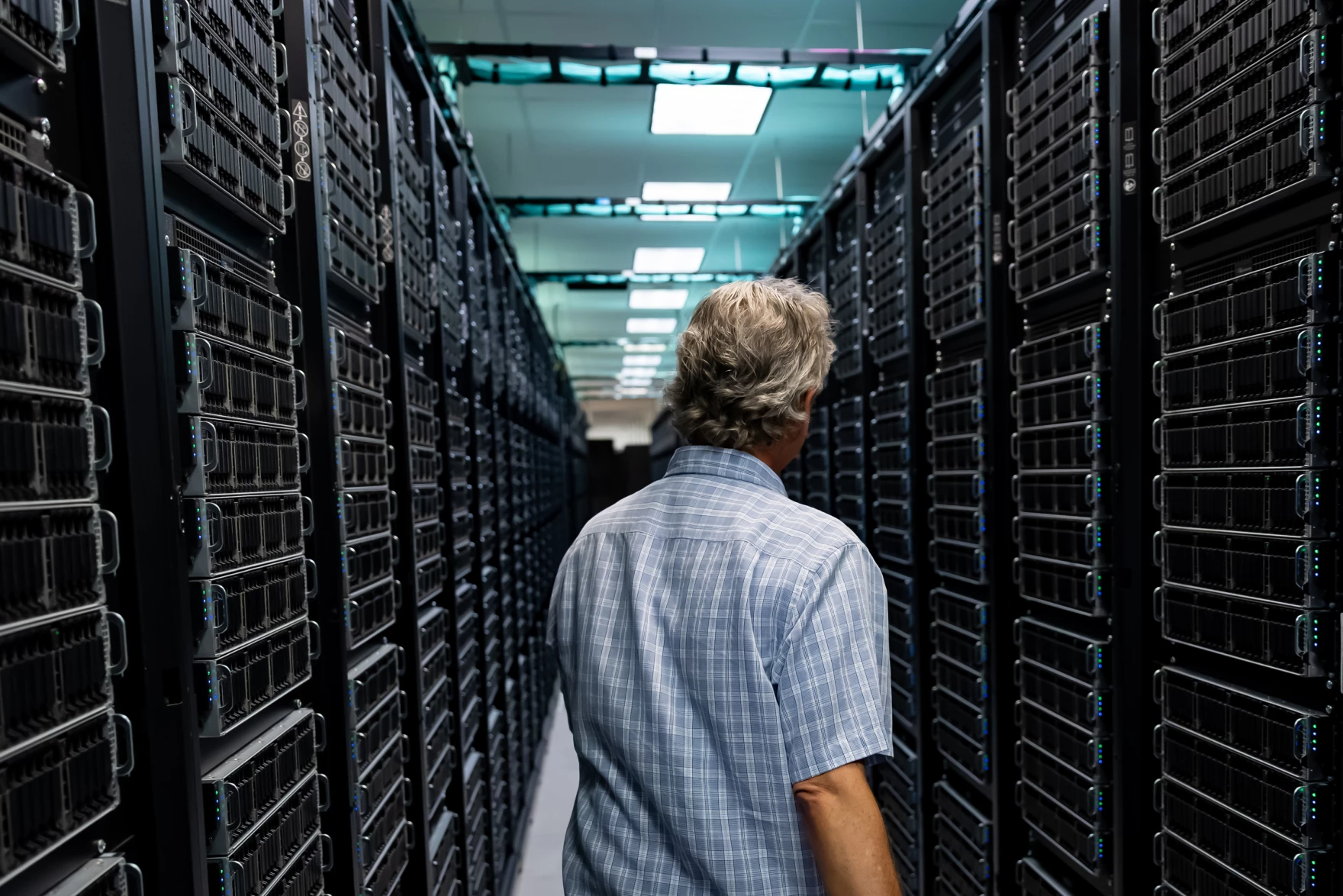
On the outside, the TACC just looks like a warehouse. But on the inside, it looks like something out of a sci-fi movie. Rows upon rows of computer servers are stacked on top of each other throughout the room. The servers are densely packed and constantly running.
It’s painfully loud inside. The noise is generated by over 500 fans working to cool the stacks of machines, which generate heat — like your laptop after working all day without a lunch break — that needs to be dissipated for the servers to function properly.
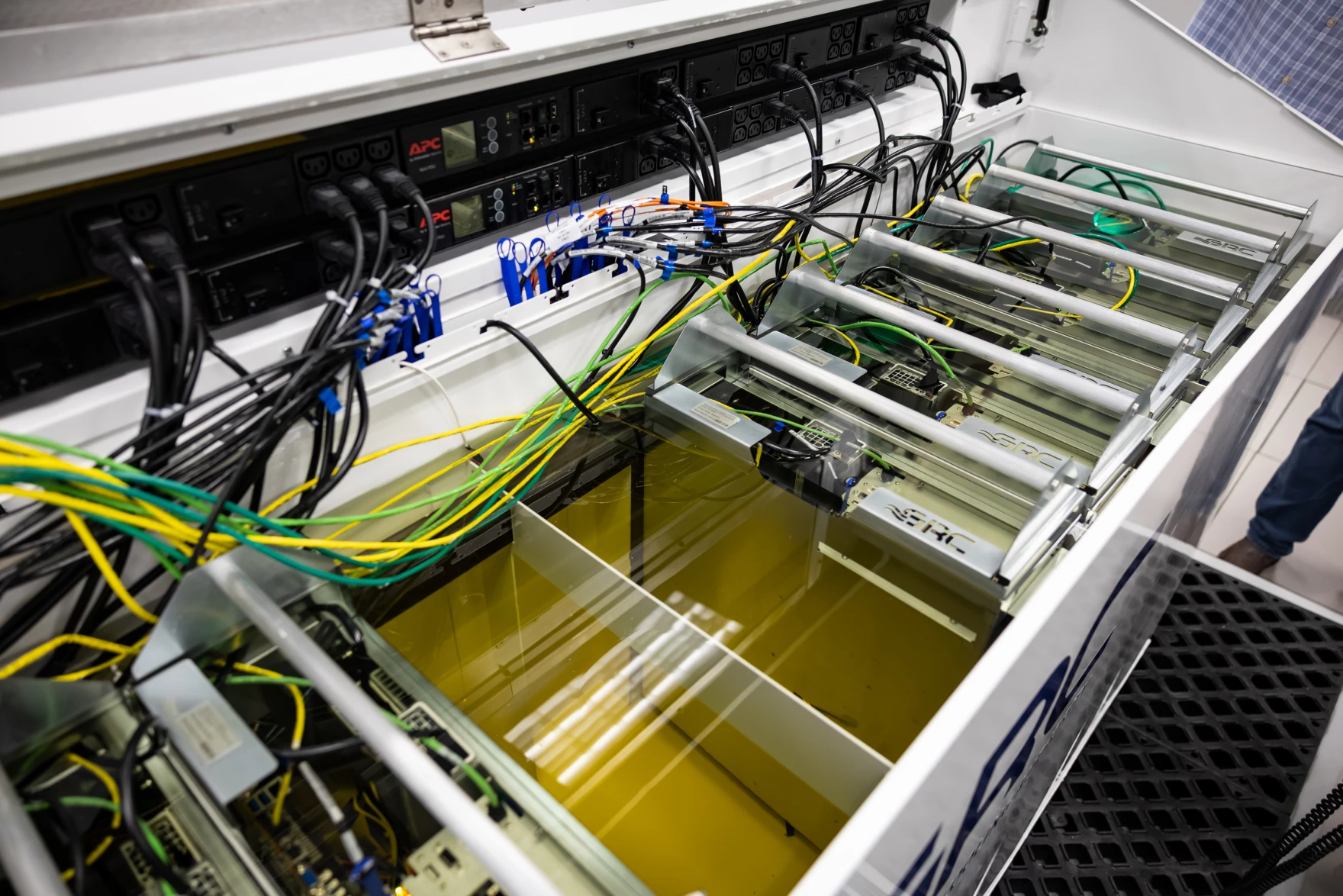
Minyard said the heat generated by computer servers is a main challenge for data centers. The servers need to be cooled somehow, and big environmental trade-offs come with each option.
Air cooling with fans is loud and requires a lot of electricity. Evaporative cooling uses less electricity, but it’s noisy and water intensive. Minyard said TACC experimented with using solar panels on the building’s roof to power some of its servers, but found they only generated enough electricity to power three of its server racks — a tiny portion of the data center.