Breakaway border buoys disrupt Rio Grande bridges during Texas flooding

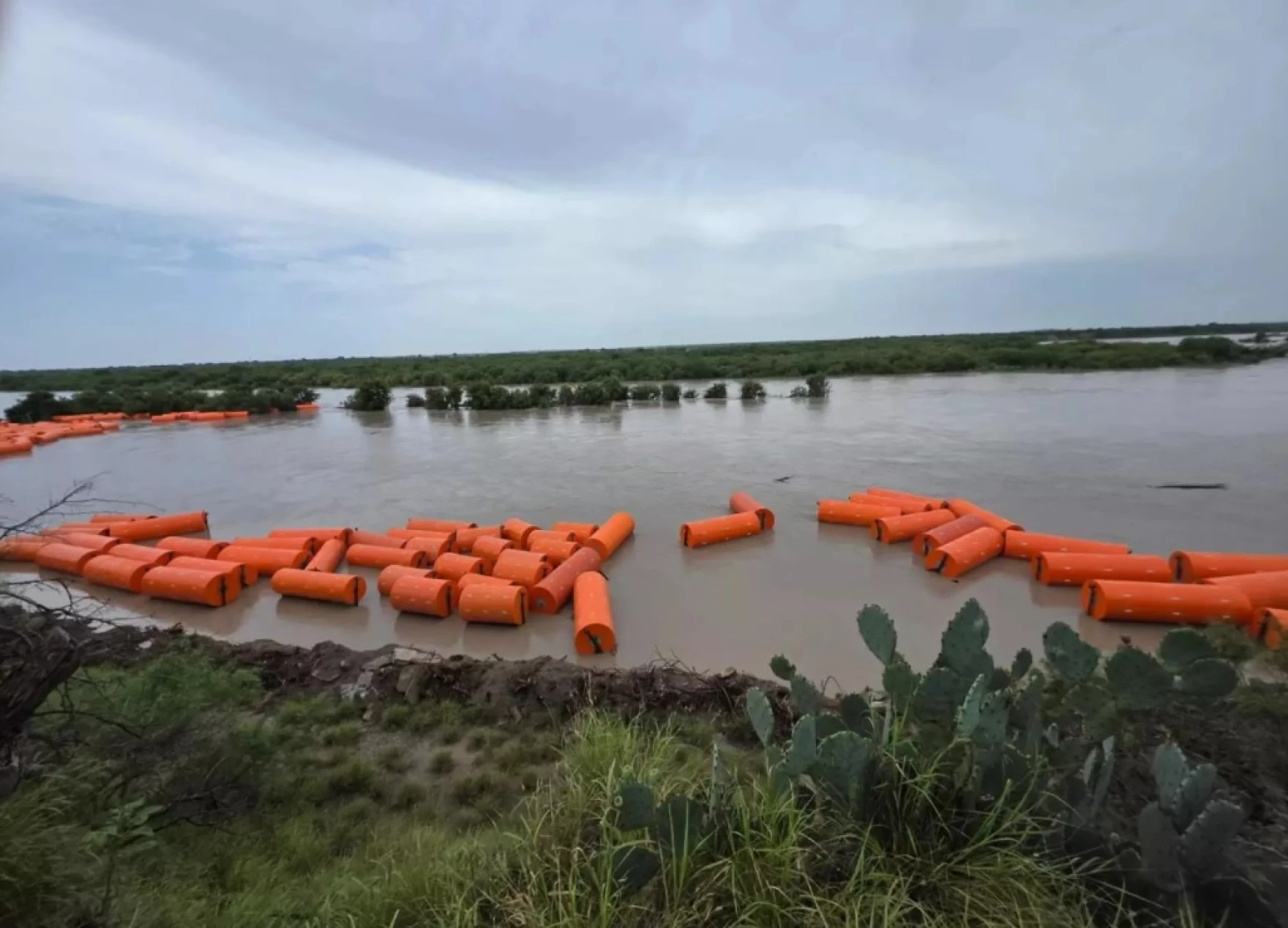
Hundreds of federal border buoys broke loose during recent flooding along the Rio Grande, disrupting traffic at international bridges and intensifying concerns that the floating barriers could endanger critical infrastructure and public safety.

By David Martin Davies, Texas Public RadioJuly 24, 2026 9:30 am, ,

From Texas Public Radio:

Hundreds of federal border buoys broke loose during recent flooding along the Rio Grande, disrupting traffic at international bridges and intensifying concerns that the floating barriers could endanger critical infrastructure and public safety.

The high water was the first major test of a floating border barrier installed by the U.S. Department of Homeland Security. The system consists of interconnected orange cylinders that are approximately 15 feet long, four feet high and weigh about a ton each.

“The buoys were definitely in the water, could not be retrieved and were on their way down the Rio Grande,” said Amerika Garcia-Grewal, co-director of the Frontera Federation and an Eagle Pass resident who has been tracking the barriers.

Officials in Eagle Pass temporarily stopped traffic on the city’s two international bridges as the buoys passed underneath.

Eagle Pass is also home to about 2,000 feet of a separate floating barrier installed by Texas Gov. Greg Abbott under Operation Lone Star. Those spherical buoys have been in the river since 2023.

Abbott said during a news conference that the state’s barrier remained in place during the flooding.

“The state buoys remain intact where they were located initially and have not moved,” Abbott said. “They’re being reinforced as we speak to make sure they’re not moved.”

Although the state buoys did not float downstream, Garcia-Grewal said parts of the barrier appeared damaged and partially dislodged after the flood. She described the front of the barrier as curled inward “like a fiddlehead fern” and said its unsecured rear section was moving back and forth in the current like the tail of a dog.
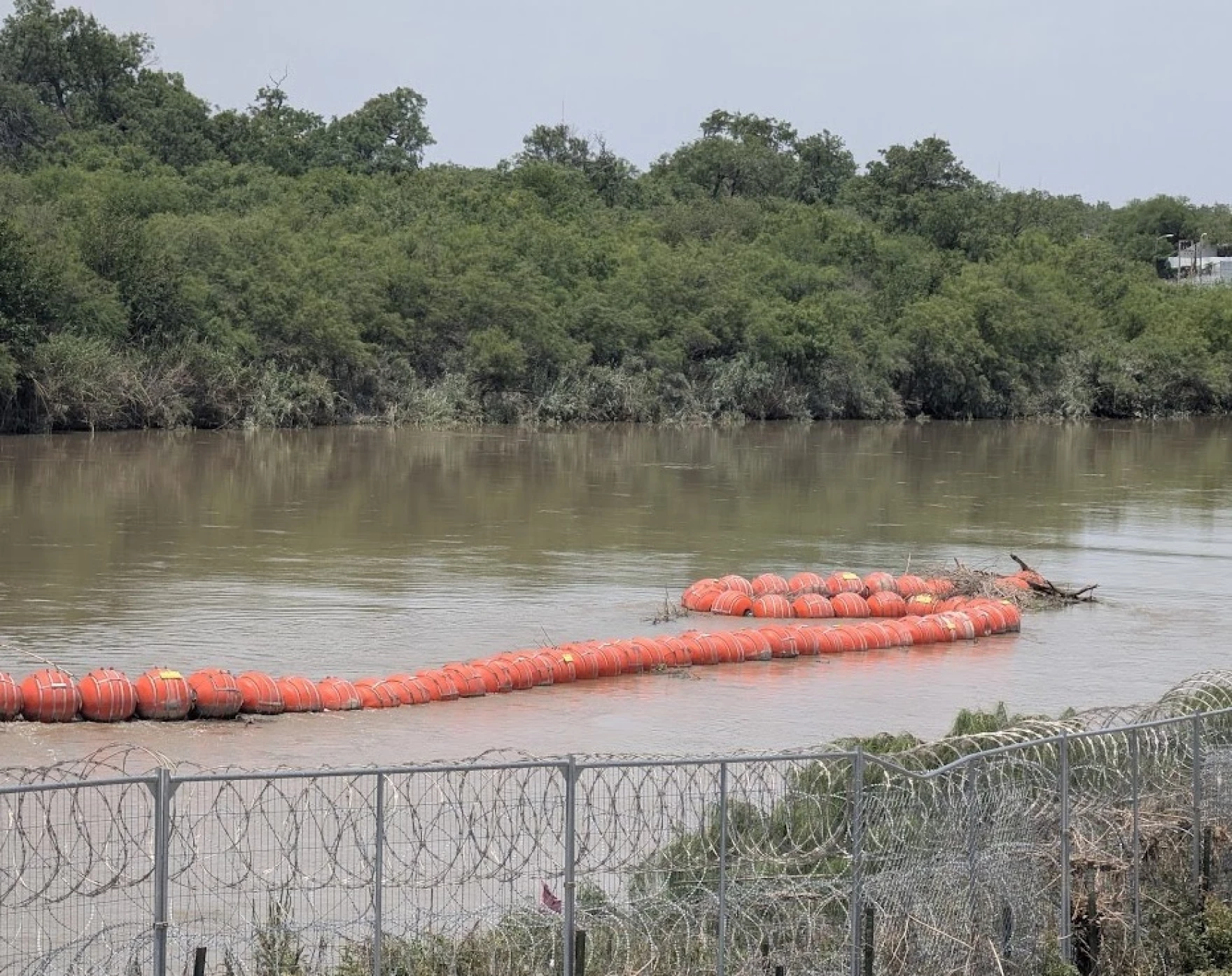

Texas border buoys damaged after July 2026 flood.

She said the damage raised concerns that some of the state buoys could eventually break free and become another downstream hazard.

That is what happened to an estimated 600 federal buoys in the Eagle Pass area.

“It’s such a fiasco,” said Tricia Cortez, executive director of the Rio Grande International Study Center.

Cortez said many of the federal buoys became lodged in the river. Others crossed into Mexico, where some were reportedly recovered by residents and sold as scrap metal.

Her organization warned about the potential danger when the Trump administration announced plans to deploy hundreds of miles of floating barriers along the Rio Grande.

“All of this was already predicted,” Cortez said. “Our organization commissioned a risk assessment of the wall and buoy system here on the Rio Grande.”

The assessment found that floodwaters could break the barriers apart and send the heavy buoys downstream, where they could strike bridges and other infrastructure.

That concern became a reality in Laredo when dislodged buoys became trapped against support columns beneath the World Trade Bridge.

Laredo Mayor Victor Treviño said officials temporarily stopped traffic so the bridge could be inspected.

“Because the buoys were lodged under the bridge, that was concerning to us,” Treviño said. “So, we had to pause traffic.”

The World Trade Bridge is one of the country’s busiest commercial crossings. Treviño said approximately $1.2 million in trade passes through it every minute.

“That is important to the economy of the United States — all the merchandise that goes through,” he said.

Inspectors found no damage, and traffic resumed. But Democratic U.S. Rep. Joaquin Castro of San Antonio said the incident could have had a much worse outcome.

Castro called the floating-border-wall-project poorly conceived and badly executed. He is seeking a congressional investigation into the contracts, the failure of the barriers and what federal officials will do to prevent a similar incident.

“This work was done in a shoddy way, obviously,” Castro said, criticizing the contracts awarded for the project.

Castro also questioned whether the barriers have had any meaningful effect on unlawful immigration.

“This whole thing was a big show,” he said. “It was done completely incompetently.”

Treviño also questioned the need for the buoys, saying unlawful river crossings near Laredo have become rare. He said his greater concern is what the barriers could do during the next flood.

“Now we have real-time evidence,” Treviño said, “of what happened with the buoys when they got dislodged.”

U.S. Customs and Border Protection said in a statement that contractors are working to recover the remaining buoys. The agency did not say whether it plans to redesign, reinforce or reconsider the floating barrier system before the Rio Grande floods again.

If you found the reporting above valuable, please consider making a donation to support it here. Your gift helps pay for everything you find on texasstandard.org and TPR.org. Thanks for donating today.