What survives when civilization begins to fall apart? Relationships, human connections, a sense of who we truly are? Our stories?
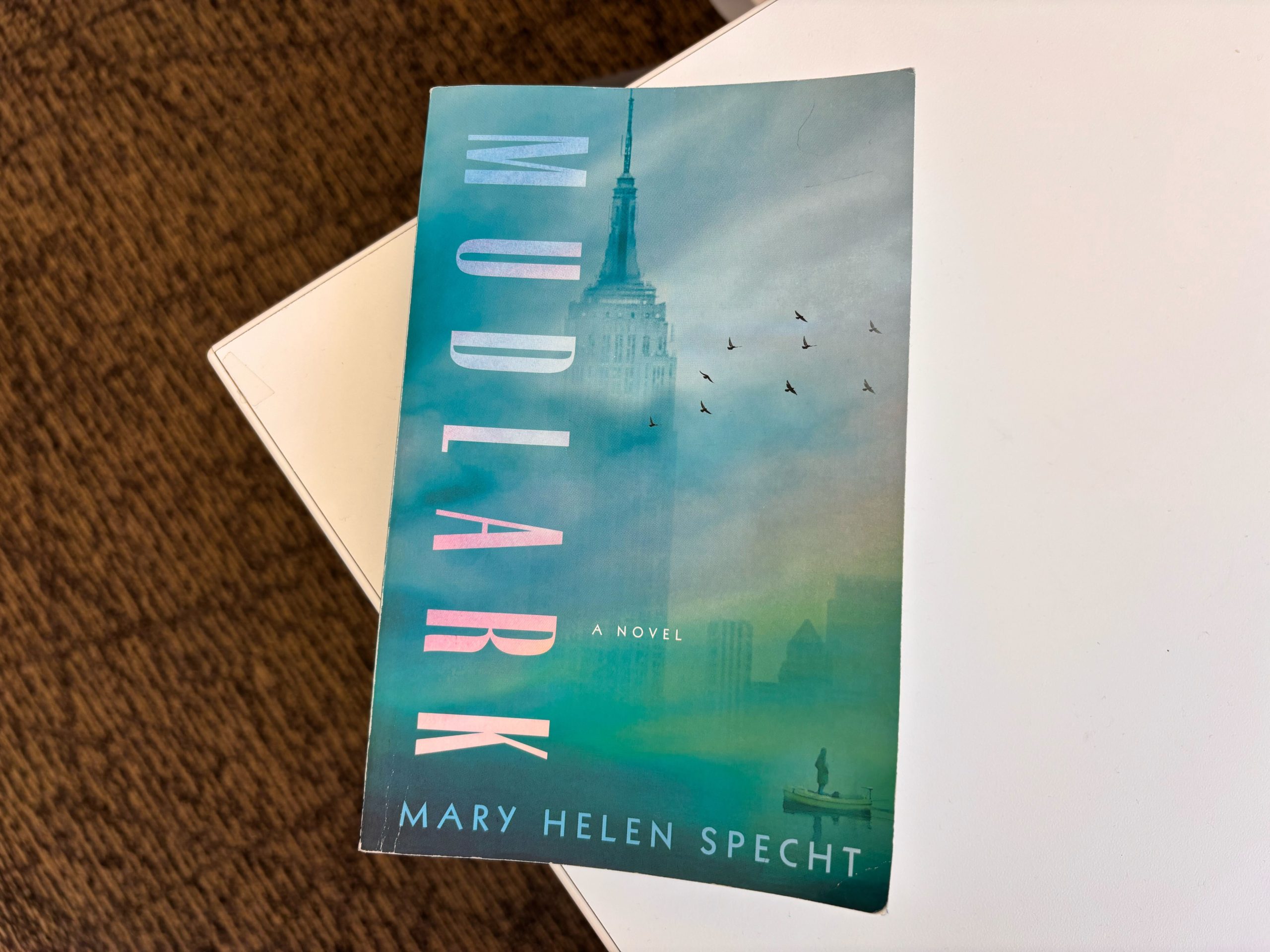
These questions and more underpin the narrative in Texas-based writer Mary Helen Specht new dystopian book “Mudlark: A Novel.”
In the book, a troubled rock musician loses her teenage daughter during a chaotic final performance at Burning Man. 25 years later, that daughter is scavenging the flooded ruins of Manhattan when she discovers the master recording of her mother’s lost solo album. She discovers something else, too: Evidence that her mother might still be alive.
Specht joined the Standard to share more. Listen to the interview in the player above or read the transcript below.
This transcript has been edited lightly for clarity:
Texas Standard: How far into the future are we talking about here? I guess the are really, temporally speaking, sort of two times. There’s Burning Man, and I guess that’s in the more not-too-distant future, is that right?
Mary Helen Specht: Well, the Burning Man sections are actually set right before the pandemic. But basically the present. And then the future sections are 25 years in the future when Neko, the daughter, has kind of grown up and become a mother.
Tell us more about the mother, Jenny. She seems to be going through a lot.
Well, so if you’re a writer and you make the mistake of saying that at a party, people are always telling you, “oh, I have a story for you.” And usually they are great stories, but writers usually pick something kind of more personal as a reason to kind of delve into a novel.
But I did have a friend of mine, a college roommate, who was like, “you know what? You should set something at Burning Man.” And I said, that’s ludicrous. There’s like a lot of sand there, a lot people. That sounds like a horrible place for me, although I have a lot of friends that are Burners.
But for some reason, the next week, I just found myself sitting down and starting a scene with this indie-rock, cult-favorite musician playing a set that she didn’t really want to be playing at Burning Man, and her daughter goes missing. And I wasn’t sure what that was going to be or what was going be happening, if this was even going to a book. But that’s where it began.
And for Jenny Sweet, her band is breaking up. Her marriage is breaking up. So there’s kind of a lot that is fracturing for her in this moment and then she can’t find her daughter and she’s in this kind of crazy, apocalyptic kind of landscape that is Burning Man.
And then I wasn’t sure where the novel was gonna go and I ended up having a kid and I started thinking about my kid and what her future was gonna look like, especially with climate change happening all around us. And I started to realize, I think the book is actually about the kid when the kid grows up, having to experience this kind of underwater Manhattan, having to come to terms with her own mother and her own parents.
I’m wondering on a deeper level, beyond even climate change, if you’re sort of speaking to some other present-day anxieties or realities that sort of help you illustrate that world that Neko, Jenny’s daughter, is trying to navigate.
Well, Neko, one of the things she’s really interested in — and her job as a mudlark, kind of scavenging — is to find things that she considers the Real: Basically things that are like analog, concrete things you can hold in your hands.
I’m a professor at St. Edward’s University in Austin and I’ve been noticing the last number of years, my students becoming more and more interested in the analog, the Real. They’re wanting to like knit in class, to make zines, getting frustrated with maybe the kind of technology that they’ve grown up with.
And I’ve loved kind of seeing that. I see a hunger in them for wanting to write stories without asking a chatbot how their sentence should be finished, right? That sense of how ephemera can tell a story, objects can tell stories. And I think some of the best fiction tells stories through objects as well, through the physical world.
So that’s another thing that I’ve really been kind of obsessed with and thinking about. It’s kind of also fun to imagine the objects in our world becoming like the vintage of tomorrow.
Yeah, for sure. In fact, when I first heard about your book, I recalled some YouTube videos that I saw not that long ago. There were people doing this, they were mudlarking on the Thames. They were basically, you know, going into that damp, wet muck that’s right along the banks.
Have you seen any of those videos sort of unearthing these Edwardian spoons and all kinds of little trinkets from London’s past and trying to put the pieces together?
Yes, absolutely, it’s so fascinating. Yeah, the word “mudlark,” I definitely didn’t come up with it. It comes from Britain.
My aunt who was an artist a number of years ago traveled there and went mudlarking along the river and she brought back this kind of clay pipe for me. And that’s kind of when I also started going down the rabbit hole of the people who go and kind of scour the banks of the river to find old coins from the time of Henry VIII.
And because of the special conditions — the Thames is like a rare tidal river — and the special conditions mean that things are preserved in this anaerobic mud. So you can even find like leather slippers from like hundreds of years ago.
And so that was an inspiration for my partially flooded Manhattan. The East River is coming down into the ocean, which could potentially kind of create a similar kind of environment for my character to be mudlarking.
And I mentioned Neko’s discovery of this recording and it sort of got me thinking about what art can do in a way that maybe formal history sometimes can’t, you know what I mean?
Yeah, and I mean, writing about other art forms is challenging. I think there’s that saying about like, “dancing about architecture.”
But yeah, I just kind of can’t help myself because music in particular is a type of art form that I feel like marks different eras of our lives. It’s kind of connected to moments of our memories, our relationships in a really special way that was kind of important for me to explore in this novel.
Jenny, her solo album is essentially a way that she is trying to communicate with her daughter in a way that she can’t through normal channels. And so for me, it was really kind of important for the music aspects to be a really big throughline in the novel.
We see that Jenny Sweet thinks in music. When she sees something, often a soundtrack begins in her mind. This is kind of her own way of trying to kind of communicate a love that she has a hard time communicating in other ways.
You know, you were telling me that you’re from Abilene, and Abilene is quite a music-rich community as a lot of Texans know. Are you an indie rock fan yourself? I gotta think yes since you’ve named one, I mean, main protagonist here, Neko, and I thought of Neko Case immediately.
Yes, I grew up in Abilene. My father collected records and was really into music. It was kind of actually embarrassing sometimes to have a dad who would know about the cool music before I did.
But, you know, this was also the ’90s, I would like send off to like Kill Rock Stars and they would like mail me things to listen to. And then when I was in college, I was a DJ at the college radio station in Houston, was playing very weird, amazing music.
And so it’s always been a big part of my life. And then I’ve lived in Austin for a number of years and, of course, the live music here is always an inspiration to me.