Fort Worth is burning more land. More diverse plant life is the result

In the past, most controlled burns were at Fort Worth Nature Center & Refuge. Now the city has expanded the prescribed fires to other areas.

By Nicole Lopez, Fort Worth ReportJune 3, 2026 9:15 am,

From Fort Worth Report:

Fort Worth is burning more land — and officials are seeing more growth and plant life because of it.

Burn seasons are broken up by time of year and climate conditions.

Between December and February, the city broke a record by treating 1,000-plus acres of natural areas to prescribed burns, more than any other “burn season,” said Jared Hall, Fort Worth Nature Center & Refuge natural resource supervisor.

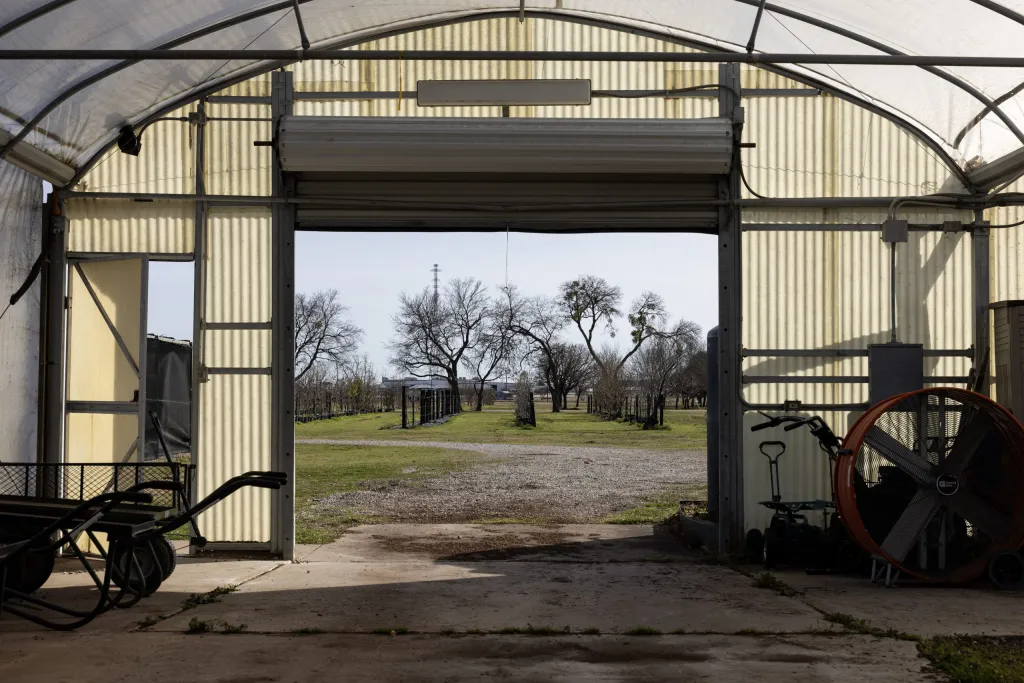
That record included 1,036 acres at the nature center and 8 acres at the Rolling Hills Tree Farm, where Fort Worth staff grow and tend to trees before they are distributed.

This comes after 83 acres were burned last summer. During that season, officials burned 10 acres at the nature center, 71 acres at Rock Creek Ranch Park and 2 acres at the demonstration prairie site outside of the Botanical Research Institute of Texas.

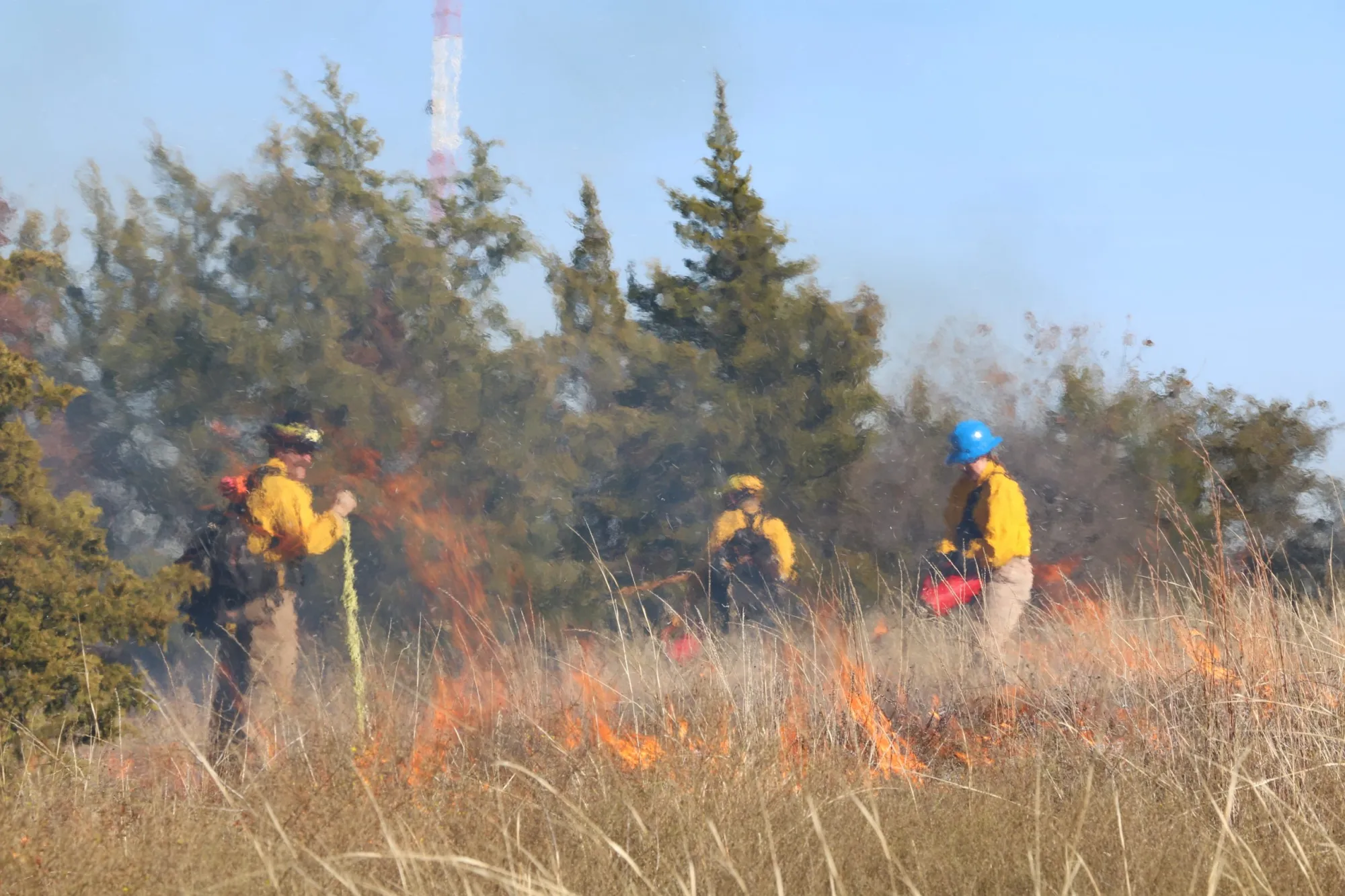
Burn treatments, also known as controlled burns or planned fires, are designed to restore natural land, encourage biodiversity, clear invasive plants and prevent larger, natural wildfires, according to the National Park Service.

Especially in the spring, fresh greenery and new plant life can be seen within days after burning areas inundated with leaf litter or invasive species, Hall said.

Fort Worth officials have witnessed a wide range of benefits since expanding the prescribed burn program in 2024.
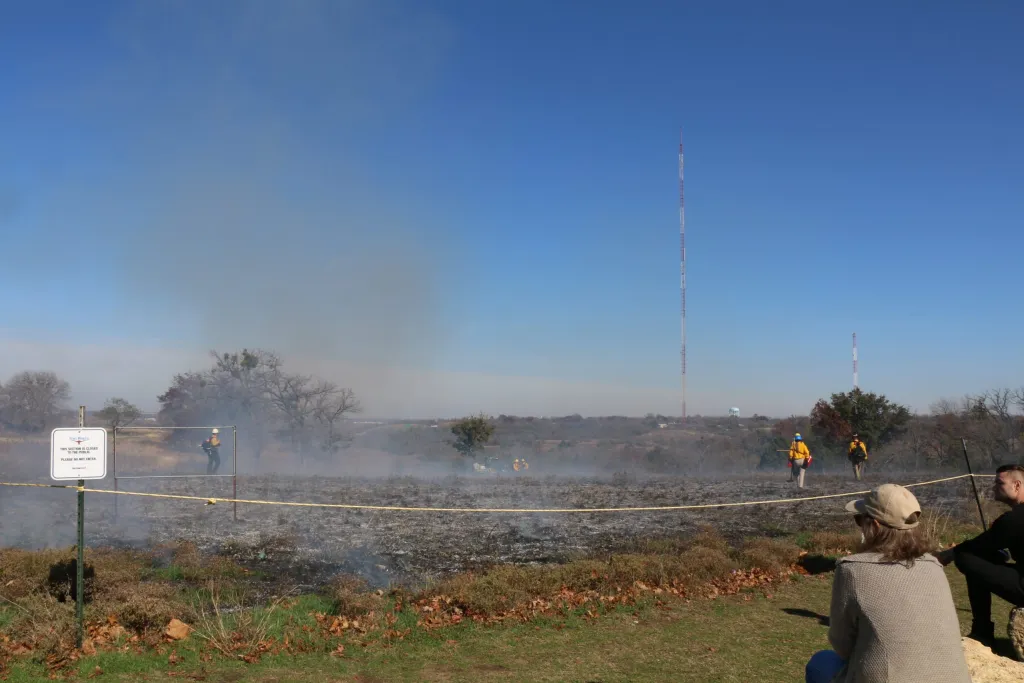
Nicole Lopez / Fort Worth Report

The Tandy Hills Natural Area, pictured Dec. 20, 2024, has undergone prescribed fires to reduce invasive species and support new, healthy growth.

Biodiversity is flourishing, with never-before-seen and even rare plants growing in the city’s prairies and woodlands, Hall said.

Recently, Hall and his team burned a wooded area at the nature center that hadn’t been treated to a burn in over a century.

Many areas at the nature center that were previously covered in heavy leaf litter are now growing plentiful plants. Ultimately, these treatments provide more suitable habitats for animals and insects and encourage carbon sequestration — the process of capturing and storing atmospheric carbon dioxide.

“It really lacked biodiversity and now we have a whole bunch of plant growth,” Hall said.

The burn team also made major strides in clearing out Chinese privet, the most common invasive species in the southeastern portion of the country.

Nicole Lopez / Fort Worth Report

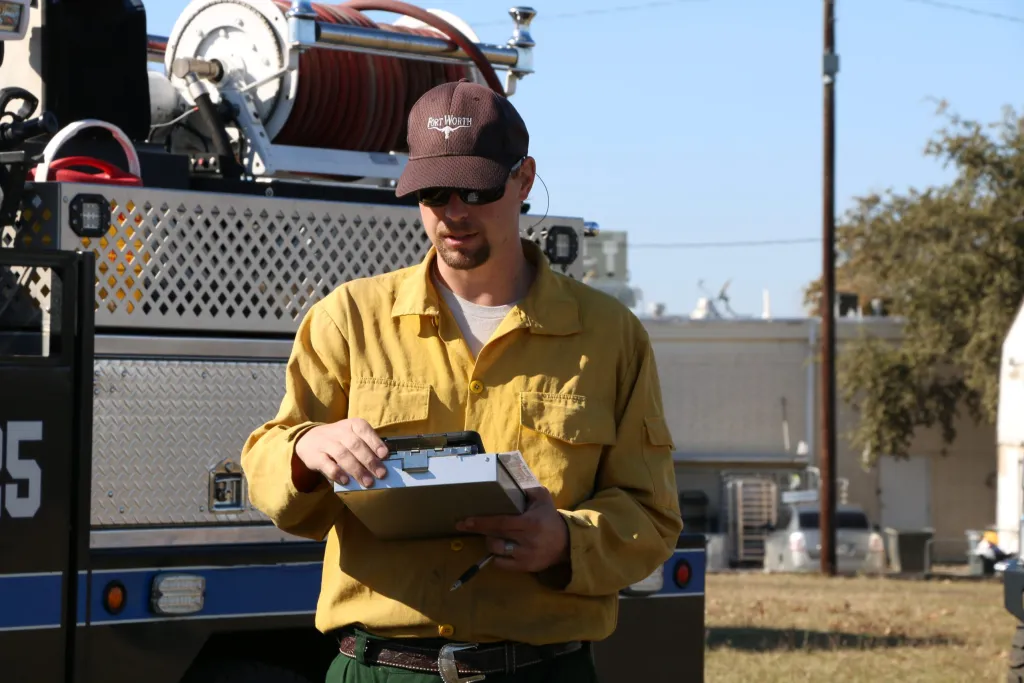
Jared Hall led a prescribed burn Dec. 20, 2024, at Tandy Hills Natural Area as Fort Worth’s natural resource manager. He is now the natural resource supervisor at the Fort Worth Nature Center & Refuge.

The plant was first brought into the country in the 1850s, assistant park and recreation director Joel McKnight said in an April 22 meeting. Fort Worth has heavily relied on methods such as prescribed burns and herbicides to clear its natural land of the species, he said.

Privet is known for quickly spreading and replacing native species.

Treating the bushy plants to a burn reduces workloads and the need for herbicides, Hall said.

Unlike intense natural wildfire, prescribed burns are controlled to be just hot enough to burn invasive species while also nourishing the soil, Hall explained.

Fort Worth’s last two burn seasons covered areas that had previously not been treated with a burn, such as the city-owned tree farm.

In 2024, Hall and nature center manager Jared Wood announced plans to conduct prescribed burns outside of the 3,600-acre refuge, where such local burns historically took place.

Officials across the nature center, parks and fire departments have gone on to treat other natural areas in need, including Chisholm Trail Park and the Tandy Hills Natural Area.

The tree farm’s burn this past winter marked its first-ever treatment, according to Hall.

Maria Crane / Fort Worth Report / CatchLight Local / Report for America

Trees are grown at the Rolling Hills Tree Farm, pictured Feb. 24, in Fort Worth.

In March, the Tarrant Regional Water District led a prescribed fire across the northeastern portion of Eagle Mountain Lake to improve habitats, control invasive species and reduce flammable vegetation.

The prescribed burn program aligns with the city’s policy to better steward Fort Worth’s natural areas.

Adopted by Fort Worth leaders late last month, the city’s green space team found the need to create a policy after years of acquiring land for conservation, green space champion Allison Docker said in a March 31 meeting.

Invasive plant removals, more prescribed burns and stream habitat assessments are some of the strategies the new policy recommends to guide Fort Worth’s care for plant life and healthy ecosystems.

Fort Worth can expect to see continued expansion under the prescribed burn program.

City staff plan on burning new areas, including recently established parks as early as this summer, Hall said.

“We plan to stay aggressive with it,” Hall said. “We’re going to keep burning.”