Houston’s World Cup officials want to make the city more walkable. Will it work?

As part of their sustainable plans, the Houston World Cup host committee and other organizations developed the “Green Corridor,” a 14-mile loop from East Downtown to NRG Stadium. Transportation advocates are divided on its success.

By Michael Adkison, Houston Public MediaJune 16, 2026 9:45 am, , ,

From Houston Public Media:

If necessity is the mother of invention, native Houstonian Owen Dunn began his experiment to save money.

“Let me see if I can get to work without a car,” he told Houston Public Media, “see how long I can go without spending the money. And it’s been about eight months now.”

He and his wife, who live in the Westchase District, had downsized to just one car during the COVID-19 pandemic. At the time, they both worked in Westchase. But several months ago, his wife started a new job in Katy.

Since then, Owen Dunn has biked to and from work. That meant crossing busy intersections like Richmond Avenue and Westheimer Road — the latter of which was labeled the deadliest road in the United States by The Washington Post.

On top of that, he began to notice there were literal obstacles in his path, sometimes getting in the way of his bike rides. Rather than give up, Dunn bought a dash camera and began making TikToks.

Some of his videos, which catalogue his obstacle-laden rides, have garnered thousands of views. In one from last month, he noticed a crosswalk sign had been struck by a car and was completely destroyed.

“Here’s a dog poop bag in the middle of the sidewalk,” he says in narration on the video. “Great job bagging it, but there is a second step to that process.”

At the end of the video, he calls his adventures “bike commuting in the most bike-unfriendly city in America.”

“It was almost too funny to not share with other people,” he said. “But I also want to show people that it is possible in some places in Houston. Obviously, not everywhere. There’s a lot of areas where it’s not, but I try to inspire people. I’m an unathletic guy who just wants to get to work and not pay for a car, and maybe you can too.”

This summer, some officials are banking on enhancing Houston’s walkability during the 2026 FIFA World Cup to make it easier to get to NRG Stadium, East Downtown, and other crucial parts of the city. Houston’s World Cup officials embarked on creating a 14-mile loop they call the “Green Corridor,” which could get Houstonians and tourists around the city without a car.

“It’s a way for folks to get to and from our two main venues, the stadium and the Fan Fest [in East Downtown] by foot, bike, or rail,” Chris Canetti, president of the host committee, said.
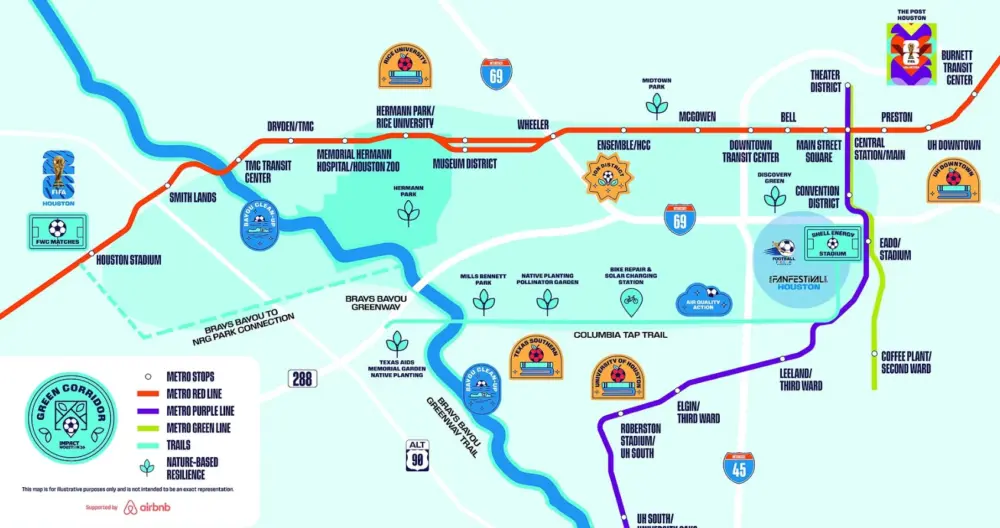
Houston World Cup Host Committee

A map of the Green Corridor, shared by the Houston World Cup host committee.

The Green Corridor

The Green Corridor can be roughly split in two: the walkable portion on a hike-and-bike trail, and the other half following the Metropolitan Transit Authority of Harris County’s light rail system.

“What we’ve tried to do is tell the story of Houston’s resilience and innovation through the Green Corridor,” Elizabeth Carlson, a sustainability volunteer with the host committee, said. As a volunteer, she helmed much of the work with the Green Corridor.

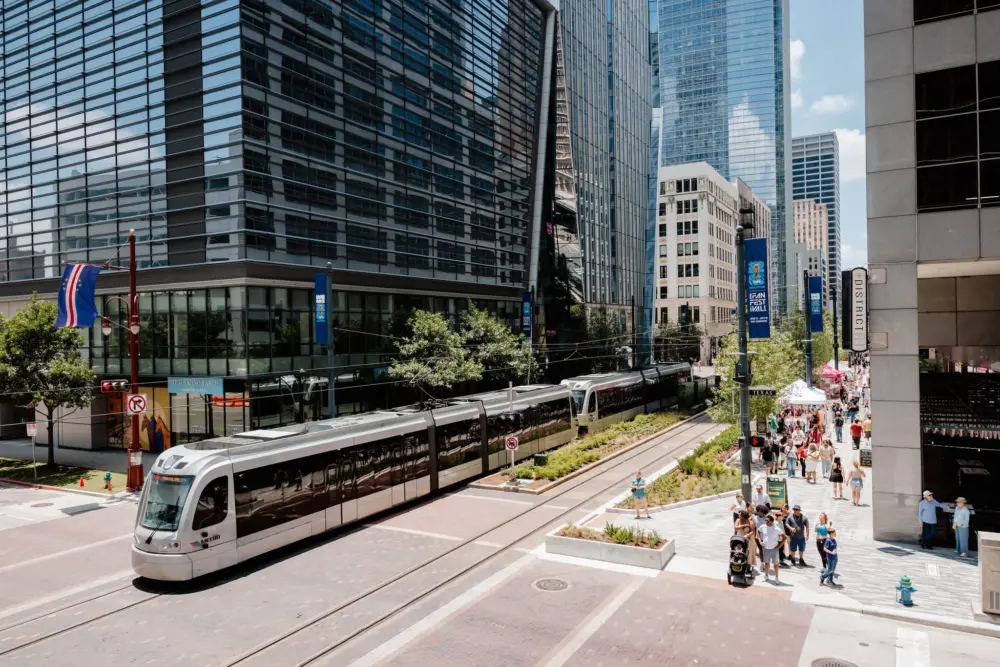
One hub, somewhat connected to the Green Corridor, has already been in the works for years: the Main Street promenade in downtown Houston. Downtown Houston+ partnered with the city government to create this pedestrian-friendly corridor accessible only by foot, bike, or light rail.

“We’ve transitioned this into a wide, embellished pedestrian space,” Kris Larson, president and CEO of Downtown Houston+, told reporters last month. “All of this is about creating a place where Houston can come together comfortably.”

Michael Adkison / Houston Public Media

Elizabeth Carlson, a sustainability volunteer with the Houston World Cup host committee, speaks to reporters on May 19, 2026.

Some shade structures have been put in place along the walkable pathway, and METRO’s Red Line runs right through the promenade. All told, the promenade was a roughly $12 million investment from Downtown Houston+.

About a mile-and-a-half away is East Downtown, is where the free FIFA Fan Festival will run through the entirety of the World Cup. Nearby is the Columbia Tap Trailhead, which begins a 4-mile hike-and-bike trail through East Downtown and the Third Ward.

All along the Columbia Tap Trail, Air Alliance Houston has installed 17 air monitoring systems to give travelers a look at real-time air quality conditions. The sensors will remain on the trail after the World Cup.

“Once the World Cup is over, this network will stay here and will continue on to be used for years to come,” Juan Flores, programs director at Air Alliance Houston, told reporters in May.

Downtown Houston+

The Main Street Promenade officially opened on May 31, 2026.

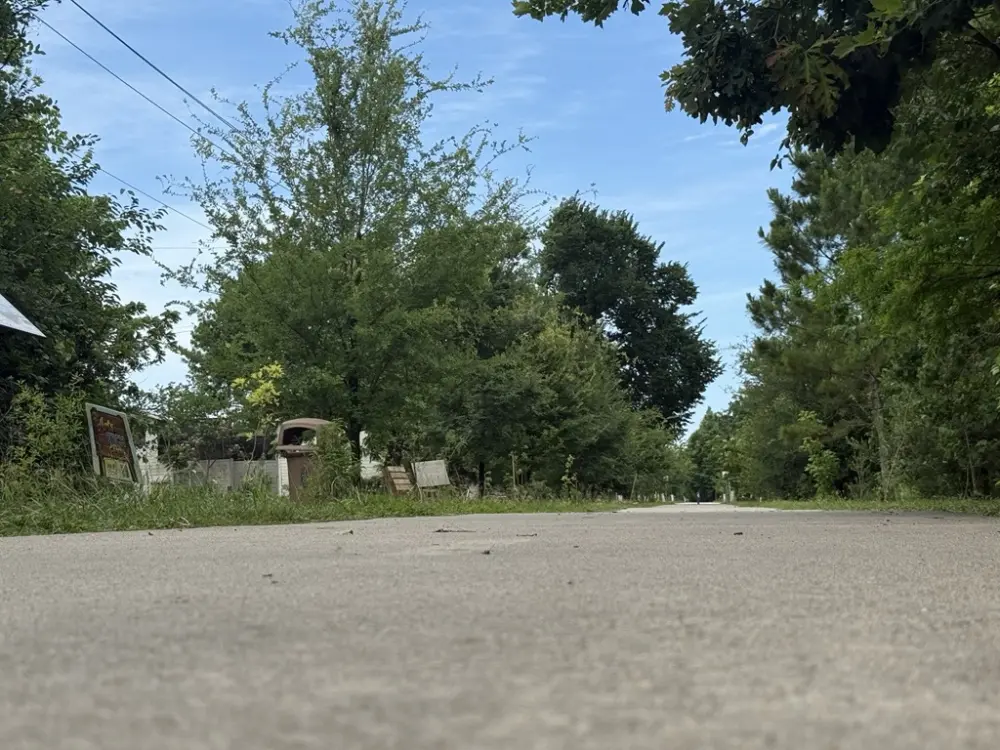
The Columbia Tap Trail runs alongside businesses and backyards before connecting at the Brays Bayou Greenway. That greenway then takes travelers to Hermann Park. Continue along Almeda Road and Holly Hall Street, and you will have walked roughly seven miles from East Downtown to NRG Stadium — in summertime, no less.

The other half of the Green Corridor, though, is METRO’s Red Line. The Red Line is not a new initiative, but the transportation organization is boosting its services for the World Cup. Now, the Red Line runs every six minutes, including on the weekends. After 9 p.m., the Red Line runs every 12 minutes until the last train at 1:30 a.m.

At the same time, METRO committed to keeping its prices at $1.25 for local service.

A more walkable Houston?

With the Green Corridor, Houston’s transportation advocates said public transportation will be easier and more accessible than ever, albeit only for a few weeks.

“This increased service would not be happening if not for the World Cup coming to Houston,” said Peter Eccles, director of policy and planning at LINK Houston, a transportation advocacy group. “But, in the process, we are getting a taste of that world-class American transit for five weeks.”

Michael Adkison / Houston Public Media

The Columbia Tap Trail, which is part of the Green Corridor, as pictured on May 19, 2026.

In a seminar last month hosted by LINK Houston, Eccles made the case that the increased services from METRO would put Houston’s public transportation services of a caliber of other major transportation-friendly cities.

If and when that comes to fruition, it would be a welcome sight for many Houstonians. In 2023, a Kinder Institute survey from Rice University found that 60% of Houstonians said they preferred more walkable, mixed-use neighborhoods, as opposed to neighborhoods comprised of single-family homes.

As the costs of transportation increase, advocates said the Green Corridor could prove to be a beneficial asset for the time being.

“The timing is excellent,” Felicity Maxwell, executive director of Texans for Housing, said. “We know how expensive gas is right now, insurance costs. For people who are living in Houston, this could be a transformative five weeks, and that’s not because they’re going to a soccer game. It’s because there’s a service that wasn’t there before that they can continue to use — if this investment stays there.”

Carlee Alm-LaBar, chief of staff for Strong Towns, a nonprofit focused on increasing urban design and transportation, called the World Cup a moment to test the feasibility of expanding public transit in Houston.

“The World Cup is the perfect kind of experiment to demonstrate when transit can be really high functioning and really the best way to get people from place to place in a community,” she said.

Not every transportation advocate is onboard, though. Kevin Strickland of Walk and Roll Houston, a nonprofit focused on increasing freedom of mobility, called the initiative “lipstick on a pig,” and said that “it feels like a bunch of existing features have been stitched together, or connected together, on a map with some lines.”

“This is a missed opportunity,” he told Houston Public Media. “I know the city’s been focused and planning on FIFA for years … but only up to the end of FIFA. Where’s the plan or strategy for what happens afterwards?”

Michael Adkison / Houston Public Media

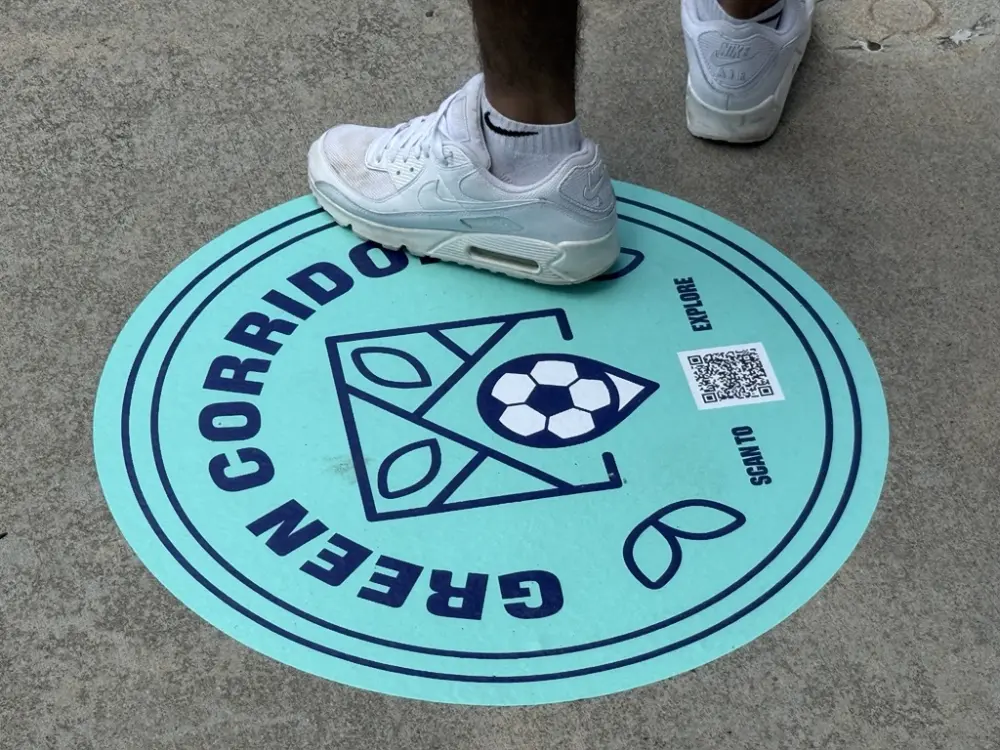
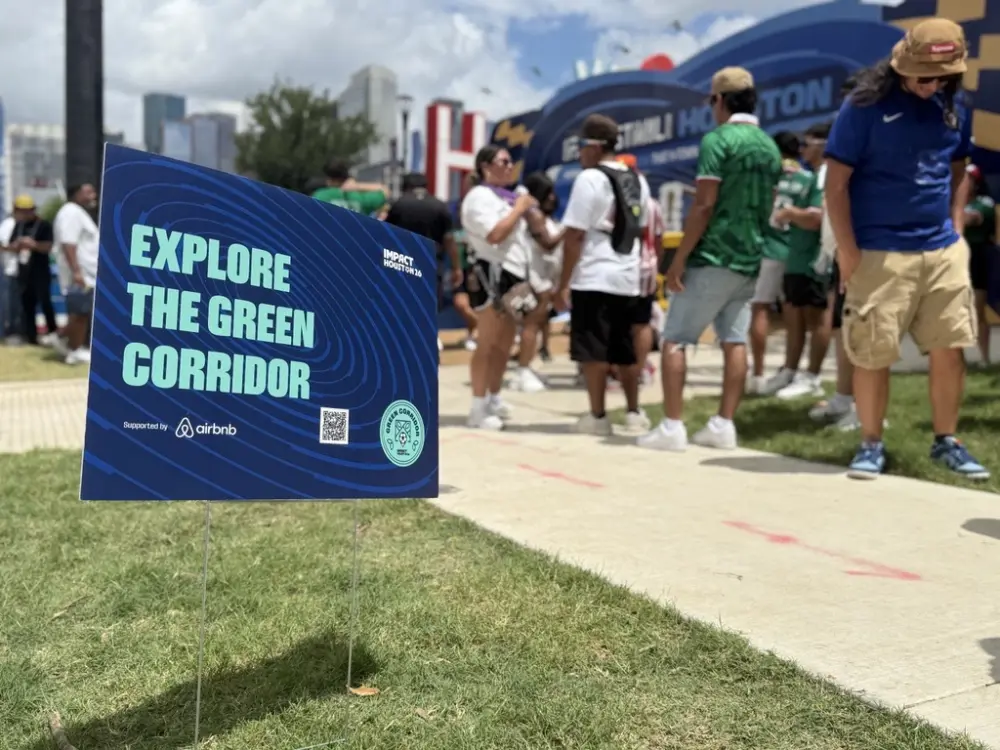
Sidewalk signage promoting the Green Corridor in East Downtown on June 11, 2026.

Not to mention, Houston in the summertime is hot. Shade structures have been put in place in certain areas, including along the Columbia Tap Trail, and Midtown Park has installed heat mitigation technology to reduce temperatures.

“Six or seven miles is a lot, particularly if there’s not enough shade or rest stops or amenities along the way,” Strickland said. “On the other hand, people love to claim that nobody can bike or walk in Houston during the summer; that’s false. The busiest month for bike rides is August.”

As Owen Dunn continues to bike to work in Westchase, the Green Corridor is a bit out of his own way. However, he called the progress a step in the right direction, if not quite a bold leap forward for walkability.

“I see Houston care about the infrastructure and walkability when they’re courting the Olympics, or the Super Bowl is coming, and now the World Cup,” he said. “And then when we’re not doing that, I feel like the infrastructure and public transportation conversations sort of falls to the wayside.”

On its own website, the FIFA World Cup host committee calls the Green Corridor not just a trail but a way to experience Houston. Some international fans — and even some local residents — may take advantage of that during the World Cup.

However, whether Houstonians will stick with the Green Corridor after the World Cup remains to be seen.

If you found the reporting above valuable, please consider making a donation to support it here. Your gift helps pay for everything you find on texasstandard.org and houstonpublicmedia.org. Thanks for donating today.