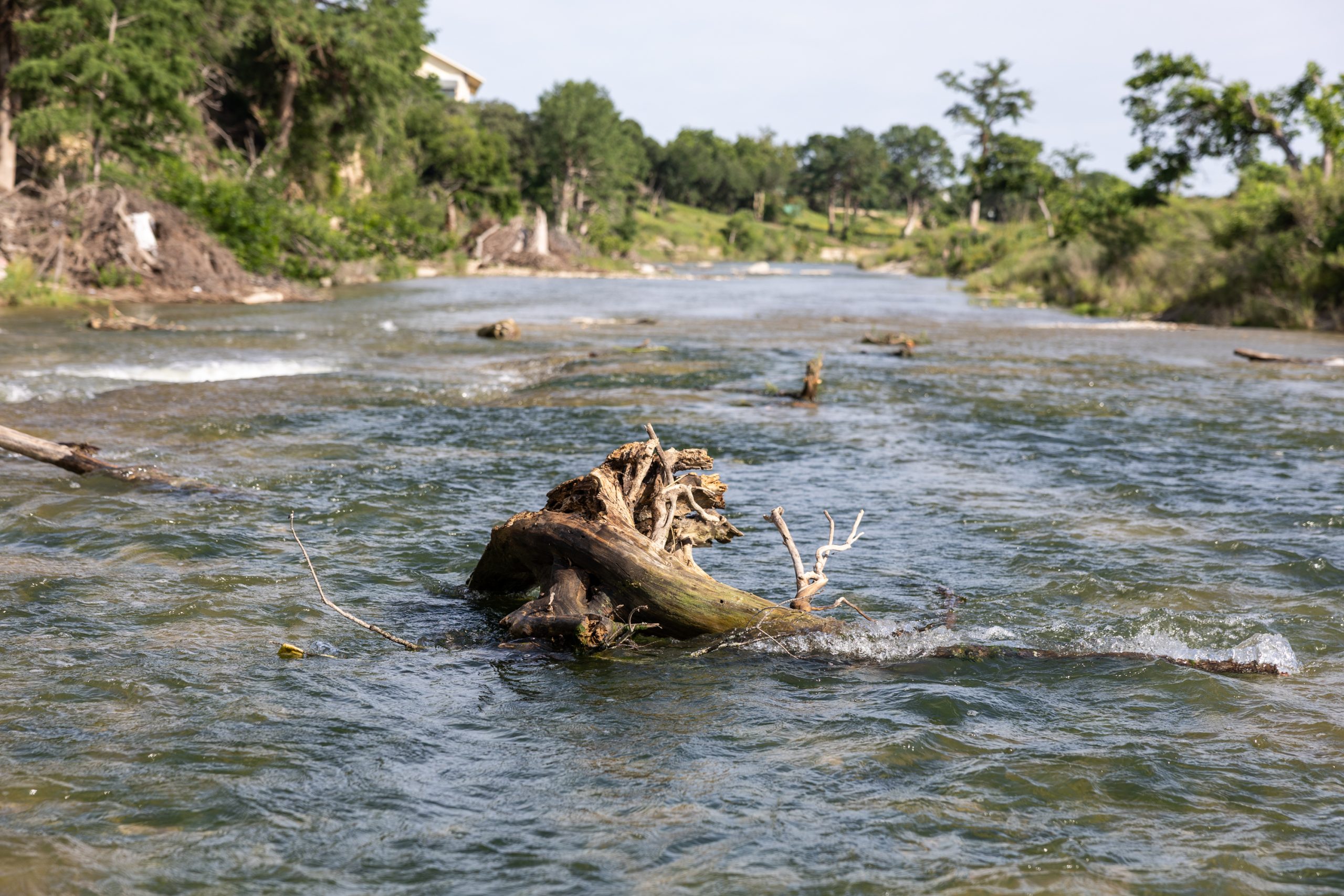
When floodwater crashed through Hill Country last year, there were no warning sirens.
The area is known as “flash flood alley.” It used to have a flood warning system after the 1987 floods, but it had since fallen into disrepair.
A few years before the July 4 flood, the Upper Guadalupe River Authority attempted to develop an updated early warning system. It would have included ten low-water crossings in Kerr County, where most of the casualties occurred.
The authority applied for grants in 2017, 2018, and again in 2024. In the end, they could not secure the funding they needed and stopped development, according to testimony given last year by Tara Bushnoe, general manager of the authority, at a joint hearing.
Last year, the National Weather Service provided various watches and warnings through phone pings. The problem is that for many, the warnings couldn’t follow the developing conditions fast enough.
In the wake of the tragedy, many questions lingered in the minds of Texans. How could the casualties have been prevented? Is a better flash flood warning system really possible? If so, how would it work?
Dr. Nick Fang is a civil engineering professor at the University of Texas Arlington. He and his team are working to answer those questions.
The team had been developing an early flood warning system for over two decades. Following the July 4 floods, the Governor’s Office awarded them a $4 million grant to develop the system.
Most users would experience the system similar to that the NWS provides: A simple graphic warning on a cell phone or updates on a website. The complicated part is everything that needs to happen beforehand.
“Early warning does not start with the siren,” said Fang. “It really starts with science.”
Part of the trick is collecting accurate rainfall data to submit to a mathematical model called a “hydrological model.” The model can provide information about how much water is in an area, how fast it is moving, and whether it will cause flooding.
Fang calls this model the “essential vehicle” behind an accurate flood warning system.
The other half of the system is the experience of the end user, said Fang. “Our main goal is to really package science into a final, usable package.”
» RELATED: Kerr County has new flood sirens, but the activation plan is a ‘work in progress’
While the majority of users would receive a phone ping, Fang pointed out that many of the areas affected by flooding didn’t have workable cell coverage. He said that in addition to the digital warnings, his team is working on ways to convey warnings across a network of sirens in the area.
The primary improvement of this system over other methods is its timeliness.
The Hill Country terrain is incredibly steep and the soil is very thin.
“Once the rain hits the ground, water just runs through,” Fang said. “So the response time is very, very short.”
The goal of the team’s hydrological model is to represent local conditions accurately and quickly, so the warnings are relevant and useful from the moment they’re received.
He said an effective implementation of the system would require the coordination of various organizations: local river authorities, local government entities and emergency personnel.
Fang said he believes with the new funding, they should have a fully operational system by the end of September 2027, if not sooner.
“We could have a beta version very soon,” he said. “I don’t have a clear date for these, but we will try our best to deliver the system as soon as possible.”
As Texas oscillates between flood and drought, it can be easy for officials and the public to forget the dangers posed by the weather, Fang said.
“In the drought season, you’re probably going to forget about the flood, the impact from the flood and the devastation,” said Fang. “That changes people’s budget planning or other actions.”
Fang believes it’s a matter of keeping the memory of last year’s floods alive.
“Those public memories stay: That anything can happen in those moments,” Fang said.