The Texas Standard is excited to share the Beachchombing Report from Jace Tunnell, Director of Community Engagement for the Harte Research Institute at Texas A&M University-Corpus Christi. The series can also be found on YouTube, Facebook and Instagram.
This week, I received calls from a couple of surfers who had an unusual complaint. Something that looked and felt like fiberglass was covering the beach and poking into their skin.
When I went to investigate, I quickly found the culprit: Sea butterflies. Millions of them.
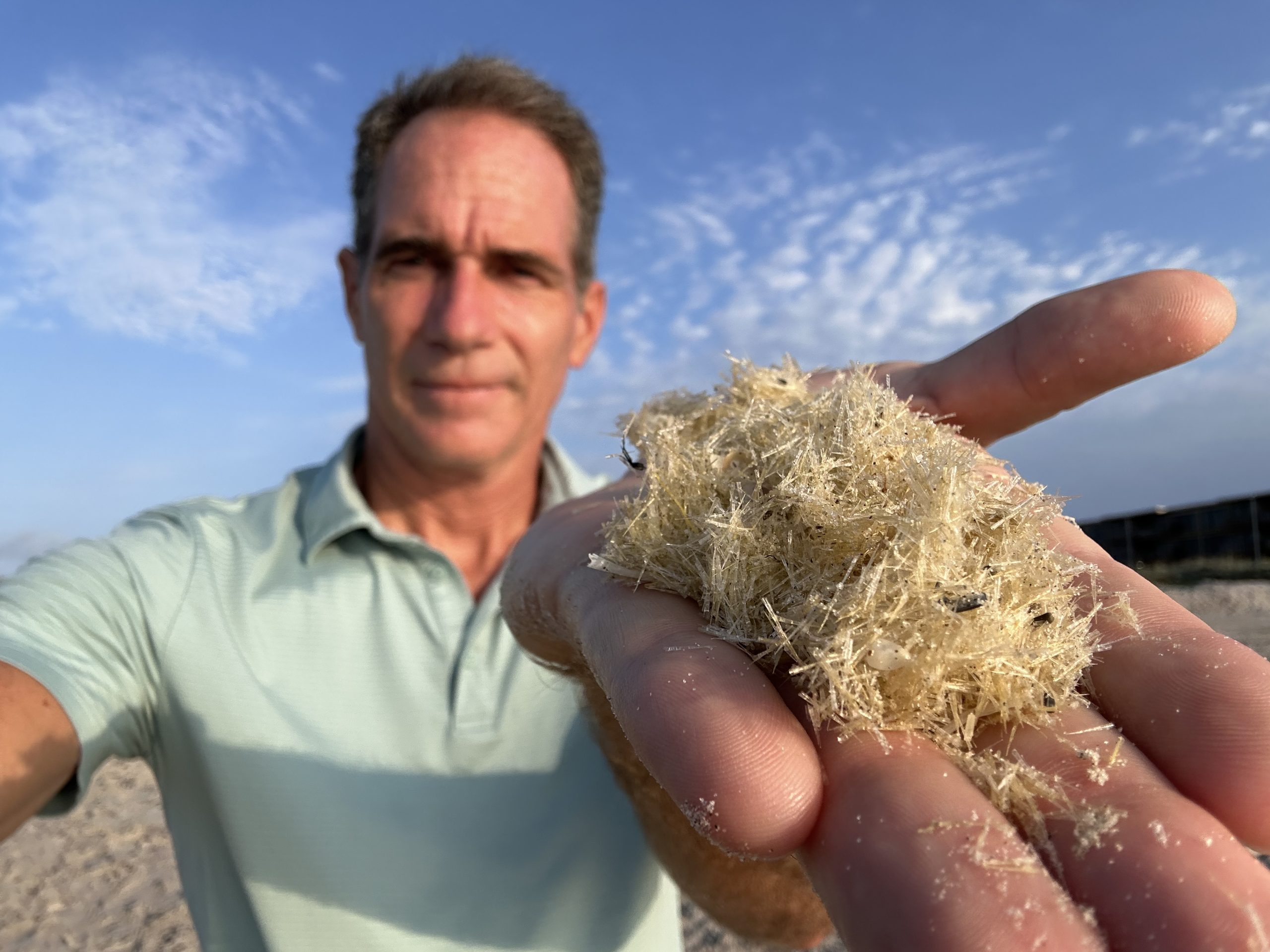
For at least 20 miles of beach, the tide line was thick with their tiny, delicate shells. In a single pinch of sand and shells between my fingers, I counted about 50 sea butterflies.
After handling them, several of the sharp little shells became stuck in my fingers and had to be pulled out, explaining exactly what the surfers had experienced.
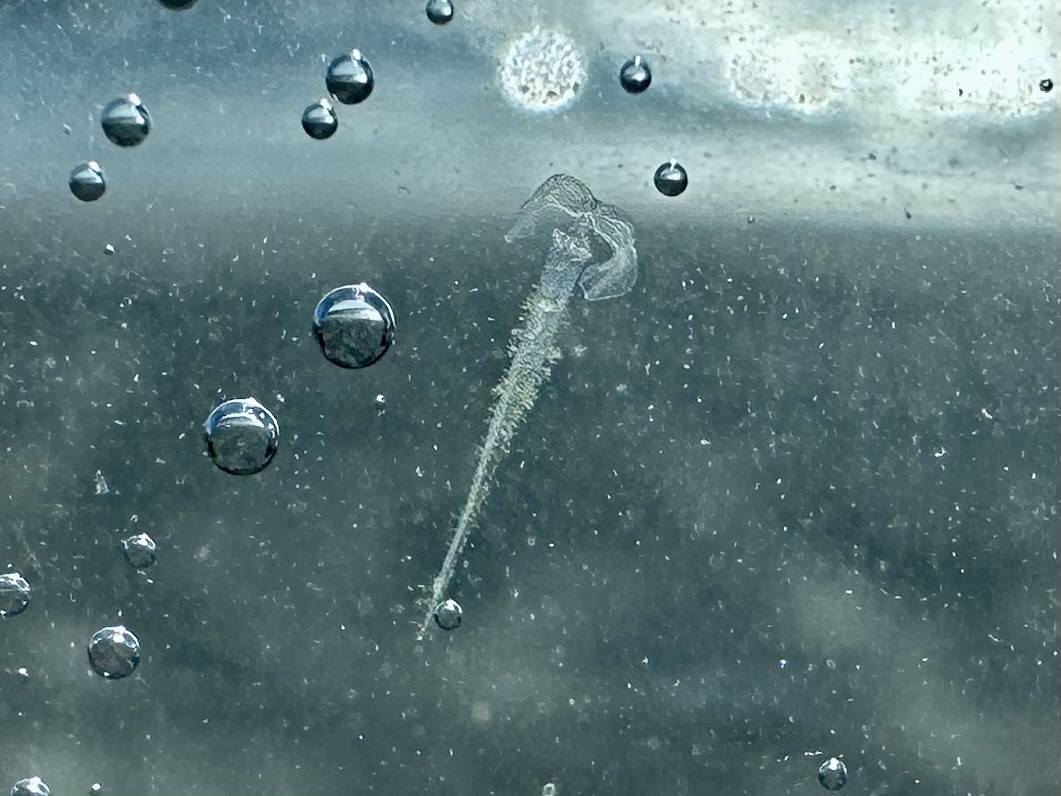
A live sea butterfly floats in a glass of water. / Harte Research Institute
Sea butterflies are small marine snails known as pteropods. Unlike the snails we normally think of crawling along the bottom, sea butterflies spend their lives drifting and swimming in the open ocean. Their name comes from the winglike structures they use to move through the water.
There are many species of sea butterflies in the Gulf, ranging from those with tiny, coiled shells to species with more elongated, needlelike shells.
Despite their small size, they are an important part of the marine food web. Sea butterflies are eaten by fish and other marine animals, including some whales.
I scooped Gulf water into a glass jar and found live sea butterflies actively moving through it. Seeing them alive made it clear that this wasn’t simply a mass of empty shells washing ashore — large numbers of living animals were being carried right to the beach.
Ocean currents, winds and waves can concentrate enormous numbers of small, drifting organisms along the shoreline. That’s one of the fascinating things about beachcombing. A beach can look completely different from one day to the next.
Millions of sea butterflies may line the Texas coast today, but after a shift in wind or current, they could be gone tomorrow.