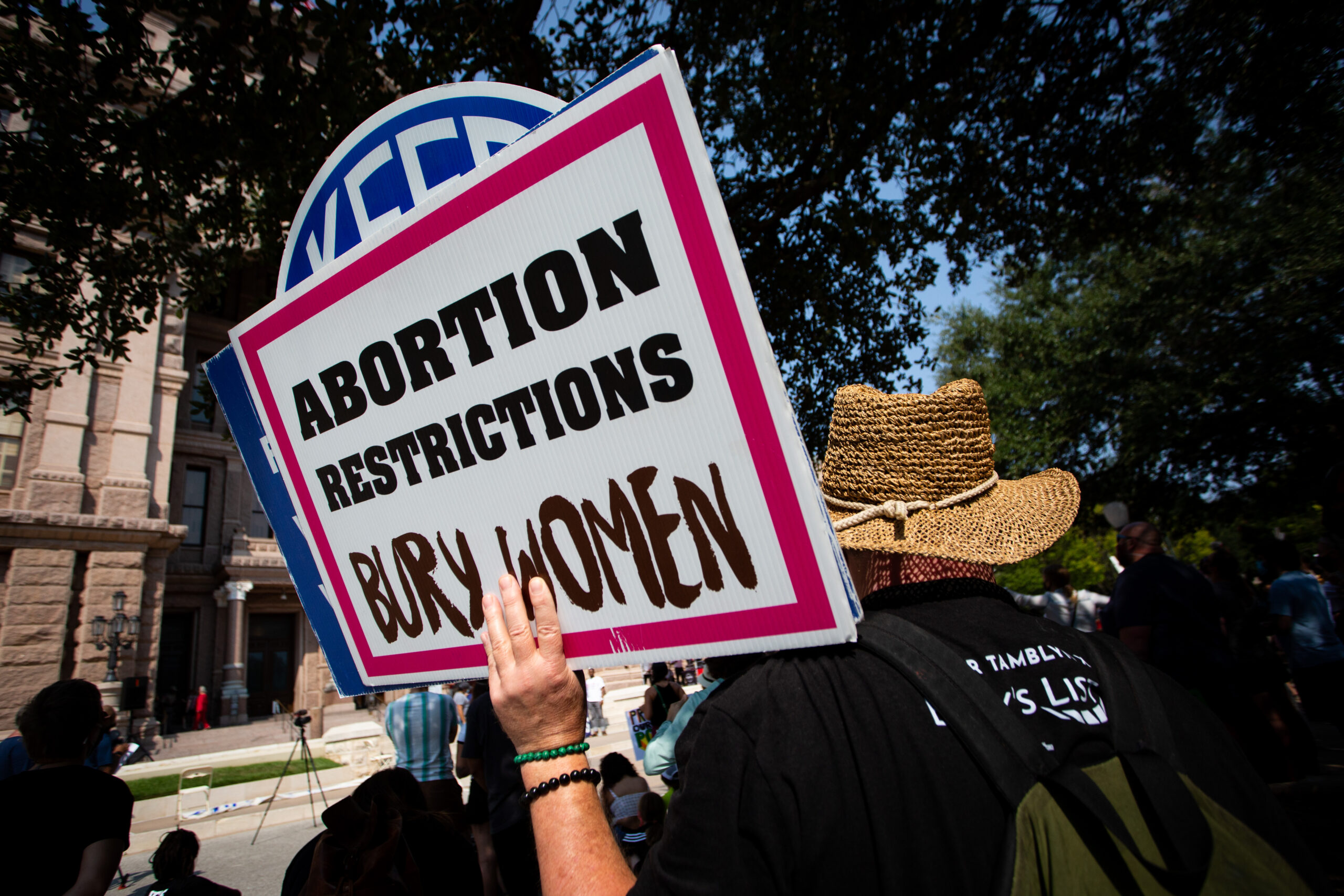
Texas’ strict rules on abortion access are the new normal. Those seeking an abortion, by and large, need to travel out of state to get one. And those with medical crises during pregnancy have also been impacted by a medical establishment less willing to intervene quickly for fear of breaking the law.
The Dallas Morning News is shining a light on how people have felt those changes in their own lives in a series called Standard of Fear that published this week. Investigative journalist Lauren Caruba joined the Standard with more about the project.
This transcript has been edited lightly for clarity:
Texas Standard: You published nine stories simultaneously about the impacts of the abortion ban. It’s a lot to focus on, from deaths to suicidal thoughts to the impact on the medical community. Why did you decide to present it this way?
Lauren Caruba: I think that what we really wanted to accomplish with this series is to take a really comprehensive look at how our healthcare system has changed under these restrictions.
These laws – and it’s laws, plural, right; we have multiple different abortion bans and updates to the laws that are kind of overlapping in Texas – have been in effect for almost four years now. And they are one of the most seismic changes that we’ve had to women and reproductive health care in decades.
What we found is that there has been this ripple effect across Texas and outside the borders of Texas that has changed healthcare in all of these different ways, from fear that permeates exam rooms and hospitals, both on the doctor side and on the patient side, to the actual healthcare that patients are receiving, particularly when there are urgent complications or other problems in pregnancy, such as fetal anomalies.
Obviously, there has been amazing reporting that has been done by many different journalistic outlets up until this point. But what we wanted to contribute was kind of this really broad, comprehensive look. And that’s why we ended up interviewing 47 Texas physicians who have practiced under these laws and more than a dozen patients.
You titled your series Standard of Fear, and that’s part of the headline of one of your stories. Was that the idea that kind of brings all of your reporting together?
I would say so. I would say that across the different interviews with clinicians, with patients, with advocates, fear was actually like the common thread.
There are doctors who remain fearful of penalties under these laws. There are patients who remain fear of being found out that they self-managed in abortion, for example.
Or there are patients that are now afraid to be pregnant in this state as a result of their experiences, such as women who had problems in their pregnancies, were unable to terminate, ended up with like a stillbirth or having to leave the state to terminate. There are now people who are actually fearful of the state of pregnancy themselves.
We spoke with both patients and physicians who were too afraid to be named because of fear of personal or professional or legal repercussions. And on the doctor side specifically, we spoke with doctors who had essentially kind of been threatened with termination if they spoke out about the effects of these laws on their work. We spoke with many physicians who were just kind of fearful of repercussions from their institutions.
And I think that’s why we chose Standard of Fear as the title, not only that, but because fear has actually influenced clinical decision-making, like the decision- making around the care that patients are receiving. It’s a really common theme across all of the different interviews that we did.
» GET MORE NEWS FROM AROUND THE STATE: Sign up for Texas Standard’s weekly newsletters
Well, Lauren, we don’t always do this as journalists – we sort of take ourselves out of the stories – but in our conversation before this interview, you mentioned that you were pregnant and actually had a baby during this reporting. I wonder what that experience was like for you.
This was my first pregnancy, with my son – he is now almost 15 months old and is a big, beautiful toddler now. But I was five months pregnant when I decided to embark on this reporting with some of the other reporters at the paper.
And I have covered medicine for a long time, since 2018. And I actually like had a lot of questions about like, if something were to go wrong in my pregnancy, what would happen? I didn’t know, actually, and that was pretty unsettling to me as a healthcare reporter to not know the answer to such a basic question.
And so we started out looking at maternal deaths, and we identified several maternal deaths that ended up making it into our story. But then as we continued to report, we continued see that there was such a broad effect on our healthcare system that we just kept going. We wanted to interview as many people as possible to really understand how these laws have changed our healthcare systems.
And I think that having become a parent myself in the process of this reporting made me able to write about this subject matter with much more nuance than I would have. Like, for example, I experienced complications at the end of my pregnancy. I had low amniotic fluid and had to be induced at 38 weeks to avoid negative outcomes.
And we spoke with other women, like after I gave birth to my son, who had had amniotic fluid issues in their pregnancies, but earlier in the second trimester, like during those critical stages of developments for their babies. And in their cases, because it was so much earlier, they had some of the worst outcomes, including stillbirth.
And I think it was just really informative for me to be able to report on this subject matter, having just gone through pregnancy myself and really truly understanding how vulnerable it makes you as a patient and as a person.
Gov. Greg Abbott’s call for the second special session going on now includes legislation he says further protects unborn children and their mothers from “the harm of abortion.” What did you hear from all of the people that you talked to kind of overall as things continue to change here in Texas?
I think that what we have heard is that really how you are affected by these laws comes down to a couple of different factors. It comes down to where you live, what healthcare providers are seeing, their level of comfort with practicing under these laws, their levels of resources, and means, circumstance.
We spoke with patients who were able to spend thousands of dollars to leave the state when something went wrong in their pregnancies. And we spoke with patients who did not.
We spoke to two women who had anencephaly diagnoses in their pregnancies. One actually had two back-to-back anencephaly pregnancies, and she was able to leave the state to terminate both times. Anencephaly is when the skull and brain fail to form properly in the fetus. And another woman did not have the means to leave. And she had to carry to term and ended up delivering her baby, her stillborn baby, via C-section.
And we also spoke with women who ended up self-managing abortions using abortion pills, which is something they’re obviously trying to ban now.
I really think that across these different interviews, the fear just continues to stand out. There is a fear of someone finding out that you self-managed abortion. There’s a fear of what might happen to you should you become pregnant. There’s the fear that you’re not going to get the healthcare that you need potentially.
These laws have changed many, many lives. That is clear, that people’s lives have been irrevocably altered by this legislation and by these laws.