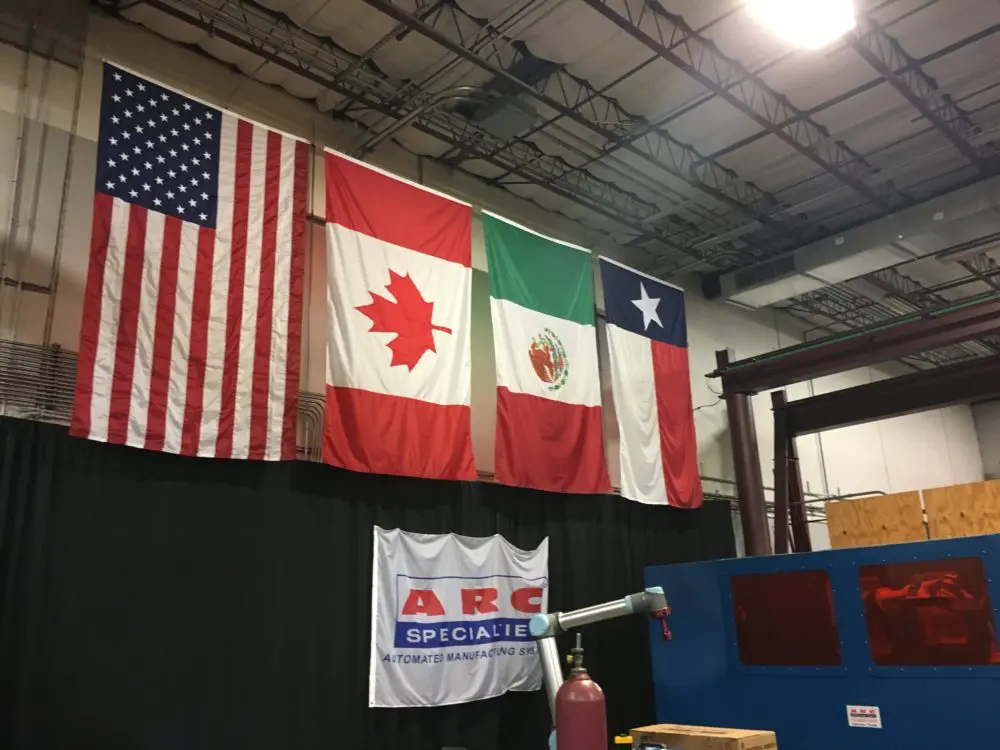
It’s hard to overstate just how much Texas has riding on a successful renegotiation of the United States-Mexico-Canada Agreement, or USMCA. Mexico and Canada are Texas’ No. 1 and No. 2 trading partners, respectively, just as they are for the U.S. as a whole. And that doesn’t take into account direct investment in Texas by Mexican and Canadian companies.
All that trade and investment means that thousands of Texas jobs depend on the smooth flow of goods and services between the U.S. and its southern and northern neighbors. So, too, does the competitiveness of North America in the world economy as a whole.
Since July 1, when the Trump administration announced it would not renew the USMCA and instead put the agreement under annual review, the U.S. has held bilateral trade talks with Mexico but not with Canada. In the meantime, ratcheting up the pressure, President Donald Trump has announced a new 10% tariff on a fraction of Mexican imports and 50% tariffs on a range of Canadian imports, including cars and trucks.
“The problem is not for Washington or Mexico City or Ottawa,” said Tony Payan, director of the Claudio X. Gonzalez Center for the U.S. and Mexico at Rice University’s Baker Institute. “The problem is for businesses, because a lot of these companies — manufacturers, energy companies — they’ve got long-term plans. They have to plan ahead 5, 10 years. And now they have to learn to live with the uncertainty of investments that may not be covered by the agreement whenever that is ratified, if it all.”
‘It’d be tough’
In 2024, two-way trade between Texas and Mexico came to $281.2 billion, while trade between Texas and Canada came to $69.2 billion. Taken together, that’s equivalent to 12% of the state’s economy. Texas’ main exports to Mexico and Canada are oil and natural gas products – but its manufacturing, particularly of vehicles, depends heavily on parts imported from both countries. Texas’ and Mexico’s economies have been historically integrated, but that doesn’t mean they wouldn’t suffer if the USMCA dies. That’s even more the case with Texas’ ties with Canada.
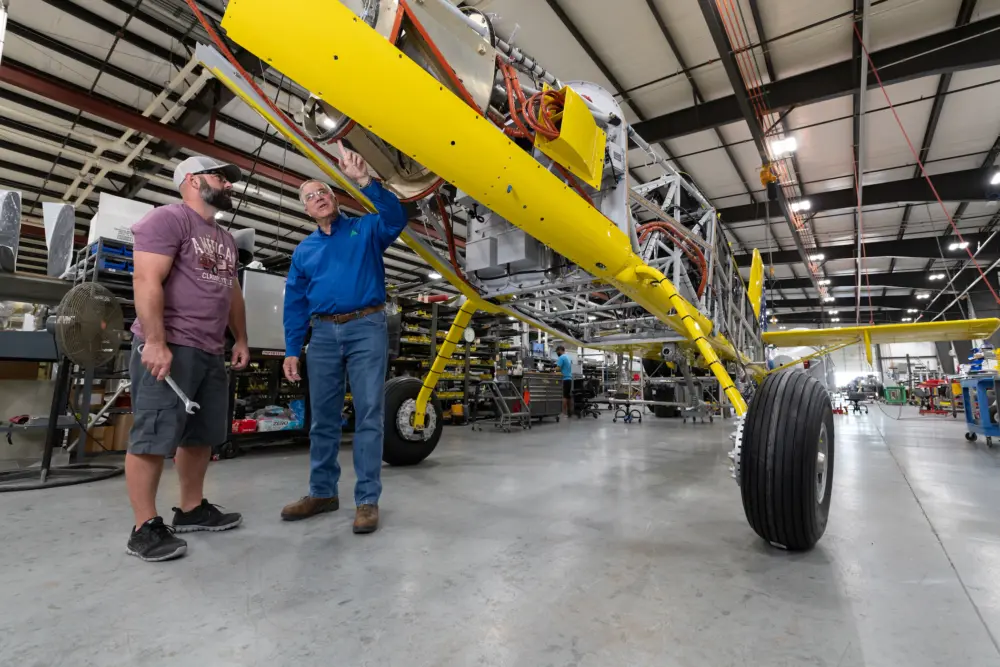
Air Tractor, Inc. is a prime example of a company that has thrived thanks to USMCA. Based in the small North Texas city of Olney, the company makes aircraft for farming and aerial firefighting. It sells to customers throughout the U.S. and in more than 50 countries across the world.
“The USMCA and the old NAFTA in particular help facilitate a relationship with our engine supplier, Pratt & Whitney Canada,” said Air Tractor’s president and CEO, Jim Hirsch. “Our engines that come from Pratt & Whitney in Canada potentially could be subject to a 25% tariff. The engine in our airplanes represents approximately half the value of the airplane.”