Vogue photoshoot looks to capture how Texas is ‘rewriting the American narrative’

From rodeos to church choirs to marching bands, the magazine’s feature highlights the Lone Star State’s vast array of cultures and experiences.

By Leah Scarpelli & Porshea GoinsJuly 6, 2026 2:56 pm,

Vogue Magazine is known to highlight fashion, beauty and culture. Celebrities including Zendaya, Harry Styles and Beyoncé have all graced the cover.

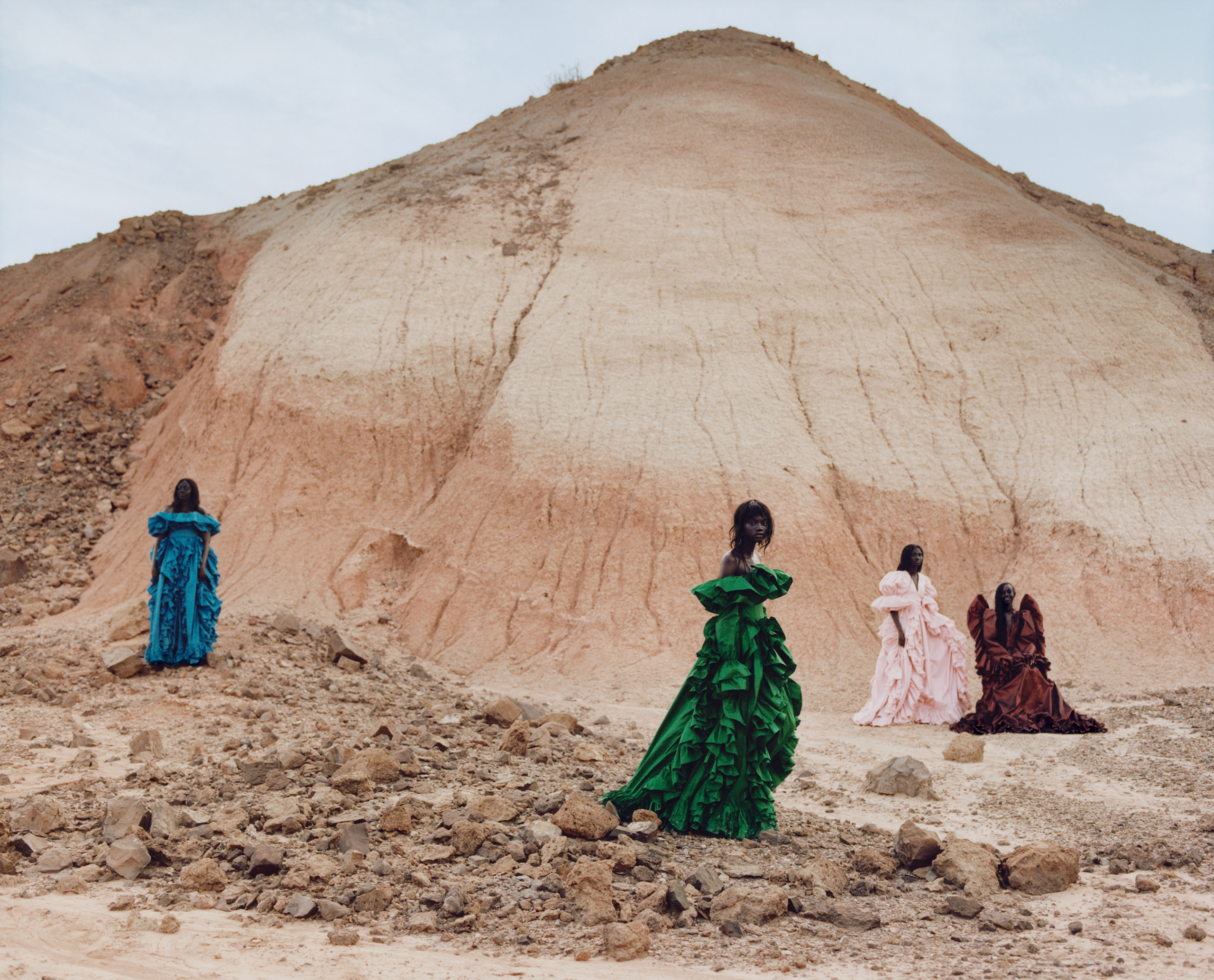
But in the magazine’s summer issue, a feature called “Lone Star State of Mind: Snapshots of Texas Today,” highlights rodeo-riders, ranchers, church choirs, cowboys, marching bands and many more aspects of Texas as part of the issue’s celebration of America’s 250th anniversary.

Naomi Elizée, fashion market director for Vogue, and Morgan Senesi, Vogue’s global talent director, joined the Standard to talk about the feature. Listen to the interview in the player above or read the transcript below.

This transcript has been edited lightly for clarity:

Texas Standard: So why Texas?

Morgan Senesi: We kind of started this journey about exploring America and the 250th anniversary this summer. We started, honestly, with like five states and we were going to do a road trip and hit a bunch of different notes.

As we did more and more research about places, people, things that we could find, we honed into Texas and it became the only state we covered in the entire basis of the story.

What was it about Texas that you think sort of needed the most attention? 

Morgan Senesi: Definitely the multiculturalism that exists there.

I’m from Texas — I am from San Antonio — and me and a few other people that were involved in this that know the state well were able to kind of talk through. There’s these different pockets that exist, these really large cities that exist but that are also so different and offer so many different things.

So with that, our exploration kind of just continued to grow and we started finding all these different people and places to highlight. 
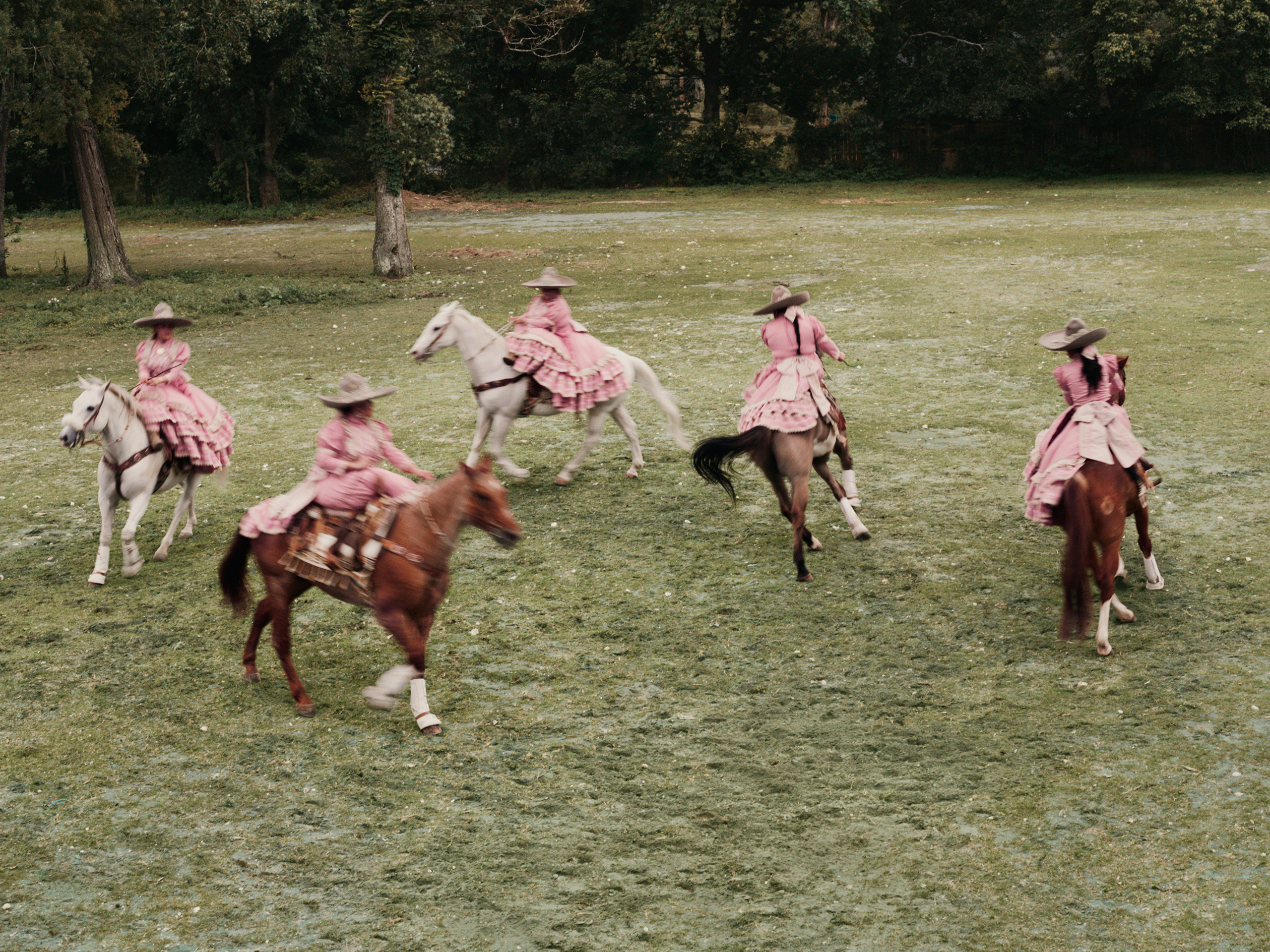
Courtesy of Tyler Mitchell / Vogue

Members of Charras de Agua Santa, an Austin-​based escaramuza team, ride in formation. The photo feature sought to capture the many different cultures that make up Texas.

Morgan, can you explain the process of selecting people for projects? I mean, in this, some are models, others are related to models, others are just everyday Texans. 

Morgan Senesi: For this one particularly we were looking for models who were from Texas — Erin Wasson being one of them, who is a veteran model who has been in this industry for years and is very open about her relationship with Texas, being from outside of Dallas and loving her relationship with the state and her city and living anywhere from New York to Paris to most recently the south of France, but always returning home to Texas. 

So those particular stories were important. Sarah Grace is another woman who’s in the story who’s from Texas — was kind of plucked out of obscurity there, and so has a good story to tell.

Ruth [Deng], as well, with her family — first-generation immigrants living in Dallas — had a really important story to tell as well. 

I want to ask about one specific photo of Ruth and her family. You took them to the sort of the borderlands area around Big Bend National Park, and there’s the family in the Rio Grande, right?

Can you talk about that moment? That might not have been part of their physical journey, but what did it mean to have them there as immigrants themselves? 

Morgan Senesi: I think it’s a very sensitive subject but a very important one.

We all know what’s happening at the border and for a family that feels at home and feels like this is where they belong and where their place is, to get closer and closer to actually such a majestic and beautiful place, but also have to think about all these other things that are existing and happening around there that maybe pertains to them and their family was a bittersweet moment for everyone, I think. 

Naomi Elizée: Just Ruth and her family and just how her presence just quietly carries that story of what Morgan is saying of the Sudanese diaspora and also just immigration in this country while also having it at Big Bend where so many of these national parks are just being stripped of their resources… It really is able to cover both of these topics in a way that felt very true. It just felt so powerful.

But also when you look at the video of Ruth with her family and just how beautifully connected they are, it just feels like such an honest weave into the story and speaks back to the Texan culture.


Naomi, we can’t talk to Vogue and not talk about the fashion. Can you talk about the wardrobe — the dresses and the other materials that you selected for this? 

Naomi Elizée: Yeah, absolutely. It’s like, a lot of this relied to knowing who the talent was — so who’s going to be the characters casted here? How do we want to portray them?

Carlos Nazario, the stylist of the shoot, had a strong vision of ensuring that the characters — the people, the real Texans, the real talent that were being featured — were just like an elevated version of themselves. It’s still capturing the essence of who they are and what they represent but also making a statement with the designers that we use. 

So all of the summer issue featured American designers. You get to layer in designers that speak to the zeitgeist of America right now. That’s someone like a Willy Chavarria, Rachel Scott, and Emily Bode.

It then ties back all of their fashion to the same idea of like bringing it back to how Texans are prideful, they’re culturally rich, they’re talented. It anchors them to be the center of the story while then keeping them elevated through the clothes that they’re wearing on their bodies.

Courtesy of Tyler Mitchell / Vogue

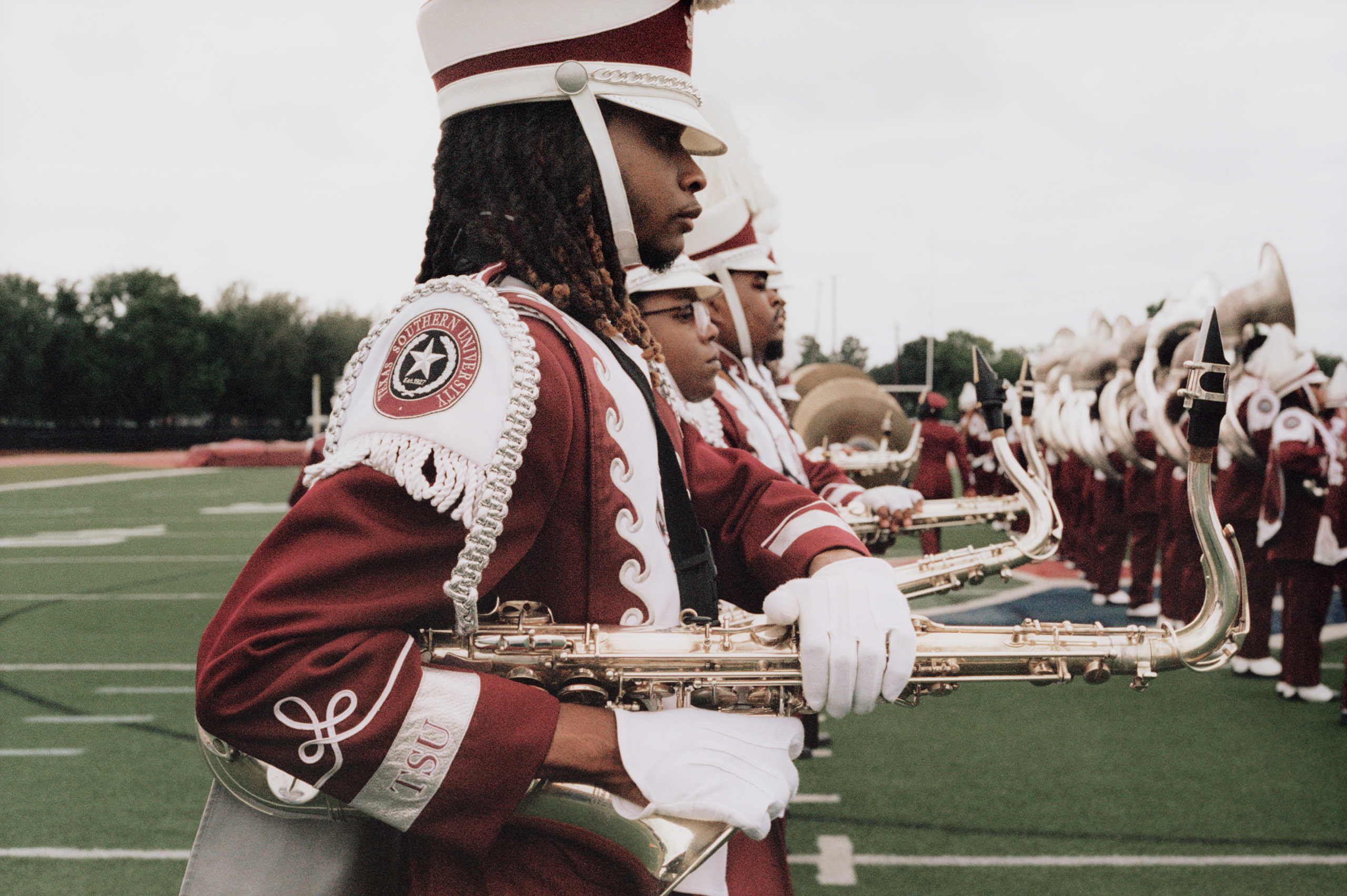
Texas Southern University's marching band.

Well, you write Texas is “rewriting the American narrative.” How would you all describe that? 

Naomi Elizée: I’d just say we didn’t wanna illustrate an idea of Texas as like, you know, just the idea. We wanted to really document the people that were actually living it: different backgrounds, different talents, what they bring into the richness of the history of Texas. 

It’s really about the people who are quietly, let’s say “authoring,” what America looks like right now — the TSU marching band, the ranchers, the designers, the Black cowboys, all of these people that you could put it all in one frame and then you’re not just looking at one stereotype, you’re looking at America. 

That’s really what Texas represents, because it’s such a brilliant state where you can have so many different creatives and different people in it that are then creating their own stories. 

Anything that you would like to add Morgan? 

Morgan Senesi: Being from Texas, there’s such a stereotype, I would say, that exists. Some of our team members who took this trip with us were kind of like “I would never think I necessarily wanted to be in Texas or visit Texas.” I promised them they would have a different opinion when they left this shoot — and they did.

We have a history of being a certain way, even though other things existed. It was very one-note for a long time.

I think what’s happening in Texas is changing every day. The culture is changing everyday and it’s a great place. That’s the way I always describe it.

If you found the reporting above valuable, please consider making a donation to support it here. Your gift helps pay for everything you find on texasstandard.org and KUT.org. Thanks for donating today.