From KERA News:
Nicolette LaRoe is a court-appointed attorney for kids in the child welfare system. But she advocates for them like they’re her own.
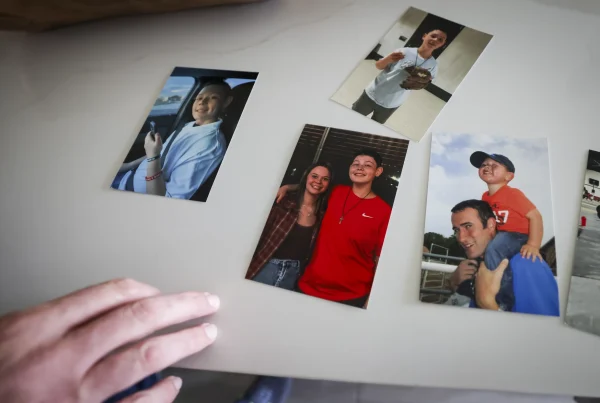
That’s why she’s so passionate about CJ. “CJ” is how a recent court filing refers to the boy, whose full name and age aren’t disclosed.
According to the document, CJ was diagnosed in June 2024 with type of lupus induced by Depakote or divalproex sodium, a medication used to treat epilepsy and other conditions.
But caseworkers for EMPOWER — the private nonprofit managing foster care in the Dallas area at the time — didn’t properly document CJ’s medical needs in his case record and authorized the hospital to give the boy divalproex sodium Nov. 26, 2024.
CJ was admitted to the hospital February 19, 2025, with chest pain and pneumonia, according to the filing — conditions believed to be caused by lupus. In the eight months between his diagnosis and his admission to the hospital with lupus-related conditions, the document states, CJ had five different EMPOWER caseworkers assigned to him.
His medical needs were miscommunicated in the shuffle.
“All the stuff that has happened has been tragic,” LaRoe said in a July interview with KERA News. “And while they were going through all these caseworkers and supervisors and different directors and all this crap, it’s like trying to hold jelly in your hand. You can never get a grip on anything.”
A KERA News analysis of two years of DFPS corrective plans showed CJ’s case wasn’t seen as an outlier: EMPOWER’s caseworkers reportedly weren’t showing up to court — and when they were, they were unprepared. Caseworkers dealt with large caseloads, lacked basic training and made simple mistakes that led to negative — and sometimes fatal — outcomes for kids, according to those documents.
KERA News also spoke to educators, attorneys, state lawmakers and child welfare workers who say state intervention with EMPOWER is a start — but it’s not enough to fix fundamental issues with Texas’ model of what’s known as community-based care.
An ‘extraordinary’ measure
CJ’s hospitalization occurred less than a year into EMPOWER providing foster care placement services for more than 3,000 children in state custody in Dallas, Collin, Ellis, Fannin, Grayson, Hunt, Kaufman, Navarro and Rockwall counties.
Entrusting foster care management to private contractors like EMPOWER is the basis of the community-based care system — the goal of which is to keep children closer to home and, as a result, improve the services they receive. The model was what Texas lawmakers saw as a fix to a child welfare system plagued by high turnover, documentation issues and less-than-ideal accommodations for foster children.
But months into its takeover, it appeared EMPOWER was crushed under the weight of the same issues. The state’s child welfare agency announced it was cutting ties with EMPOWER July 21.
Now, Texas Family Care Network — which operates in 15 southeast Texas counties — will take over management in Dallas County. Our Community Our Kids manages 10 counties, including Tarrant and Denton counties, and will add eight counties previously in EMPOWER’s care to its load beginning Oct. 1, according to OCOK’s website.
“This decision was made with one priority in mind: helping ensure children, youth, and families receive safe, stable, and high-quality services,” DFPS said in an email to community stakeholders.
The news came four months after the death of an infant in EMPOWER’s care. Her name was Athaliah Leilani Silva Bernal, according to reporting by The Lab Report.
That same month, the Department of Family and Protective Services asked a Dallas judge to appoint a regional director to oversee EMPOWER’s operations in a process known as receivership — an “extraordinary” measure, DFPS said in its petition to the judge, that precedes contract cancelation.
CJ’s hospitalization and the deaths of Athaliah and another infant resulted from EMPOWER’s “systemic failures” that created an “imminent danger” to kids in state custody, the agency said, even after DFPS imposed more than a dozen action plans meant to improve EMPOWER’s performance.
LaRoe, CJ’s attorney, asked the judge in June to let her intervene in EMPOWER’s case because she said the receivership wasn’t child-focused enough and still suffered from grave issues.
“Each child represents a real child with a family with people who love and care about them, including their attorneys,” LaRoe said. “And that we, as the people on the ground — I’m talking about lawyers, I’m talking about judges — that we have to deal with the fallout, which are the real-world implications and impacts that our children have to endure that we serve.”
EMPOWER said in a July 6 emailed statement to KERA News child safety remained its top priority through the receivership, and additional oversight, training and corrective action are meant to address the state’s concerns.
“(Community-based care) requires sustained investment, both in funding and in community partnerships, to be successful. And like all cultural changes, transitions of any nature take time,” the statement reads. “Our vision remains clear: ensuring children are safe today, strengthening the systems that support them tomorrow and continuing to build a stable, high-performing workforce to serve families across the Metroplex East Region.”
Fifteen days later, when DFPS canceled EMPOWER’s contract, the nonprofit issued another statement saying EMPOWER was “disappointed” by the termination of its contract. This time, a spokesperson said she was required to send KERA News’ request for comment to DFPS for vetting and approval.
“We are proud of our dedicated staff, providers and partners and the positive impact they have made in the lives of countless children and families,” the statement reads. “We will work collaboratively with DFPS throughout this new transition to minimize disruption in services for children and families. The well-being of those we serve will continue to guide our efforts every step of the way.”