The Texas Standard is excited to share the Beachchombing Report from Jace Tunnell, Director of Community Engagement for the Harte Research Institute at Texas A&M University-Corpus Christi. The series can also be found on YouTube, Facebook and Instagram.
This week, while beachcombing along the Texas coast, I came across one of the most beautiful displays I’ve seen all summer.
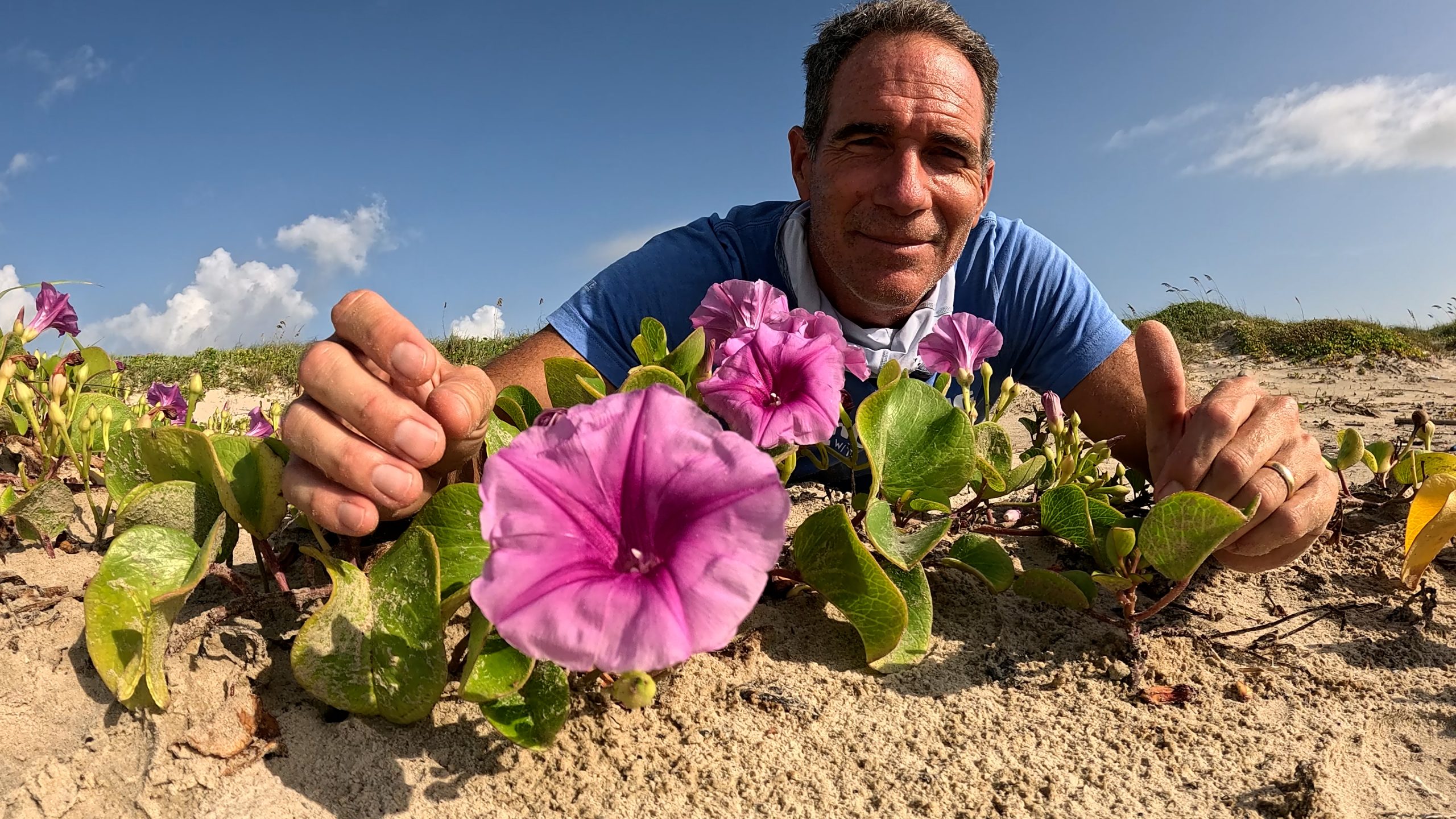
Hundreds of railroad vines were in full bloom — their large, pink, trumpet-shaped flowers stretching across the sand dunes. The blooms were buzzing with bees and butterflies, making it hard not to stop and admire the scene.
As beautiful as the flowers are, railroad vine is doing something even more important. Its long, creeping stems, which can stretch more than 100 feet, root along the sand and trap blowing sand as they grow. Over time, they help build and stabilize the dunes that protect our coastline.
Those dunes are our first line of defense against hurricanes and tropical storms. They absorb wave energy, reduce storm surge, and provide valuable habitat for wildlife.
It’s amazing that a plant growing low to the ground plays such an important role in protecting the Texas coast.
Railroad vine has been appreciated for centuries for more than just its beauty. Indigenous peoples and coastal communities traditionally crushed its thick leaves into a paste that was applied to jellyfish stings and other skin irritations. Modern research has found anti-inflammatory compounds in the plant, lending support to those traditional uses.
If you’ve walked the beach, you may have noticed another vine with similar leaves and white flowers growing nearby. That’s beach morning glory, a close relative of railroad vine.
While both species help stabilize dunes, railroad vine is easy to recognize by its larger pink-to-purple blooms and large, hoof-looking leaves, while beach morning glory produces white flowers with a yellow center.
If you spot these colorful vines on your next beach walk, take a moment to enjoy them, but also give them space. Every stem helps build stronger dunes, every flower feeds pollinators, and every healthy dune makes our coast a little more resilient.
Sometimes the most important plants are also the most beautiful.