It’s called the “lost copy.”
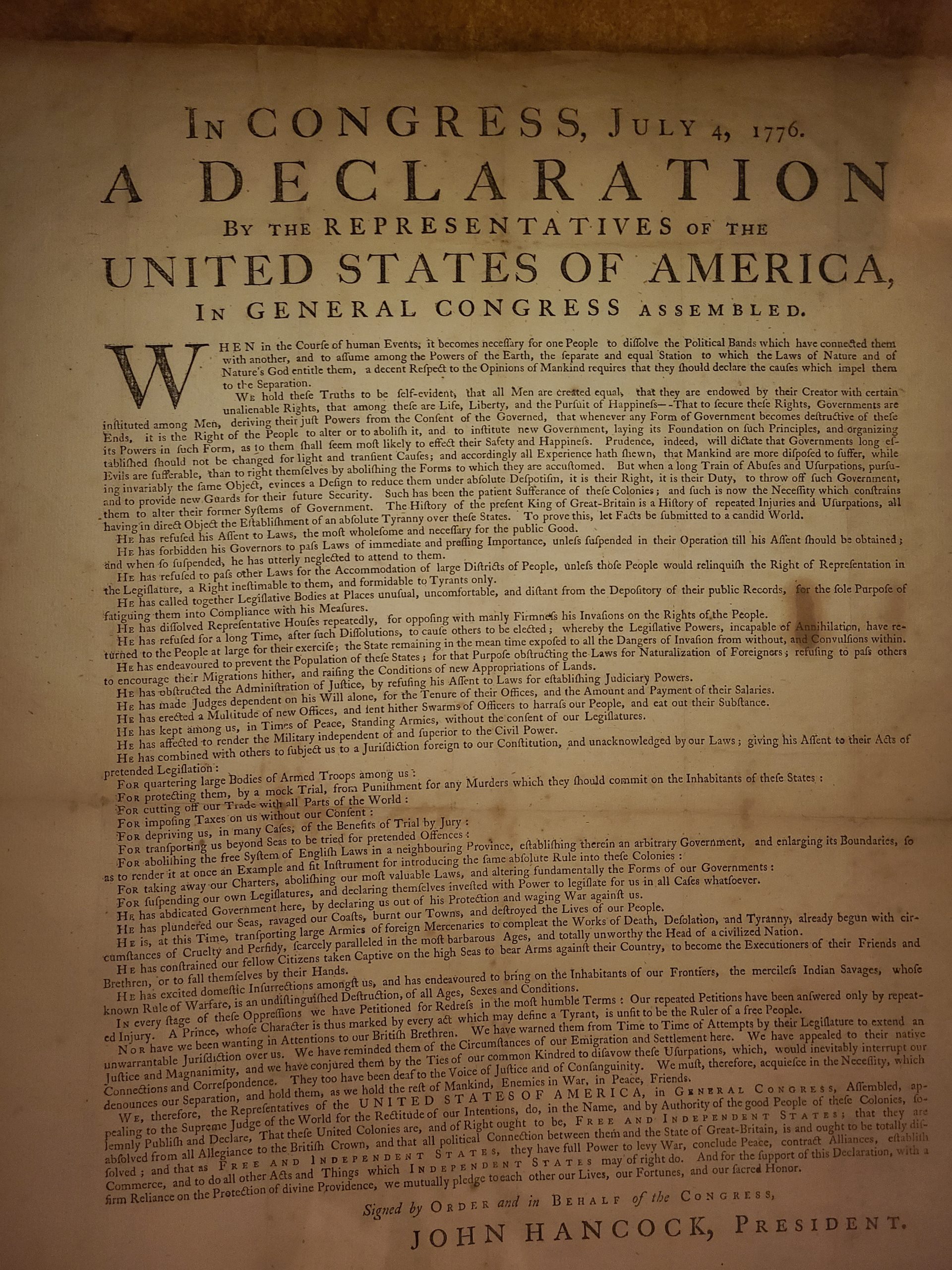
Unlike most of the 25 other copies of the Declaration of Independence, with well-maintained pedigrees and records down to the minute, the only copy in Texas embarked on a centuries-long odyssey to arrive in the Dallas Public Library.
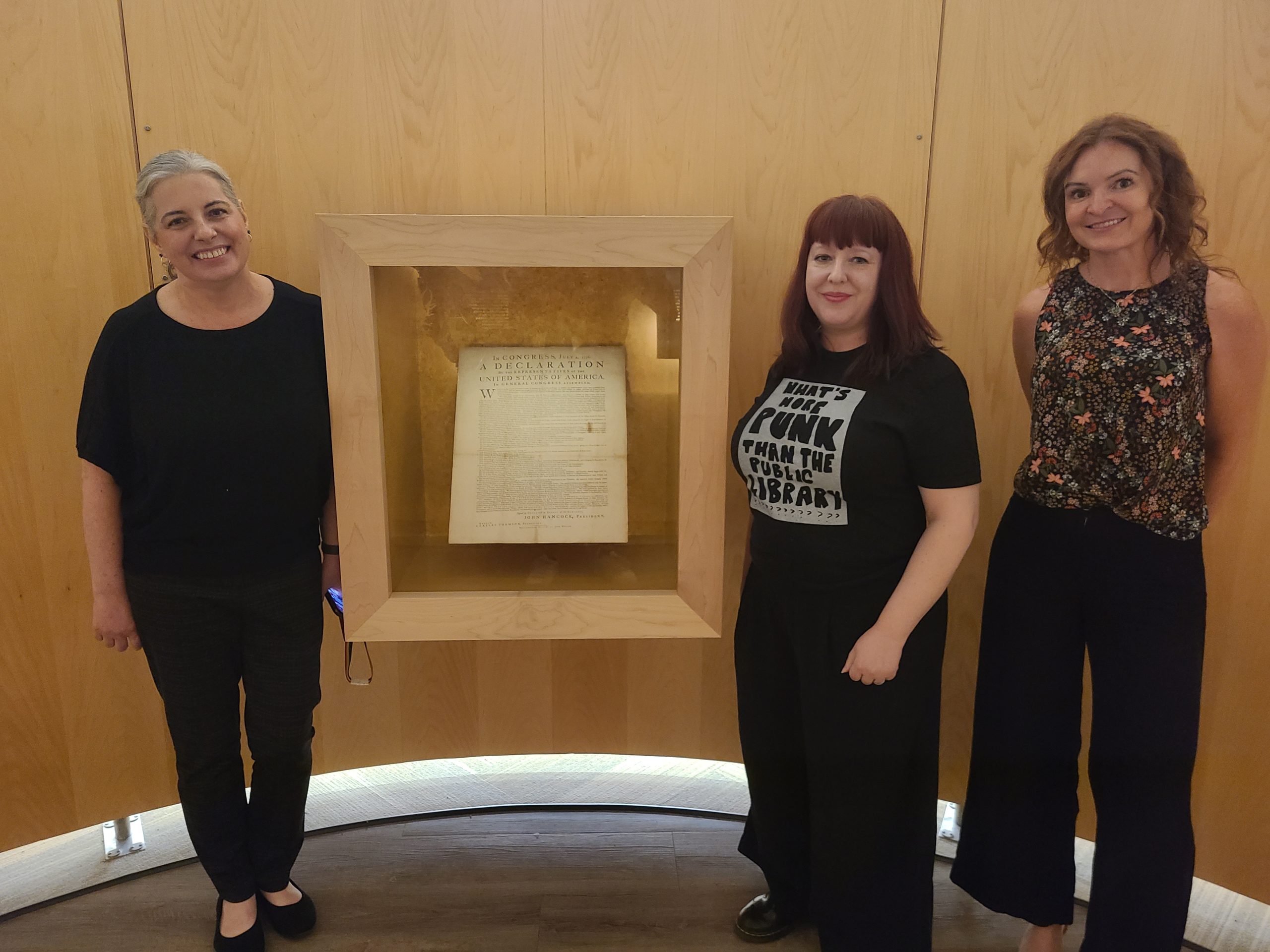
Three folks down at the library recounted this saga to the Texas Standard: Melissa Dease, the Assistant Director of Dallas Public Library; Misty Maberry, Manager of Dallas History and Archives; and Kristen Calvert, current Director of Library and Outreach Services at Denver Public Library who was formerly the Programs and Partnerships Administrator in Dallas.
The document’s story begins deep into the night of July 4, 1776.
“We didn’t have the internet to spread information like we do now. They had to have some way to let everyone in the colonies know that this Declaration had been written,” Dease said.
Raul Alonzo / Texas Standard
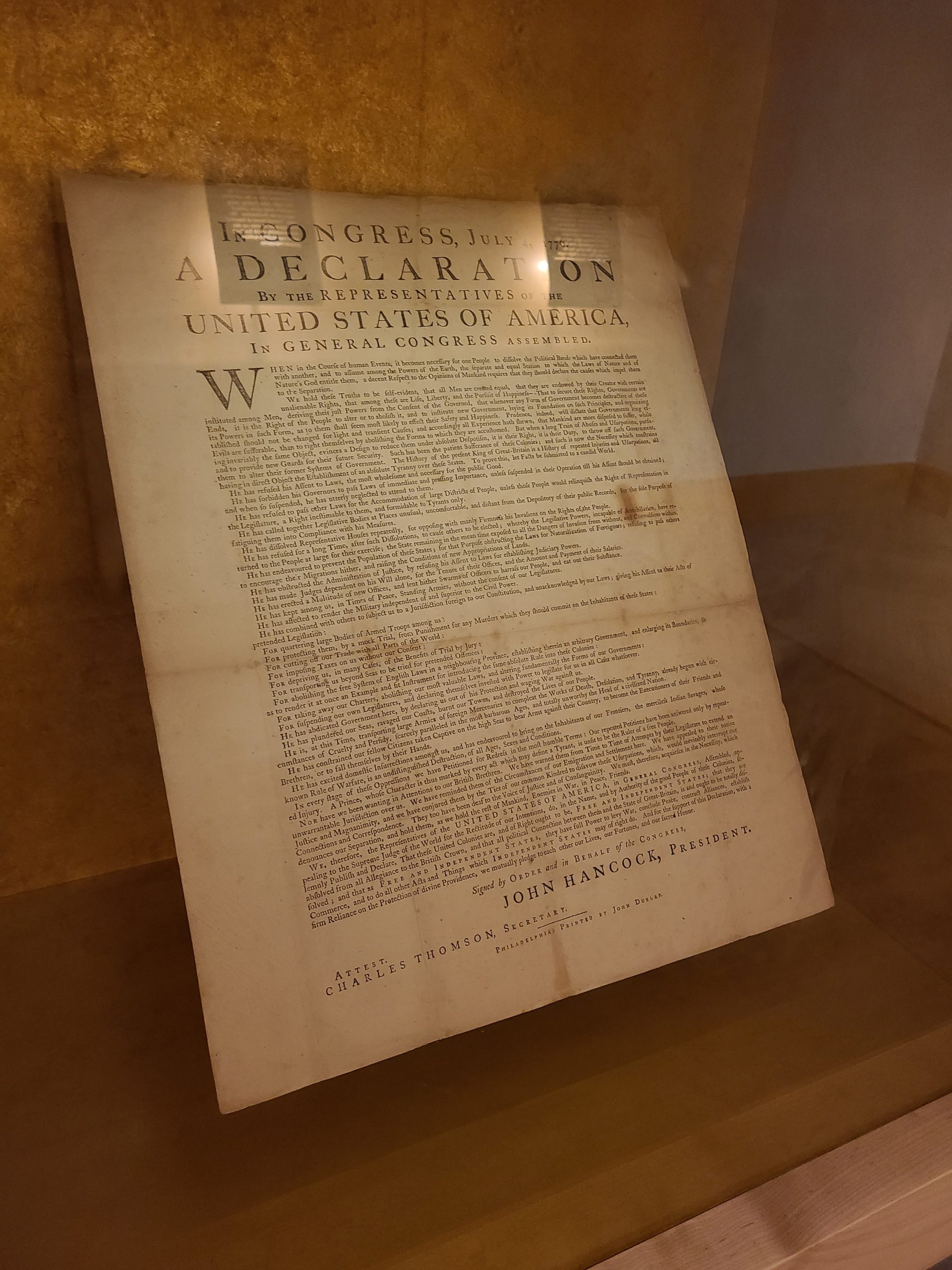
These original copies are called Dunlap broadsides after their printer, John Dunlap of Philadelphia, a 29-year-old Irish immigrant.
Each copy was printed by hand, with a tiny wooden piece for every letter. There is evidence these copies were made with the same nervous excitement anyone finishing a paper well into the night might relate to — punctuation moves around between copies and some were folded before the ink could dry.
Over the next two days, around 200 copies were circulated throughout the new United States. They were also nice enough to mail one to England.
The story of Dallas’ copy goes dark after this moment. It wouldn’t resurface until 1968.
That year was an unfortunate one for Leary’s Book Store in Philadelphia. The bookstore had run for over a century, but that November it finally buckled: Its consumer base now gone to cheaper homes in the suburbs and the “Golden Age of Books” in its sunset years.
In 1969, while liquidating the remaining Leary’s stock at the Freeman auction house, the booksellers discovered a previously unknown copy of the Declaration waiting patiently for them in storage.
It sold for $404,000 — “the highest price ever paid at auction for a printed or manuscript book or document” declared an article in The New York Times that May. That’s about $3.6 Million in today’s money.
Two wealthy Texas executives bought it: Joseph Driscoll and Ira Corn, Jr.
They beat out Hans P. Kraus, a New York rare-book dealer and chief of a re-print enterprise in Lichtenstein.
Kraus told the Times: “If you fight with a Texan, you have a fight on your hands. We both got mad —fighting like crazy. I told my wife before the sale that I might have to pay half a million for the Declaration, and she said, ‘Hans don’t come home.’ Now I can go home.”
While Kraus, Driscoll, and Corn all went home, the Declaration didn’t. That’s because it was discovered so close to America’s bicentennial celebration in 1976, the pair of Texans sent the document on a nationwide tour.
“It was taken on the road,” said Maberry. “This is known as the lost copy of the Declaration of Independence, and it’s also known as the most-traveled copy.”
After several years of travel, the city of Dallas finally acquired the Declaration in 1982.
At first it was displayed in Dallas City Hall. The city manager, George Schrader, preferred it to stay there.
“We had a firecracker of a library director named Lillian Bradshaw,” said Maberry. “She heavily advocated for it being brought over to the Dallas Public Library. She wanted it to be in a space that was open and accessible to the public.”
Schrader acquiesced, and the document moved a few blocks down South Ervay Street, into the Dallas Public Library.
“The Friends of the Dallas Public Library were instrumental in helping us acquire that and getting the space built,” said Maberry.
The Declaration now lives on the seventh floor of the building, in a sealed case that lights up its dimmed room. It has temperature controls, humidity monitors, and all the bells and whistles you’d expect for this paper celebrity.
“It just has kind of a gravitas,” said Dease. “Walking into this dimly lit space with this lit document behind glass, that even if you didn’t know what it was, it kind of makes you say ‘Oh, I need to look closer at this. This must be something important.’”
Calvert says people fall quiet when they enter the space.
“It is like a moment of gravity where people want to take it in, I think, and really think about it. And it does kind of give you chills, like if you really think about what we have here,” she said.
Raul Alonzo / Texas Standard
The Declaration does still get out from time to time.
“When the touring production of Hamilton came to Dallas, we took it to the theater and we had it in a display case,” said Melissa. “So as people came in to attend Hamilton, they could view it.”
Thousands of students and members of the public have come to see the document in its permanent home. Dease says it’s an essential part of keeping the story of U.S. independence alive and grounded for many Texans.
“This is the only copy west of the Mississippi,” Dease said. “It’s one thing to be in Boston or in Massachusetts, where all of those kinds of historical sites and monuments are right there, and you live with it every day.”
During the America250 celebrations, the Declaration will be displayed in the Hall of State at Fair Park through July 17. It stands central before the Hall’s 12-foot-wide golden medallion — a far cry from when it was folded and forgotten in a Philadelphia basement.
After the celebration, it will return safely to its library home, where it is free to visit along with an original Shakespeare’s First Folio, 19th century Navajo textiles and a wealth of art from artists around the globe.
The adventure this document embarked on may tell us just as much about the history of our nation as the text itself.
“The further west you get, the more that doesn’t feel like a real thing that happened, because there’s no evidence of that around you. Here’s something right here in Texas that you can see and experience,” said Dease.