From KERA News:
Dallas is projecting at least $1.5 billion in “economic impact” for the region.
FIFA is projecting over a $30 billion impact for the country as a whole, 185,000 new jobs and healthier people due to the increase in physical activity.
Those are some big claims about the 2026 FIFA World Cup.
They’re also likely exaggerated, some experts told KERA News.
Large international sporting events usually result in only a modest bump in economic activity, which can be offset by security costs, they said.
Even President Donald Trump at a White House event with FIFA President Gianni Infantino last year sounded suspicious.
“It’s expected to drive more than $30 billion, Gianni, I don’t know about that,” Trump said. “That sounds like a lot of money, are you sure?”
The true benefit of the World Cup may come from getting the region in front of hundreds of millions of eyes, some experts said. But even that is hard to quantify.
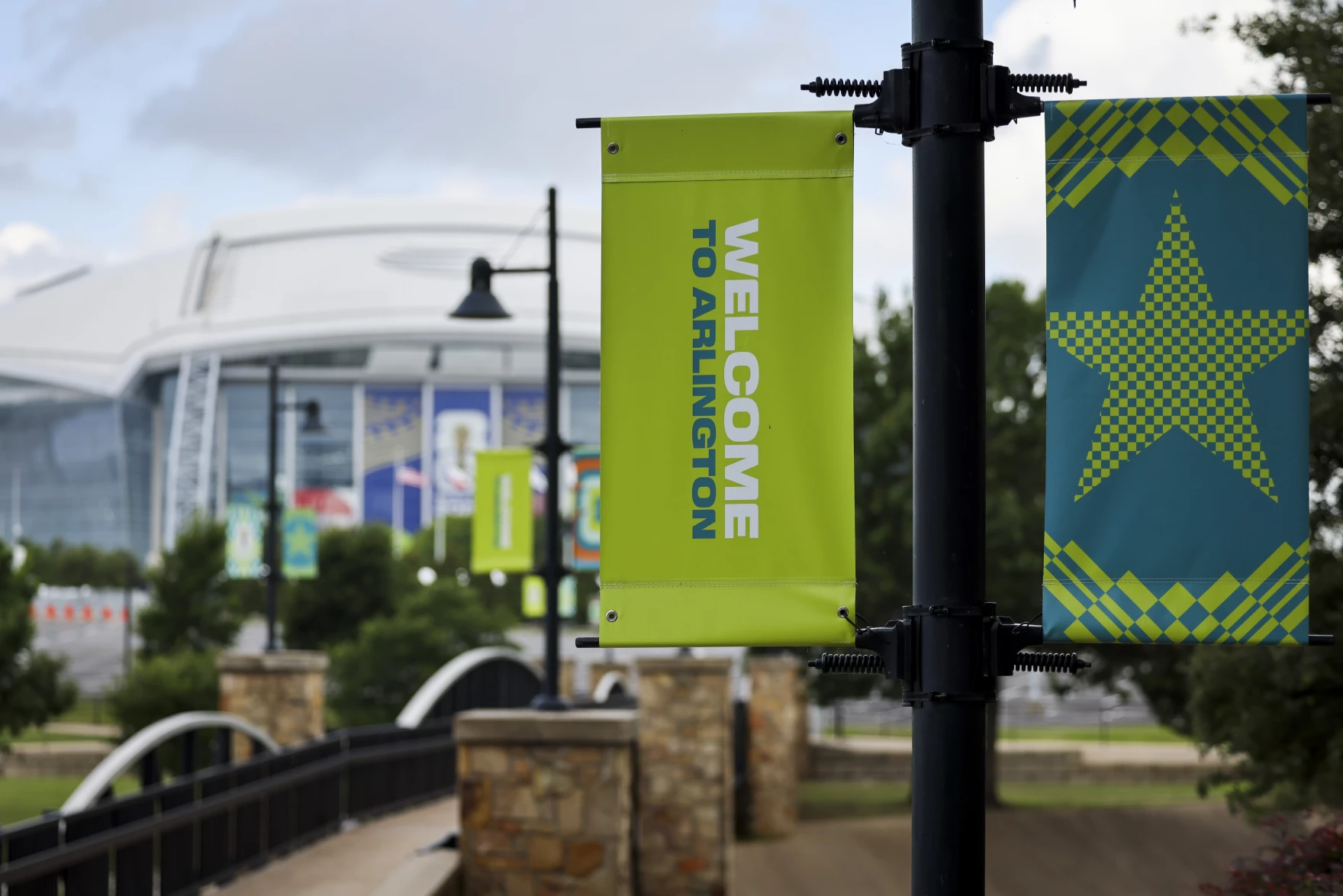
Meanwhile, questions remain about how cities like Dallas will economically benefit from the games — especially considering the games take place at AT&T Stadium, temporarily renamed to Dallas Stadium during games but which is based in Arlington.
Will Dallas benefit?
Cullum Clark, a professor of economics at Southern Methodist University, said the games will likely have a modest economic impact on the city.
“I guess they’d have something of a little boomlet in sales tax revenue that lasts for a few weeks, and then it just goes back to where it was before,” Clark said. “So in the grand scheme, it doesn’t really matter that much.”
Clark said the real economic benefit comes when a city starts investing in itself so it’s a viable option to host World Cup matches in the first place.
That means robust airports, highways, public transportation and an entertainment district.
Dallas itself is projecting a $3.5 million bump in sales tax revenue, a city spokesperson told KERA. Hotel Occupancy Tax revenue, which will largely go to Visit Dallas and the Kay Bailey Hutchison Convention Center, is expected to increase by about $6 million.
It’s not clear yet how much of that $6 million boost will actually materialize as hotel bookings have fallen short of expectations, KERA previously reported.
Dallas is budgeting to spend more than $32 million on police, emergency services and management for the matches.
Host cities are required to provide security for the matches, so taxpayers will largely subsidize that cost whether it’s through city, federal or state dollars.
That’s true even when the stadium isn’t in the host city — like with Dallas Stadium being in Arlington.