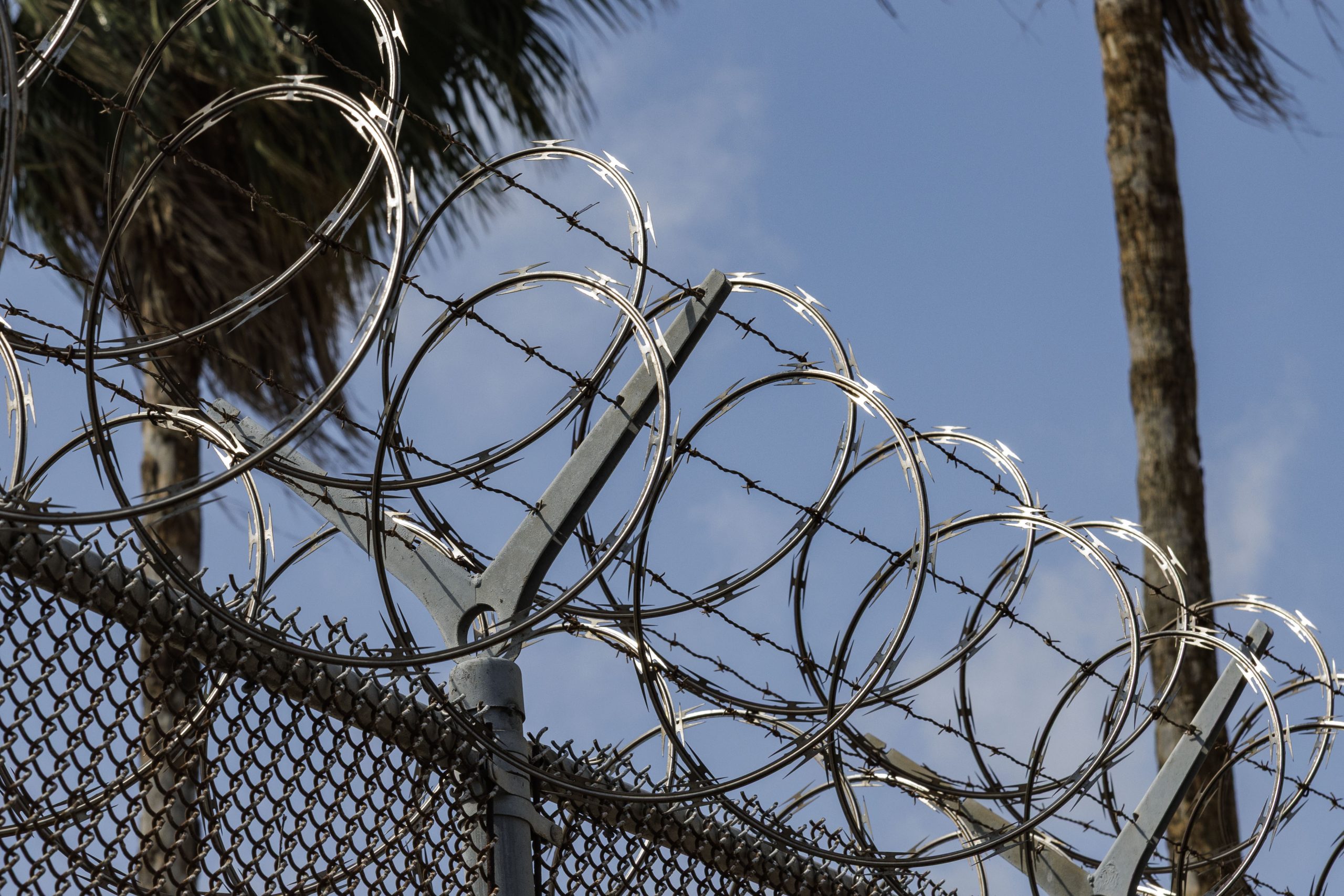
The Trump administration’s immigration crackdown has resulted in the detentions of tens of thousands of people.
There’s evidence those folks might not be properly watched and cared for, as a new investigation by the Associated Press finds an alarming number of ICE detainees have committed suicide.
Ryan Foley covers national news for the Associates Press and was part of this investigative team. He joined Texas Standard to talk about the report. Listen to the interview in the player above or read the transcript below.
This transcript has been edited lightly for clarity:
Texas Standard:You’ve tracked what you’ve determined is a spike in suicides among ICE detainees. When did this begin?
Ryan Foley: This really began 14 months ago. In April 2025 is the first suicide that we found during the Trump administration, and it’s steadily grown since then. So there’ve been 10 confirmed suicide deaths of ICE detainees since April 2025, so over 14 months.
And for some context, historically, ICE has often had zero or one suicide deaths per year and to have a spike of 10 over 14 months is notable.
There have been a big increase in detainees, though. I mean, does the spike match the rate at which more people have been brought into ICE custody?
No, this far exceeds the growth in the detainee population, which has gone up around 50% since President Trump took office from around 40,000 ICE detainees on any given day to around 60,000.
The increase in suicides is exponentially larger than that.
I mean, it would probably be really hard to determine exactly why this increase is happening looking at each individual case. But what did you hear from experts about what they think might be contributing?
Yeah, we’ve talked to some experts who have studied these issues for a long time and even advised ICE on how to prevent detainee deaths. And one of the things they said is that there appears to be big problems with how they screen detainees when they arrive at a new ICE detention facility.
Those screenings are supposed to take place within 12 hours and determine what medical and mental health needs detainees have. And we found some evidence that, in some cases, those were not happening in a timely fashion. Those have also been challenged due to language barriers. Often nurses are using handheld translation devices to try to communicate with detainees.
The experts we spoke to said there’s also an indication that when those screenings are handled properly, you know, it does pick up some red flags. The follow-up care might not be arriving on time, might not being delivered well.
And we found some indications of that where people had asked for mental health treatment and did not get that, at least not in a timely fashion before their deaths.
» GET MORE NEWS FROM AROUND THE STATE: Sign up for Texas Standard’s weekly newsletters
Where are these suicide deaths happening?
These deaths happened really across ICE’s sprawling detention network. So they’re happening in large detention facilities that are operated by ICE’s private contractors, the GEO Group and CoreCivic.
They’re happening in county jails that have recently signed up to be detention facilities for ICE, and one of the cases happened in a federal prison that works with ICE.
Well, your story is not just about numbers, but about people. Is there a story in particular that you brought to light in this reporting that really sticks with you?
Yes, we focused on the case of Brayan Rayo Garzon, who was the first suicide death that we recorded back in April of 2025 at a county jail in Missouri. And he was a 27-year-old man who was from Colombia. His case shows a lot of the shortcomings that the experts were talking about.
So when he arrived at the jail, it took about 35 hours for him to get that initial screening. At that screening, he asked for mental health treatment and said he was anxious. And they tried to schedule him an appointment for days later.
It was canceled the first time because of lack of staff, according to the records we reviewed. It was rescheduled for a couple of days after that. And then it was canceled by then because he had contracted the coronavirus.
And so after he was ill with COVID-19, he was placed into medical isolation and that appeared to weigh heavily on him. He had been making nightly phone calls to his mother. When he was moved into medical isolation, he was not allowed to make those calls.
In his final hours, he wrote some notes in Spanish to the guards begging to get in touch with his mother, saying “she’s worried about me. They haven’t been in contact for four days.” And, you know, they found him unresponsive shortly thereafter.