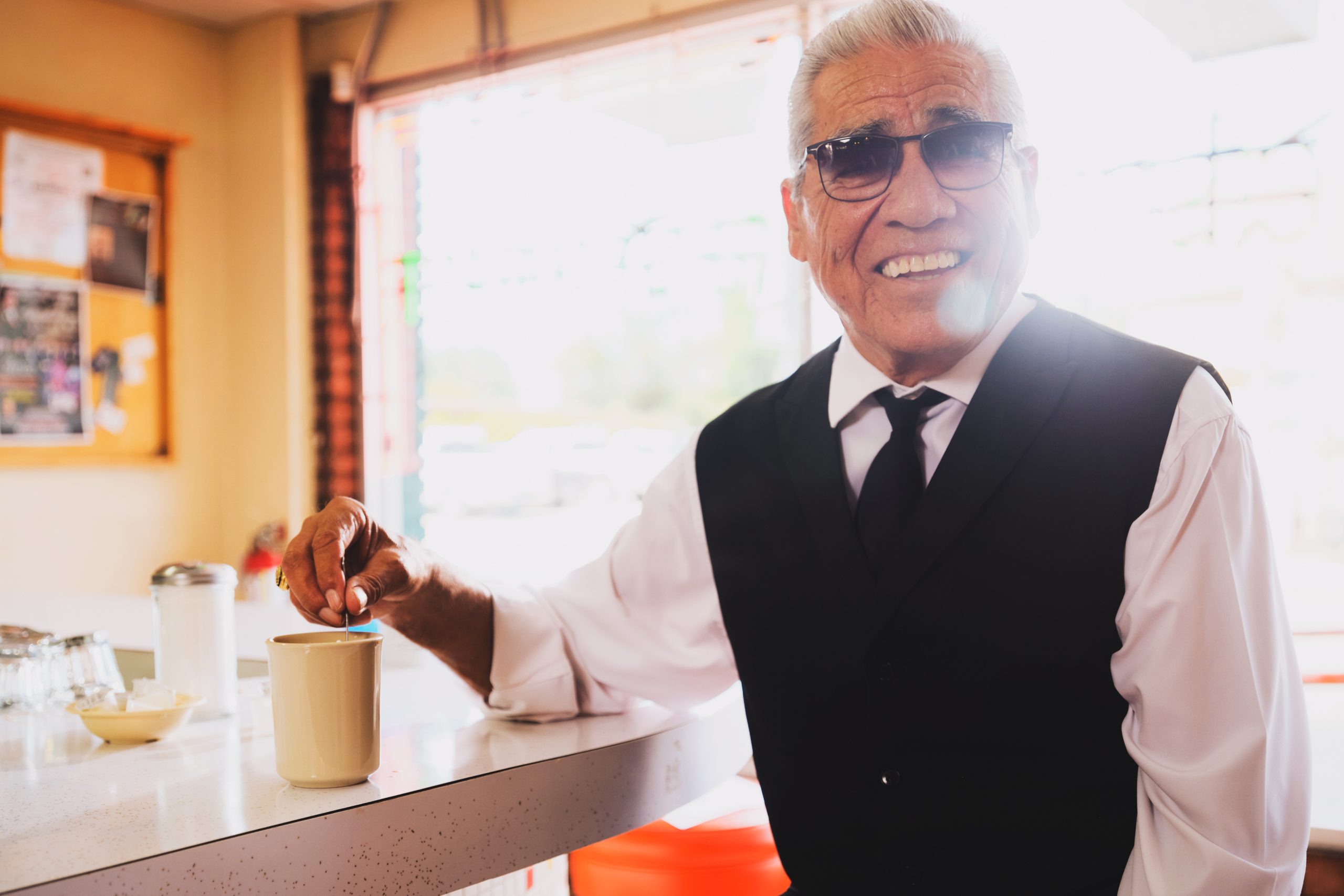
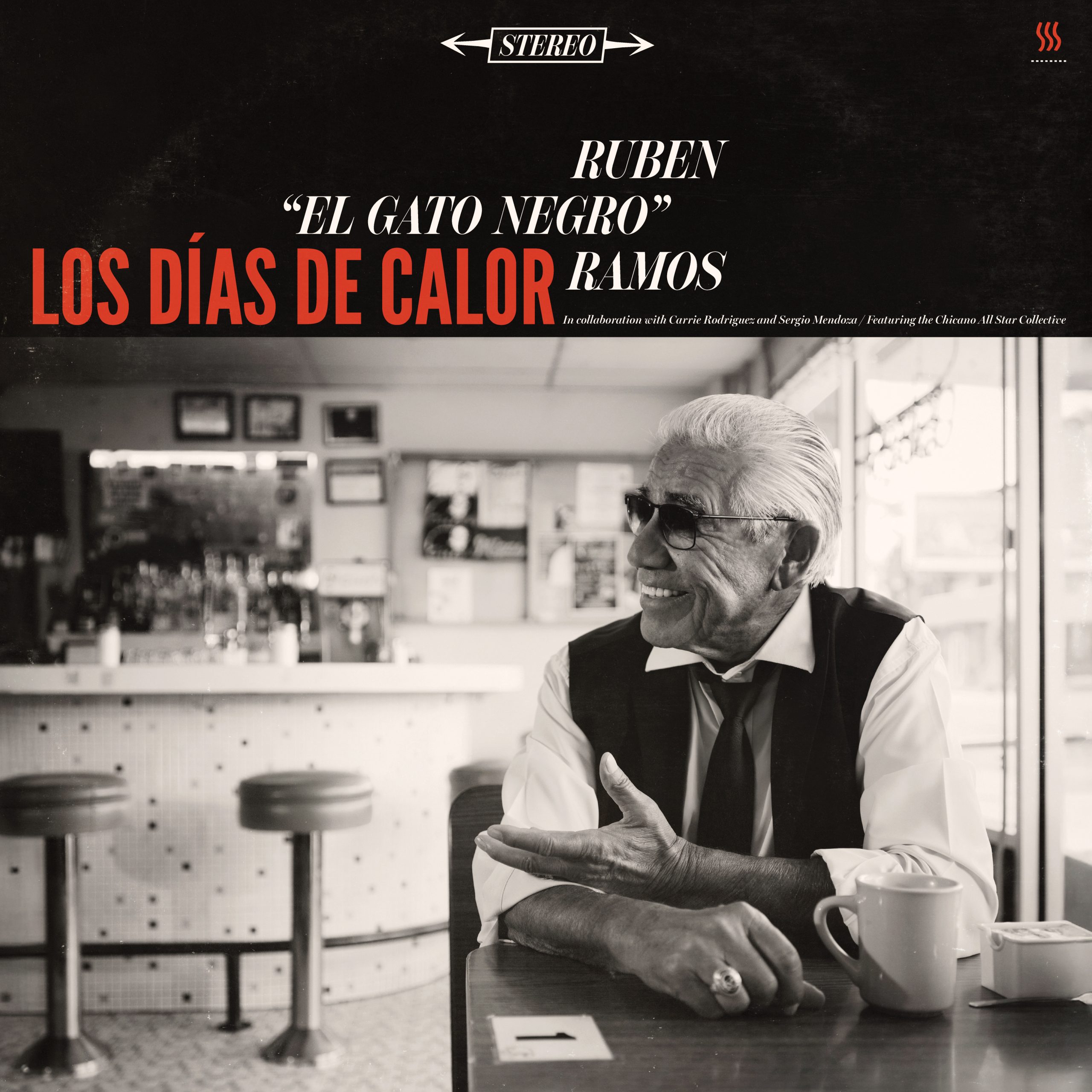
Ruben ‘El Gato Negro’ Ramos looks back on legendary career with ‘Los Días de Calor’

The legendary Tejano singer is joined by Carrie Rodriguez and Sergio Mendoza on the album.

By Leah ScarpelliMay 29, 2026 3:13 pm, ,

For more than a half a century, Ruben Ramos has been one of the defining voices of Tejano music.

Born in Sugar Land, known to fans as “El Gato Negro,” he has helped carry the sound of South Texas way beyond the state line.

This year he appeared with Los Texmaniacs on the Grammy-winning album “A Tribute to the King of Zydeco,” honoring Clifton Chenier.

He’s also released a new album himself, “Los Días de Calor,” a reflective collection produced with Austin’s own Carrie Rodriguez and Sergio Mendoza.

After a vocal cord procedure last year, Ramos is back, still singing and still helping define that uniquely Texan sound that has been revolutionary. He joined the Standard to discuss his career and new album. Listen to the interview in the player above or read the transcript below.

This transcript has been edited lightly for clarity:

Texas Standard: Tell us a little bit about The Mexican Revolution. That group was what, 1969 or something like that?

Ruben Ramos: That was born with my little brother. My little brother, Roy Ramos, was the one that separated from us five brothers in 1966/65 and went with his other orchestra. And they were left in California in 1969 and the band leader flew home and left him over there in the unpaid motel with unpaid musicians and they had to kind of put their money together just to get gas, just to get back home.

So when they got here, back to Austin, home, they named the band, The Mexican Revolution, kinda revolting against band leaders. And two weeks later, my little brother came to me and Sas, Arturo Gonzalez, came and asked me, “we need a singer.”

I told my brother, “I don’t think I can do it, because I don’t know a single word in Spanish.” English is my first language, as far as music. Anyway, they insisted that I go, so I did a couple of songs like “La  demonio colorado / me trae todo bien mareado.”

“Moño,” I was singing “la demonio,” which is “devil.”

Finally, my father, “mijo, no, no, that’s not, no. Que estas cantando? What are you singing?”

“What’s up, man? ‘La demonio?'”

“No, mijo, it’s ‘la del moño.'”

I didn’t know what that meant either. So he told me, “it’s just nice bow in the lady’s hair,” you know. “La del moño colorado / me trae todo bien.” Like man, it got me real excited.

But I think, in a way, what seemed to be happening with that band was you came to sort of develop a sound that merged a lot of different styles, sort of as a mix that people started calling Tejano, don’t you think? I mean, in a way, you were Tejano before Tejano was a thing.

Well, I was Chicano.

Say more about the difference.

Chicano is… I was introduced to all these different kinds of genres of music, you know. I incorporated Mexicano music with rhythm and blues, Ray Charles to the Beatles, to whatever, but to me that’s Chicano.


Your new album, “Los Días de Calor,” feels reflective and deeply personal. What sort of story were you hoping to tell with this record? 

This was not my idea. I didn’t come up with that idea. Carrie Rodriguez and Sergio Mendoza were the ones that put this all together.

Terrific artists.

They’re the ones that put all this story together, you know? They just said, “let’s do a documentary on you.”

I didn’t know what “documentary” meant. And these recordings that I did were already done by me, you know, in the ’70s and the ’80s and whatever, but they took the songs that pertained more to my life, like in my childhood, “Días de Calor,” whatever, and they’re the ones that put it together.

Sarah Wilson / Courtesy

Carrie Rodriguez, left, was instrumental in making "La Días de Color," along with fellow artist Sergio Mendoza.

Can I ask you about your vocal cord procedure? You had that last year. Were you concerned that maybe you might not be able to continue to sing?

Yes I was, but the doctor says, you know, “I’m pretty sure it’s not going to bother your singing. You might not sing for a little while.”

But it was just a polyp there that wasn’t that big or whatever. We just want to make sure that it wasn’t cancerous. So it was not.

But I went through a triple bypass heart before then. So I was out of commission for three years, then the pandemic hit — another two and a half years. That’s five years. And then the throat, that’s another year or so.

How does it feel to be back behind the microphone now? Does it feel different emotionally or physically?

It feels like I’m back. It feels I’m okay, I’m back.

Back home, huh?

I’m back home, I’m back home. I’m ready to do it. At my age, I am ready to do it again.

Well, you sure sound like it. You sound fantastic.

I know you’ve inspired generations of musicians and I’m wondering, when they come up to you, what do you hear from them? Do you get a sense that the music that you do is going to continue strong into the future or are you concerned about that?

I’m not concerned, but in a sense, I guess I am, but I’m thinking about it. I’m just, I think music’s being diluted. It’s been diluted.

Watered down a little bit?

Watered-down. Basically, I think you can record a whole album on your phone. There’s bands that push a button and the band, the music comes on and the only thing that’s live is a singer. And that’s, to me, no, man.

People ask me if I wanna do that… That’s not me. I want live music here, I want a wall of music behind me. I want the drums, a pair of trumpets, and the guitars, and the bass behind me, whatever. And I’ll never adhere or agree to that.

Let me ask you one final question. After all these years, what gives you the greatest satisfaction when you step on stage and sing before an audience?

Making people happy and seeing them dance, seeing them moving and reacting to my music. That’s my energy.

My favorite is playing for people live and people dancing, people rejoicing, people having fun.

If you found the reporting above valuable, please consider making a donation to support it here. Your gift helps pay for everything you find on texasstandard.org and KUT.org. Thanks for donating today.