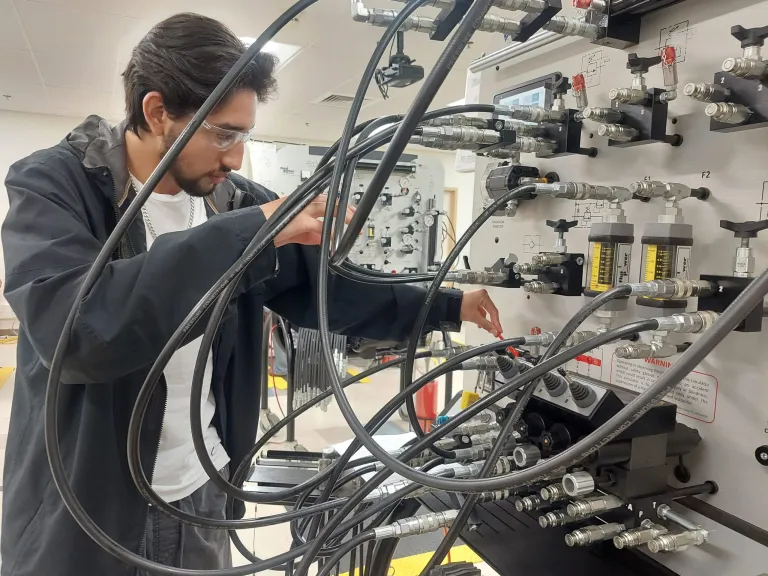
MIDLAND, Texas — Dylan Ruiz sat in front of a nearly 6-foot-tall structure, a jumble of pumps and valves that simulate the flow of liquids and pressure changes. He was working through a training scenario on preventing oil leaks during his class on pumps, compressors and mechanical drives at Midland College in Texas. In the oil and gas industry, even minor errors can have major consequences.
Ruiz, a 17-year-old senior at Legacy High School in Midland, is one of about 100 students earning dual high school and college credits by taking free courses on the basics of oil and gas production through Midland College’s Petroleum Energy Program.
“It’s a boom-and-bust economy, but you can see the profits undeniably,” said Ruiz, who wants to be a petroleum engineer to provide for his family. As a kid, he and his family felt the bust: His dad, who entered the industry without a college degree, was laid off a few times. But they’re betting on Donald Trump to help usher in a boom.
For more than a decade, as many oil and gas workers near retirement age, the industry has poured millions of dollars into Texas K-12 education to create programs designed to train students on the basics of the industry. The investment in recruiting and educating younger people was in danger of slowing as the country moved toward clean energy production. But some educators in Texas say the programs have been reinvigorated by the Trump administration’s pledge to ramp up fossil fuel extraction.
Oil and natural gas jobs pay among the highest wages in Texas, averaging about $86,298 in 2024, according to the latest figures from the Texas Workforce Commission. The Petroleum Energy Program primarily trains students for roles as technicians, supporting scientists and engineers in finding and extracting oil and gas.
“We need those workers,” said Kathy Shannon, a prominent oil and gas education advocate who retired in 2023 as the longtime executive director of the Permian Basin Petroleum Museum in Midland, which works with the school district to promote STEM education and jobs in the industry. It’s necessary, she said, to “entice these kiddos and teach them about the industry and why it’s a great living.”