‘A journey of discovery’: Duo biking from Texas Gulf Coast to Canada along whooping crane route

Ecologist Andy Caven and photographer Mike Forsberg are documenting and meeting people along the way to raise awareness about one of North America’s rarest birds.

By Raul AlonzoMay 19, 2026 1:59 pm,

There is only one self-sustaining, migratory flock left in the world of the endangered whooping crane.

Every year, the birds make a trip of some 2,500 miles from Canada to the Texas Gulf Coast, where they spend the winter.

It’s a perilous journey for any creature to fly — but what about to bike?

That’s just what photographer Mike Forsberg and Dr. Andy Caven of the International Crane Foundation seek to do.

They recently took off from the Texas coast on a two-month cycling journey they’re calling “Pedaling the Whooper Highway,” taking them up through the heart of the Great Plains into Canada — recreating the path of the cranes.

It’s an epic journey that’d only been in the works for a couple of months.

“Part of the goal of the whole project was to have the experience of trying to migrate,” Caven said. “We’re not like experienced migrants. Neither of us are trained endurance athletes … We’ve been working on getting in shape for this, and it’s sort of like a whooping crane on one of its first migrations.”
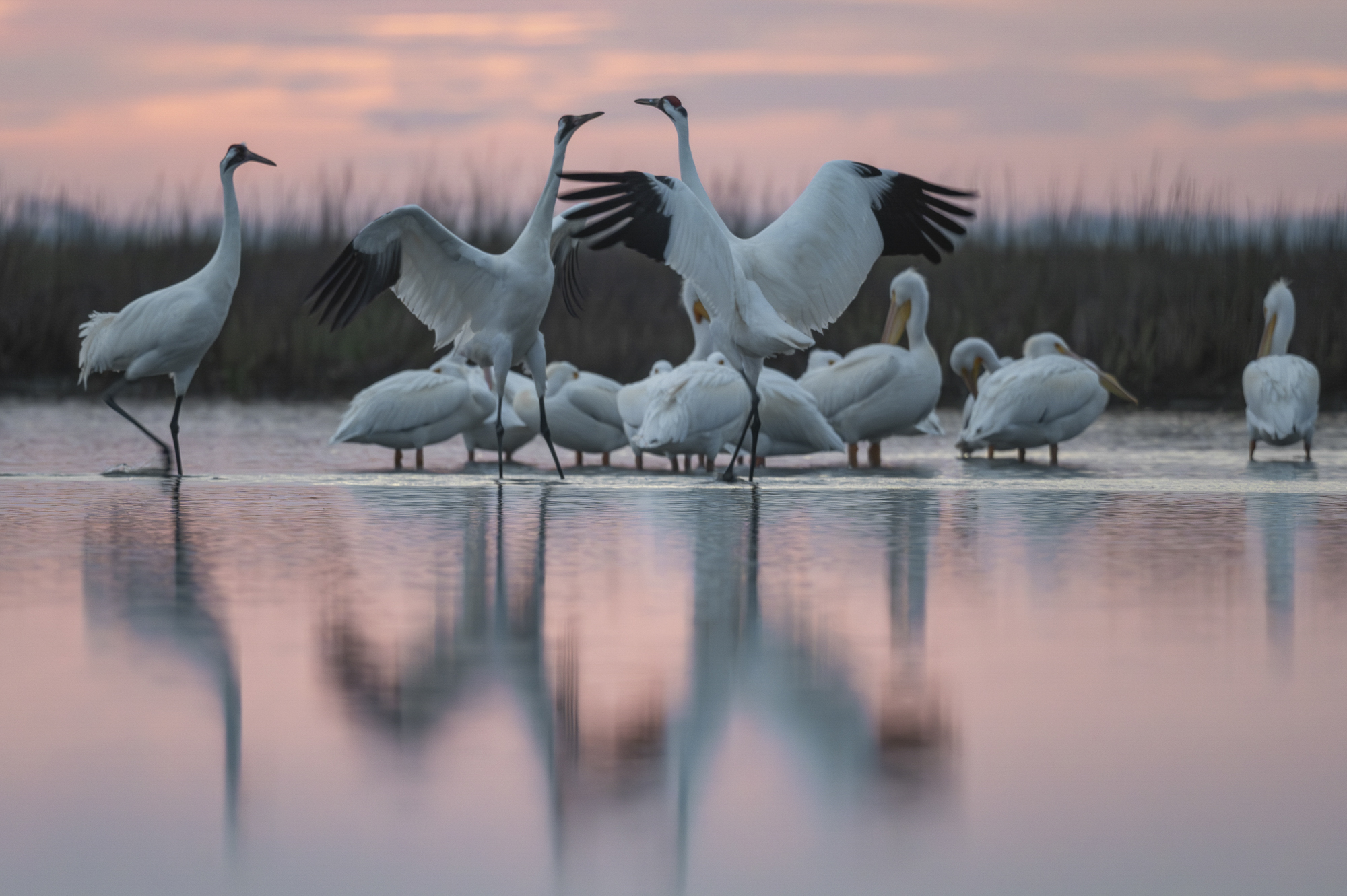
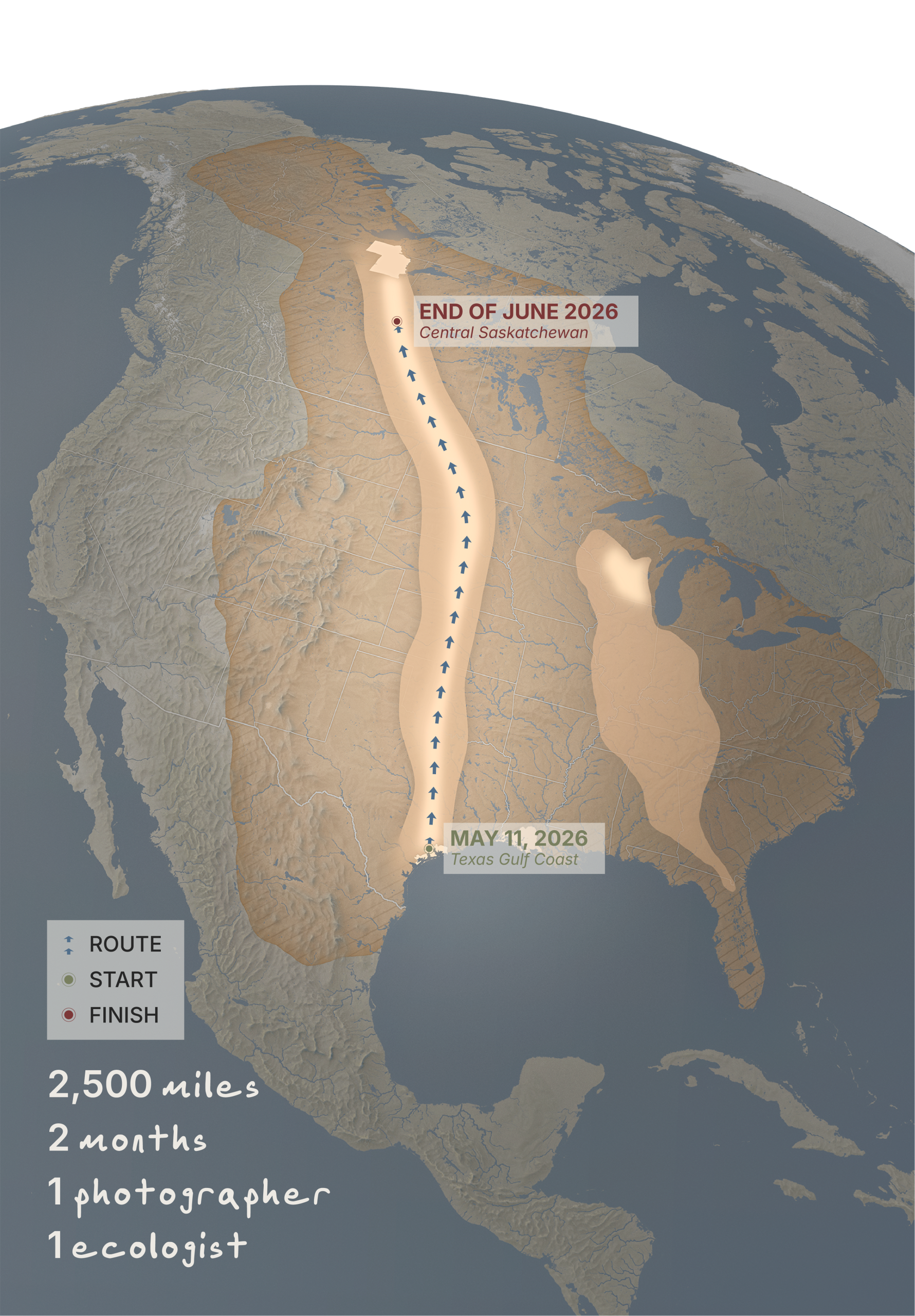
Photo by Michael Forsberg

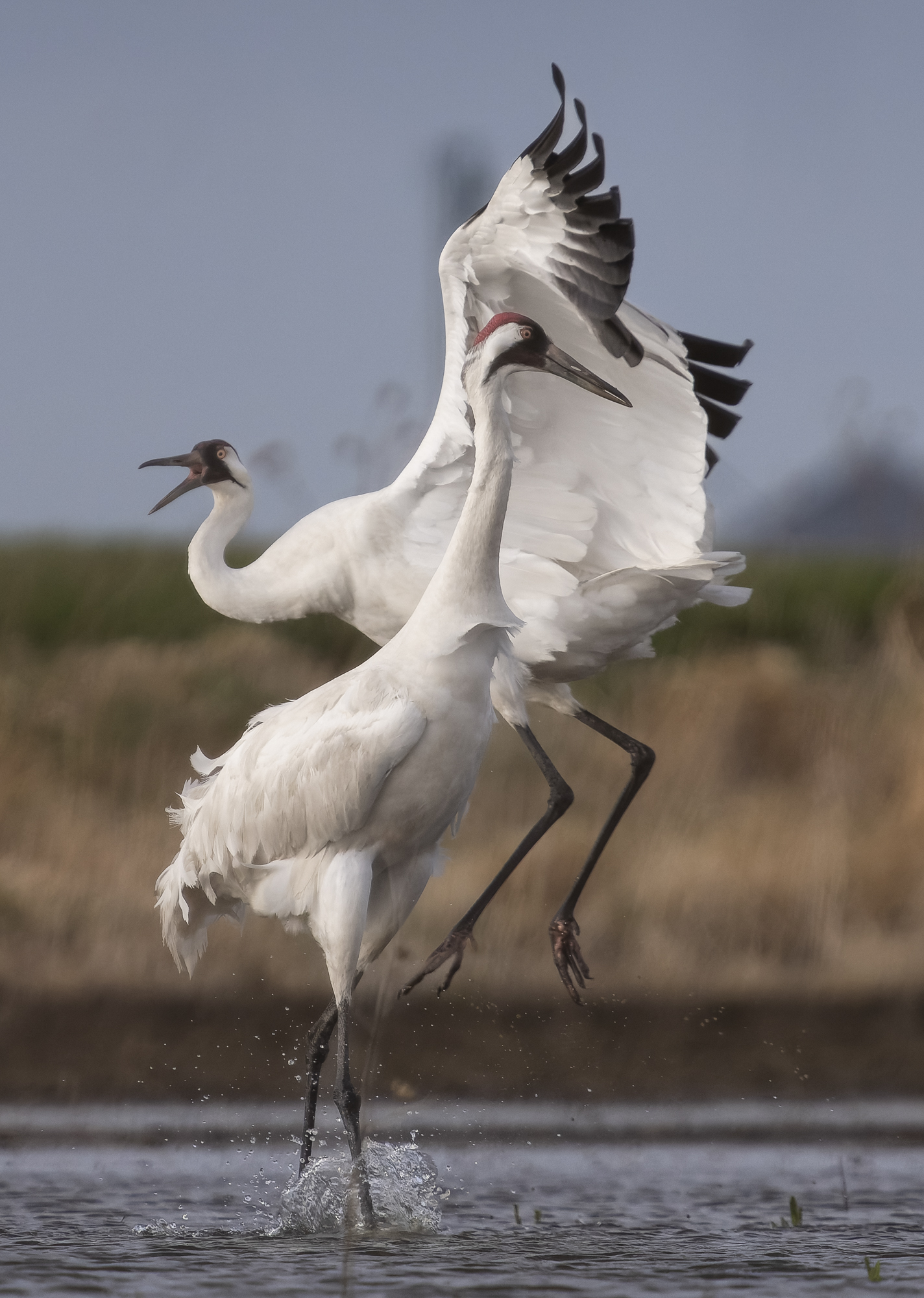
Whooping cranes, center with wings outstretched, are among the rarest birds in North America.

The Whooper Highway

The course of the bicycle trip takes the two through the Central Flyway, a route that cuts across the Great Plains and is utilized by numerous migratory species.

It’s a route that Caven says has become imperiled over the years, with millions of acres of wetland and grassland habitat lost to agriculture, suburban sprawl or other means over time. The result is a more hazardous journey for the cranes and other threatened species that utilize the flyway, like the monarch butterfly.

Map Design by Eric Knight

On their journey, Caven says part of their task will be to catalog the habitat-loss threats they see.

“As we check off these important spots for whooping cranes, they’re also important for all these other things that don’t have the formal protection. So, if you succeed for the whooping crane in this flyway, you essentially succeed for biodiversity,” Caven said.

But in addition to the science, the journey is a way that Forsberg says can help bring them closer to the experience of the cranes and people along the routes.

“For me, it’s a journey of discovery in a way,” Forsberg said. “You don’t necessarily know what you’re going to learn until you’re out there doing it. And then sometimes you’re not sure what you learned until you get to the end point and you look in the rearview mirror.”

» GET MORE NEWS FROM AROUND THE STATE: Sign up for Texas Standard’s weekly newsletters

It’s not the first time either of the two have followed the path, though it is the first time they are doing so by bicycle.

Caven says he’s driven the route, while Forsberg said he flew it in a small plane at the same elevation the birds fly — roughly 1,000 to 3,000 feet.

In doing so, as they aim to do on this trip, the two have seen the changes the Great Plains have undergone.

“We’ve gone from a wild prairie landscape to a breadbasket and energy pump — and all that stuff’s fine. But the question is, moving forward, who do we want to share the planet with, and do these birds matter to us?” Caven said. “Do the things that they connect for us — whether or not it’s personally or professionally or whatnot — do they matter enough that we want to conserve them?”

From the brink of extinction

The story of the whooping crane’s recovery begins on the Texas Gulf Coast in the 1940s.

It was there, at the Aransas National Wildlife Refuge, that the last wild flock of whooping cranes — numbering just 15 birds — was studied by ornithologist Robert Porter Allen.

“At that time, they didn’t know where [the cranes] were coming from,” Forsberg said. “Nobody knew where they nested. And they didn’t know the migratory pathway.”

Photo by Michael Forsberg

This kicked off a years-long conservation effort to bring the birds back from the brink of extinction.

It was a slow process, however. By the time the birds were listed in the first Endangered Species Act class in 1967, they still numbered around 60 or so, Caven estimates.

“There’s still less than a thousand. It’s the rarest crane in the world,” Caven said.

The flock that makes the trip from Canada to Texas is the only remnant flock — birds that descend from that last wild flock of the 1940s — left. Since then, three flocks have been reintroduced — one of which, the Eastern Migratory Population, also makes a yearly migration.

But the Canada-Texas population is the only one that follows a route taken by wild birds since time immemorial.

“I always like to say, this last wild sustaining population — migratory population at roughly about 550 birds — are here today despite us and because of us,” Forsberg said.

Caven says conservation efforts benefit not just the birds themselves, but people as well. He points to habitat preservation as bolstering natural resources that are also at risk of becoming scarce, like water.

“If you have a good basin management plan, you can have cleaner, healthier, more abundant water that supports wildlife and also supports people and is used sustainably,” Caven said.

And both Caven and Forsberg say the benefit of saving North America’s tallest bird for future generations touches something deeper.

“Imagine that you’re somewhere in the middle of Austin and you happen to look up and it’s April. And you look up in the sky and you see this five-foot-tall bird with a wingspan that’s as large as an NBA basketball player flying over the middle of the city, heading north,” Forsberg said. “My god, if that doesn’t make you just stop for a second, then there’s probably something that’s not in your heart.”

Photo by Mariah Lundgren

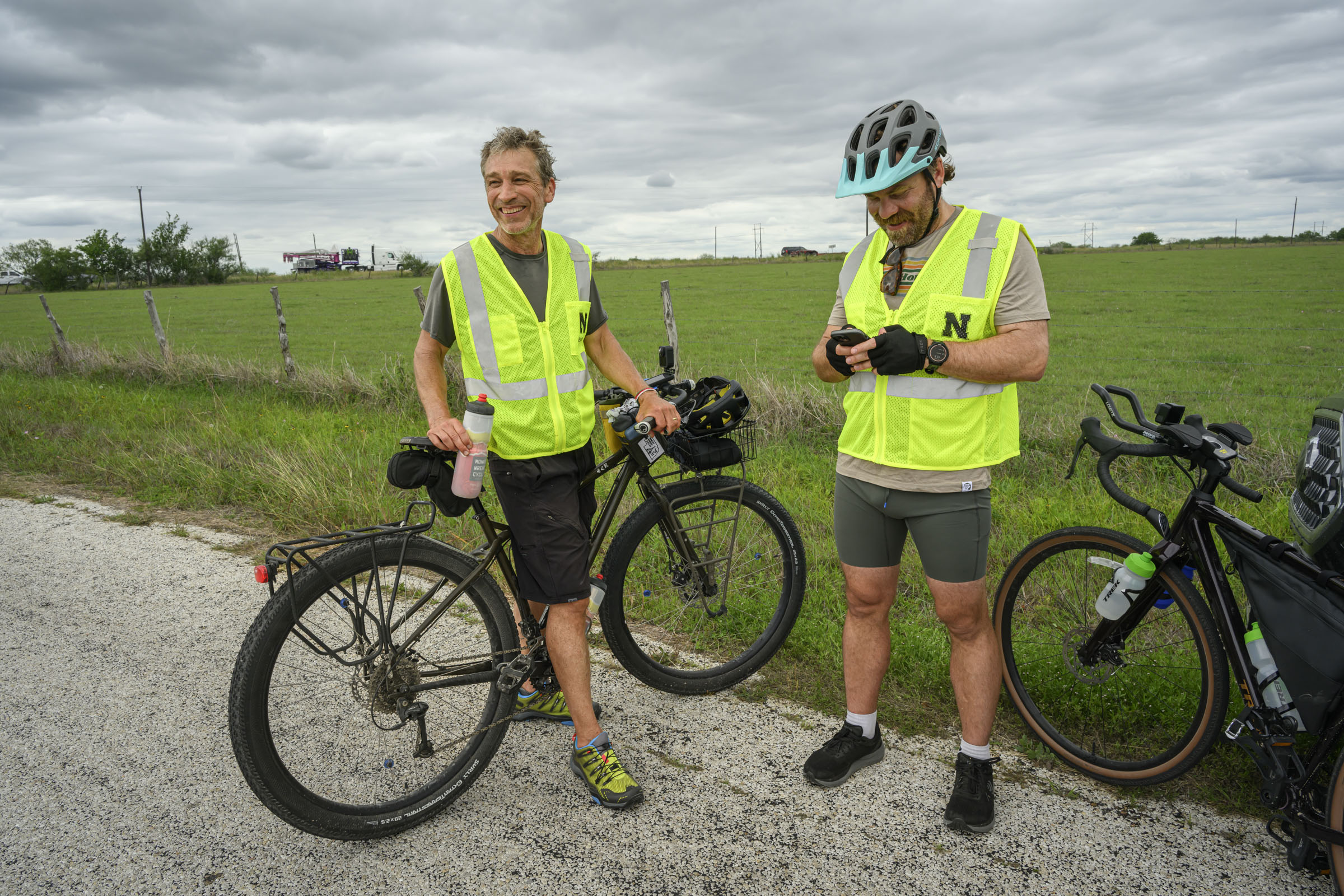
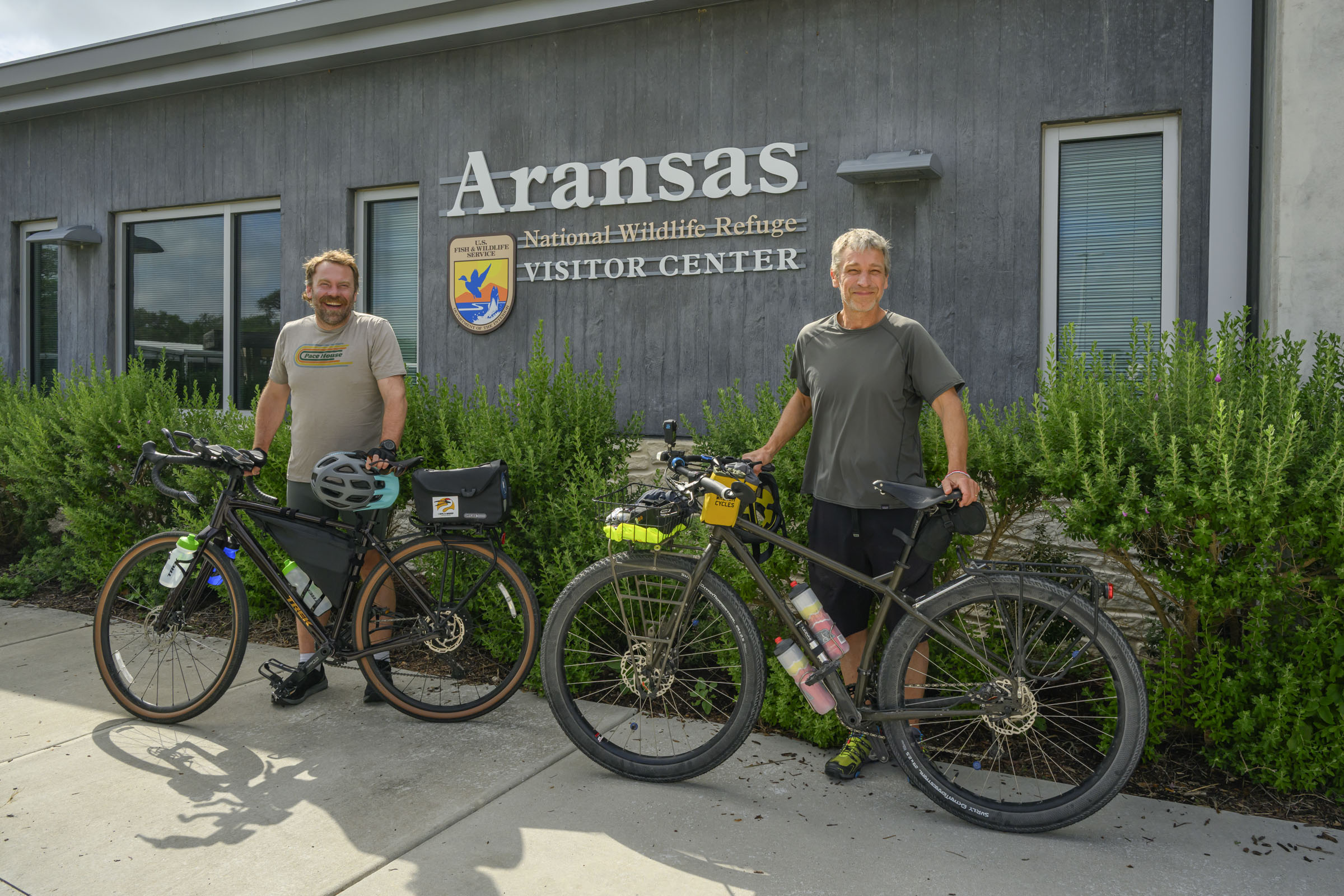
Mike Forsberg, left, and Andy Caven, right.

The journey ahead

Both Caven and Forsberg’s passion for the birds stems from their lifelong love of the natural world.

Caven recounted how he collected butterfly eggs and watched birds sitting on his porch in northern Minnesota with his grandfather, watching birds fly by overhead. Forsberg said his love stemmed from summers escaping the heat from his native Nebraska in the mountains of Colorado.

Both said these imparted a connection with the natural world that now pushes them along this epic journey.

After they took off from the Aransas National Wildlife Refuge on May 11, it took a few days to really get their legs, the two cyclists said.

“I’ve got a couple of creaky joints,” Caven said. “And for Mike, he’s getting a little more on the muscle cramp side. So we’re not even having the same issues, but we’re doing the same thing because we’re different birds. It speaks to ecology of it.”

The two will be followed by a chain of support vehicles and teams throughout the length of the trek, stopping for rest days throughout and sampling local eateries along the way.

They’re chronicling the journey on the Whooping Crane Chronicles website, with a progress tracker and on the social media pages of the Platte Basin Timelapse, of which Forsberg is co-founder.

And while they are in some ways at the mercy of the elements and their own physical and mental stamina, Caven and Forsberg say they hope to meet many people along the route.

“It’s not trying to go as fast as we can or anything,” Caven said.

“And it’s not trying to be too polemic about anything, either,” Forsberg added. “It’s just meeting people where they’re at, and if they’re interested in what we’re doing, we’ll tell you more.”

If you found the reporting above valuable, please consider making a donation to support it here. Your gift helps pay for everything you find on texasstandard.org and KUT.org. Thanks for donating today.