You may think that if you’ve seen one jellyfish, you’ve seen them all. One floating, stinging, blob can’t be that different from another, right?
A group of marine biologists from Texas A&M University-Galveston would disagree. The scientists recently identified a new moon jellyfish species that was previously unknown to science.
Maria Pia Miglietta, associate professor of marine biology at Texas A&M University-Galveston, spoke to the Standard about the discovery. Listen to the interview in the player above or read the transcript below.
This transcript has been edited lightly for clarity:
Texas Standard: Before we get too deep into the jellyfish, tell us a little bit about the circumstances under which you found this new species.
Maria Pia Miglietta: Yes, my former PhD student Alex Frolova found one single jellyfish offshore at the Gulf of Mexico and she recognized it as something possibly slightly different and brought it to the lab.
Now what gave you or the PhD candidate a sense that this jellyfish might be different from any of the others that you had seen before?
One of these was the location. It was found offshore in the middle of the Gulf of Mexico, while those animals usually are coastal animals. You find them usually on the coast on shallow water.
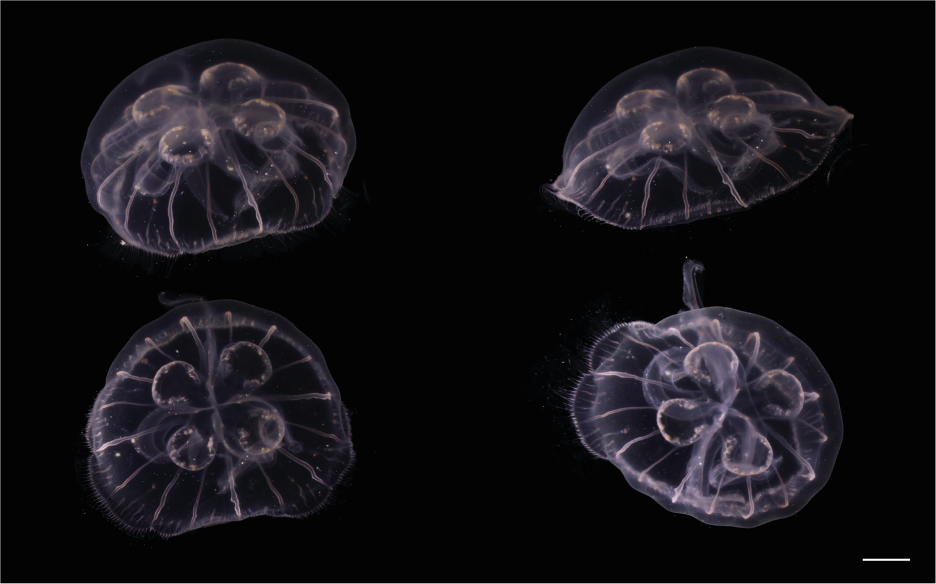
But another one was the size. And Aurelia and the moon jellyfish are pretty big, 15 centimeters or so. And this was particularly small, very compact, five centimeters. And so the size was interesting, yes.
So when your associates discovered this jellyfish, did they know right away? Did they call you up breathlessly and say, “I found something new”?
Yes, she did. She called me and she said, “I think this is different. It doesn’t look familiar to me.”
And so immediately we went with a DNA analysis to confirm. So we sequenced that gene and it was new, it was unique. So at that point we knew that she was right.
» MORE MARINE MARVELS: The massive, ‘dinosaur-era’ fish you might find on Texas beaches
Yeah, so tell us about this new species. What is it called? And other than the size, what else distinguishes it?
It’s called Aurelia profunda. We gave it the name because we believe it lives in deep water.
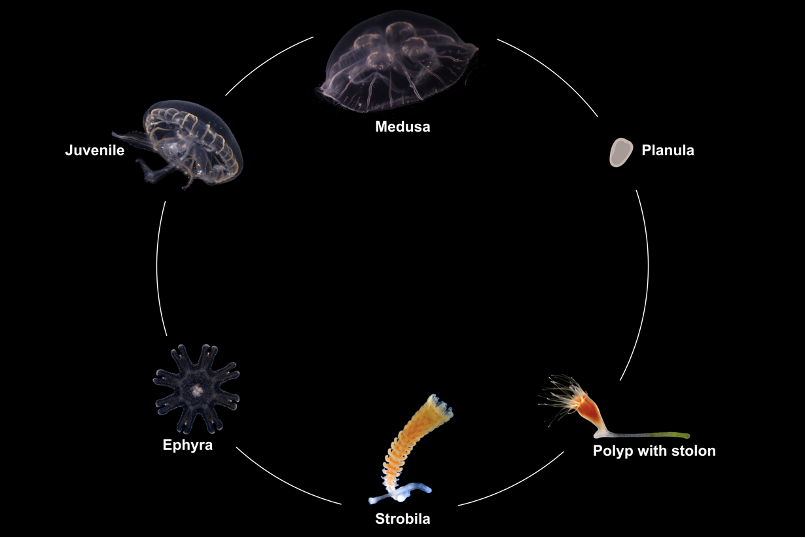
It is smaller than all the other moon jellyfish that are out there. But the juvenile jellyfish, the newborn jellyfish and the polyp that forms the jellyfish, they are some of the biggest within the group.
Oh, that’s really interesting. Now, the specific individual that your team retrieved, I gather, was pregnant at the time, or I guess the jellyfish equivalent of pregnant.
What do they call that? Is there some name for that that I’m missing?
The jellyfish had larvae on them. They usually carry the eggs and then the eggs are fertilized and so she was carrying the fertilized eggs that were developing into larvae.
And so this was significant because this gave you another observational opportunity, I suppose.
Absolutely, because if you find one single jellyfish, then that’s all you have. But in this case we had the larvae and we were able to get a culture of polyps in the lab and from the polyps get new jellyfish and therefore look at the entire life cycle.