When Jo-Anne Berelowitz was about ten years old, her father told her something that would stick with her. He said they would have to leave South Africa because Jews didn’t belong and South Africa could never be home.
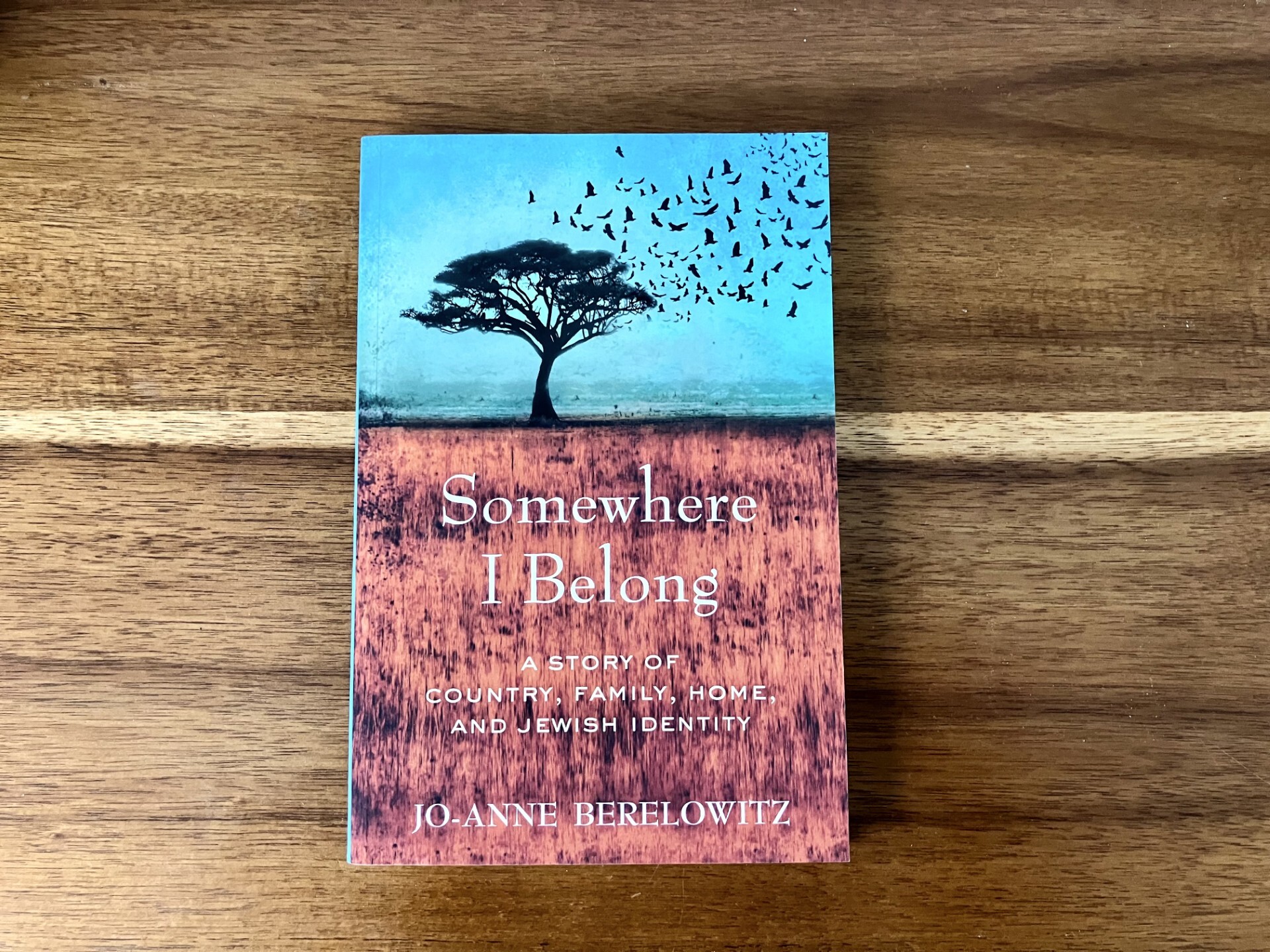
The years passed by and Berelowitz grew up anxious about the meaning of home. She reflects on that anxiety in her new memoir, “Somewhere I Belong: A Story of Country, Family, Home, and Jewish Identity.”
These days, Jo-Anne is an art historian who calls Austin home. She joined the Texas Standard to discuss her book. Listen to the interview in the player above or read the transcript below.
This transcript has been edited lightly for clarity:
Texas Standard: Your whole family did eventually move out of South Africa. Why did you feel that was necessary?
Jo-Anne Berelowitz: From about the 1960s onward, liberal-inclined South Africans left South Africa. We could see the writing on the wall. It wasn’t going to get any better. There was going to be some kind of revolution. There’d been overthrows of colonial governments to our North in various parts of Africa.
We made plans to leave, but plans take a long time to implement. My father had a business, my grandparents were still alive. So, you know, things took a while, but eventually over the course of the ’70s, we all left.
I wanted you to dig in a little bit deeper about why your father said what he did and what sort of mark that left on you and your siblings.
I think Jews are kind of sensitive to threats of imminent danger, particularly since what happened in Nazi Germany. And my father loved history, he consumed history books, and he was sure there was going to be a bloody revolution.
There actually wasn’t. But my father had a kind of apocalyptic bent. He dreaded the cataclysm. So he was determined to get us out.
And there was a fairly large exodus around the ’70s, particularly after the riots in Sharpeville when police mowed down children and the racial tensions in South Africa became more acute and to deal with them, the apartheid government clamped down even more.
You moved to California with your husband in the 1970s, and I would imagine there would be a considerable amount of culture shock.
My ex-husband had lived in California, so he already loved it, but I was terribly lonely. I knew nobody, had no family, and I was pregnant. So even my body was very different to me.
Even driving on the different side of the road in a behemoth vehicle, when I had a little Volkswagen bug in South Africa, everything was shocking.
A big part of your book is about finding home in your faith. What was that process like and how deliberate and deliberative was it?
I grew up in a very secular Jewish family. I would say that my father was almost rabidly anti-religious. Because everyone in South Africa was kind of forced into their ghetto, there was a tremendous amount of anti-Semitism in my hometown — a kind of polite anti-Semitism from the Anglo community. And so we moved mainly with Jewish people, so we were Jewish, but very, very secular.
I’m not sure if it was partly in rebellion against my father, but I began to be attracted to the rich history of my people. And the more I got into it, the more I wanted to get into it. So it caused some conflict with my parents.
My mother would ask me, are you becoming frum, which means like ultra-orthodox. But there are so many shades and so many ways of being Jewish.
As you think about people reading your memoir, what are you hoping they get out of it?
I hope people will think about where they’re at home.
One of the important things about memoir is that you get to write your own narrative. You don’t get to be scripted by somebody else. So I think some of my fumbling towards my truth comes through in my memoir.
I hope that people will be prompted to reflect on their own stories and how they might like to tell it, even if they don’t write a memoir. But just think about their own stories in different ways.