What Texas pet owners need to know about New World screwworm

There is at least one confirmed case found in South Texas. What can you do to protect your pets?

By Charlie SharpeJune 5, 2026 8:33 am, ,

It’s the stuff of nightmares: Innocuous flies that lay flesh-eating larvae. After being gone for nearly fifty years, they’ve gradually crept further and further northward.

Now there’s a case in La Pryor, TX.

While the news around the New World screwworm has focused on the cattle industry, all warm-blooded animals are at risk of infection.

The executive director of the Texas Animal Health Commission, Bud Dinges, has placed a quarantine zone about 20 kilometers (12.4 miles) around the site in La Pryor where the screwworm was found in a three-week-old calf. If you’re in this zone, you’re required to get regulatory sign-off to move your animal out of the area.

U.S. Department of Agriculture (USDA) has also sent a team to support local authorities. 

The good news: In a press conference, Agricultural Secretary Brooke Rollins said this looks more like an isolated case than a sign of an infestation.

Still, for those of us with pets, it’s always smart to be prepared. So, what should pet owners in Texas know about New World screwworms?

What even are New World screwworms?

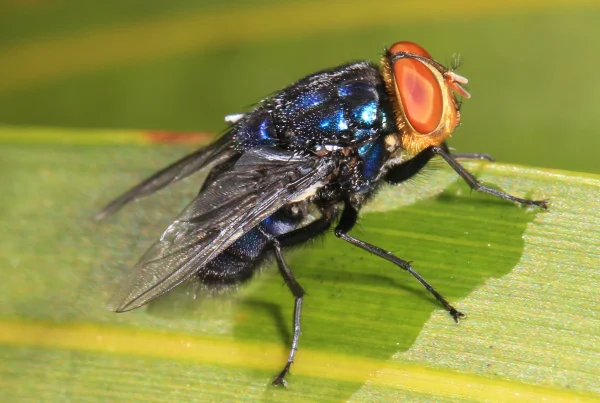
New World screwworms (NWS) are a type of parasitic blowfly that haunted the American cattle industry until the 1970s, when they were eliminated thanks to a USDA program. The adult flies — shiny, bluish-green bugs the size of a housefly — are as harmless as, well, a fly.

The real nightmare fuel is their larval stage.

Female NWS need living flesh to lay their eggs. Female flies will look for a wound or entrance on an animal and lay her eggs there.

While open wounds are the most obvious places the eggs are found, they can also be laid on tiny scratches, surgical sites, or orifices (like ears, belly buttons, or noses). Within 12-hours, the larvae will hatch and feed on the living tissue. 
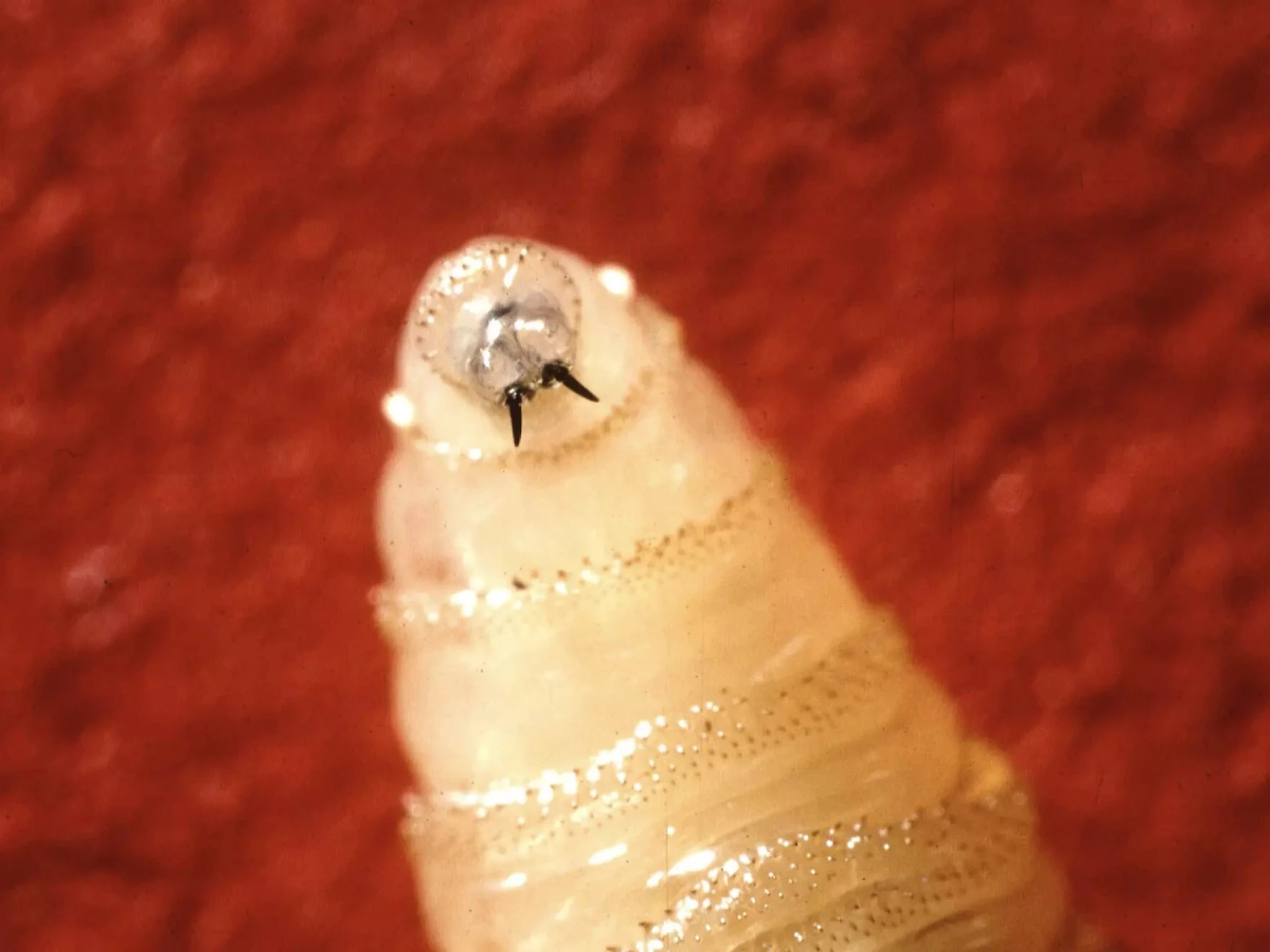
AP / USDA Agricultural Research Service

New World screwworm larva, pictured, will hatch and feed on the flesh of living animals, typically cattle. Cases in humans are rare but can be fatal.

Can my animals be affected?

If it’s a warm-blooded animal, the answer is yes.

“The screwworm doesn’t just affect livestock,” says the Texas Standard’s Michael Marks. “Dogs and cats are just as susceptible and there have been a lot of reports of dogs and cats with screwworm cases in Mexico.”

Other pets to watch out for include your birds, rodents, and any other warm-blooded critters, especially if you are located in South Texas or your pet spends time outdoors.


What are the symptoms of a New World screwworm infection?

The most tell-tale sign of a NWS infection is an open wound, especially with eggs or larvae. Because the larvae will prevent the wound from healing, secondary infections are also a concern.

Pet owners should monitor their pets for:

• Any open wounds, especially those that seem to be getting worse

• Visible larvae inside of or around a wound

• A foul-smelling odor, like rotting or decaying tissue

• Irritation or swelling around a wound

• Draining wounds

A NWS infection is painful for an animal. Other symptoms to watch out for include: 

• Lethargy 

• Head-shaking

• Irritated behavior

• Separating themselves from other animals or people

• Signs of depression

• Loss of appetite 

The bottom line is that if you see an open wound on your pet with anything that seems peculiar, it’s a good idea to go to the vet.

I think my pet has New World screwworms. Now what?

The good news is that a NWS infection is completely treatable. It’s not a disease, so when the eggs and larvae are taken out, the animal affected is able to recover. 

If you notice signs of a screwworm infection, immediately take your pet to the veterinarian. Treatment will vary depending on your animal, but will generally include the removal of the larvae and a cleaning of the wound.

Also, be sure to contact the Texas Animal Health Commission (TAHC) (800-550-8242) and the USDA area veterinarian in charge.

If you’re able to, taking photos of the eggs or larvae can seriously help out authorities in preventing the further spread of these flies.

What can I do to prevent New World screwworms?

Pet owners in South Texas have been advised to be especially vigilant. No matter where you are, staying aware of and engaged with your pet’s health can help prevent NWS.

Be sure to:

• Keep pets up to date with veterinary care, especially any parasite prevention medication

• Check pets for wounds 

• Monitor any surgical wounds

• Clean and treat any wounds you may find

• Take photos of any eggs, larvae, or flies you may find on or near your pet

• Contact a veterinarian right away if you suspect NWS

Is it contagious? Can I get it?

New World screwworms are not contagious, and they cannot spread directly from animals, people, or between the two. An infection can only begin when a female fly lays eggs on the animal.

Infected animals do not pose an immediate risk to one another. However, after about 7 days of the larvae feeding, they will drop off the animal, dig into the soil, and pupate. Adult flies will then emerge from the soil after about 7-54 days.

Female flies can mate within 3 days of emerging, which will begin the life cycle again.

Humans can get NWS, but cases are exceedingly rare. You will not get it from an infected animal, only from the female flies.

If you do suspect you may have contracted screwworm, seek medical attention.

The bottom line

While the case in La Pryor is nerve-wracking, it’s not time to panic yet. If you’re in South Texas, it’s a good idea to stay extra vigilant around your pet’s health. Know the symptoms and have a plan in place if you notice anything out of the ordinary. 

Sources

Texas A&M AgriLife Extension

VeterinaryPartner

U.S. Department of Agriculture

Centers for Disease Control

United States Animal Health Association

Texas Veterinary Medical Foundation

Texas A&M Veterinary Medicine & Biomedical Sciences

U.S. Food and Drug Administration

If you found the reporting above valuable, please consider making a donation to support it here. Your gift helps pay for everything you find on texasstandard.org and KUT.org. Thanks for donating today.