Texas Republican leaders are pushing ahead with efforts to crack down on alleged “birth tourism,” even as a federal district court has blocked an effort by President Donald Trump to do the same nationwide. A federal judge temporarily blocked Trump’s August executive order banning the practice last week.
The ruling last Wednesday marked the latest defeat for Trump’s efforts to curtail or restrict the Citizenship Clause of the Fourteenth Amendment to the U.S. Constitution, which grants U.S. citizenship to virtually anyone born in the United States, regardless of the legal status of the parents.
Trump signed an executive order on the first day of his second term denying automatic U.S. citizenship to anyone whose parents were in the United States illegally. On June 30, the final day of its 2025-26 term, the U.S. Supreme Court upheld the definition of birthright citizenship as defined in the Fourteenth Amendment, ruling 6-3 that Trump’s order was unconstitutional.
Trump responded by issuing a new pair of executive orders in August. One of these ordered the State Department and the Department of Homeland Security (DHS) to take steps to revoke the visas of any noncitizens coming to the U.S. for the purposes of giving birth and gaining U.S. citizenship for their children, as well as to permanently bar such noncitizens from entering the U.S.
“What the Supreme Court said is if you’re born on U.S. soil, you’re presumptively a citizen unless there’s some sort of a fiction, some reason why you’re not actually here,” said Josh Blackman, a professor of constitutional law at South Texas College of Law Houston. “I think what Trump [was] arguing in this order is that if there’s allegations of fraud, that is you didn’t come here under the right circumstances, it’s as if you were really never here … I don’t see that that clearly follows from the Supreme Court’s opinion.”
Judge Deborah Boardman of the U.S. District Court for the District of Maryland agreed. Boardman wrote in her decision, issued last Wednesday, that the Supreme Court’s June ruling meant that Trump’s August executive order “is almost certainly unconstitutional.”
“The administration talked so much about birth tourism in their larger attempt to change to birthright citizenship that there are probably some voters who are thinking, ‘Well, why aren’t we seeing more action on this front?,'” said Julia Gelatt, associate director of the U.S. program at the Migration Policy Institute. “I think we may be seeing the administration trying to satisfy the people who they had sort of activated on the issue.”
Gelatt said that the prospect of birthright citizenship being abused, particularly by private companies bringing in alleged birth tourists to make a profit, is something about which U.S. citizens have a right to be concerned. But she also said it’s important not to exaggerate the extent of the problem.
“It’s a pretty small phenomenon,” Gelatt said. “Less than 1% of U.S. births annually can be attributed to birth tourism. There are already policies in place that lead to higher scrutiny of travelers who may be coming while pregnant.”
Houston immigration attorney Gordon Quan agreed. He said that even without new action from the Trump administration, U.S. consuls around the world already have wide latitude to prevent people from entering the U.S. for purposes of giving birth.
“It’s not easy for anybody to get a visa,” Quan said. “Millions of people every year are denied visas arbitrarily. The consul has total authority to give a visa or not. They don’t like the clothes you’re wearing. They don’t like an answer you give. It’s a selective process.”
How Texas Republican leaders are responding
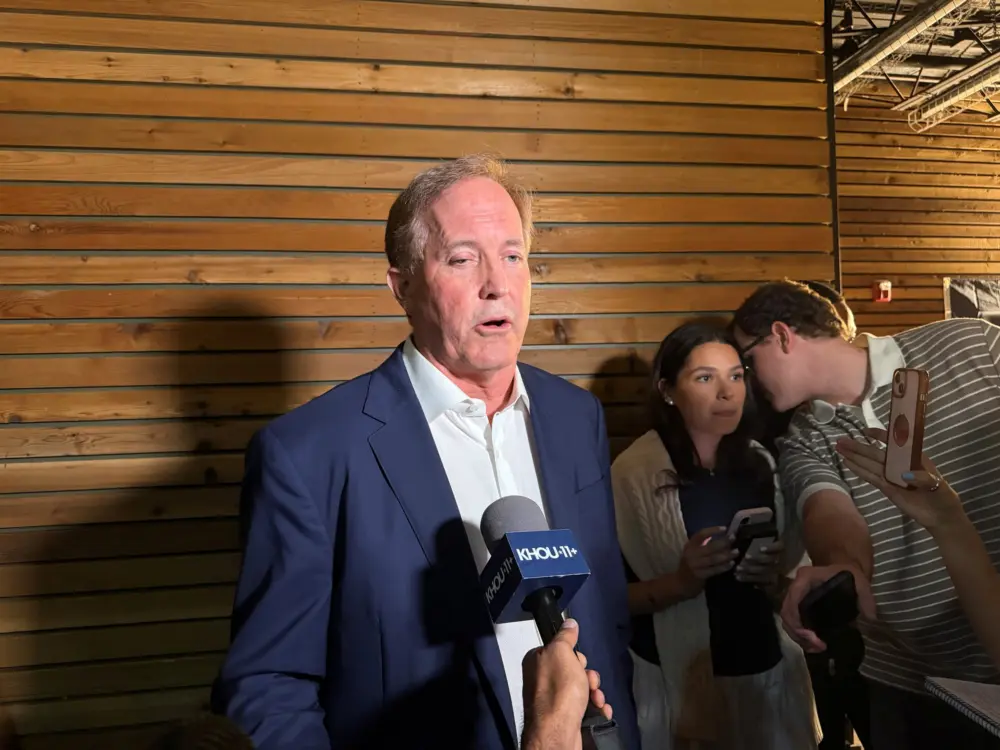
Texas Attorney General Ken Paxton didn’t wait for the Supreme Court to issue its ruling on Trump’s original birthright citizenship order before making his first move to crack down on alleged birth tourism. In late April, during his primary runoff to capture the Republican nomination for the U.S. Senate from incumbent Sen. John Cornyn, Paxton filed a lawsuit against the Houston-area De’Ai Postpartum Care Center — alleging the facility operated as a maternity hotel.
Paxton charged the center and its proprietors had violated a number of Texas laws in order to encourage Chinese nationals to come to the United States for the purposes of earning citizenship for their children. Those charges included conspiracy, unlawful concealment and harboring in violation of federal law, as well as violations of the Texas Deceptive Trade Practices Act.