Texas lawmakers question whether multibillion-dollar data center tax break still benefits the state

Thirteen years ago, when Texas created the tax deal for data centers, state lawmakers expected to lose — at most — $14 million in tax revenue in Texas’ next 2-year budget cycle. Now, state projections show it could lead to Texas forgoing more than $3 billion in the 2028-29 biennium.

By Blaise Gainey, The Texas NewsroomJuly 28, 2026 12:09 pm, ,

From The Texas Newsroom:

Back in 2013, the Texas Legislature created a tax incentive designed to encourage companies to build large data centers in the state. At the time, state lawmakers said it would attract billions of dollars in private investment to Texas — investment that would far eclipse the millions in tax revenue the state expected to forgo over its next two fiscal years.

But as the Texas data center boom continues, recent projections estimate the incentive could cost the state several billion dollars in its next budget cycle.

This, lawmakers argue, is not what Texas initially intended — especially as the state becomes one of the nation’s fastest-growing markets for data centers, fueled by artificial intelligence and cloud computing.

Members of the Texas Senate Finance Committee on Monday questioned whether the state is receiving enough in return by keeping the tax deal in place.

The hearing kicked off the panel’s examination of “the cost and consequences” of the sales tax exemption ahead of the 2027 legislative session.

A growing tax break

So, how did this happen? The simple answer is that Texas in 2013 was a very different place than Texas in 2026, and lawmakers didn’t account for those changes.

“The early estimates are significantly too low to begin with,” said Brad Reynolds, chief revenue estimator for the Texas Comptroller’s Office.

Reynolds told committee members that the state underestimated both the number of projects that would qualify for the tax incentive and the size of the facilities companies would eventually build.

For instance, Reynolds said nine qualifying projects alone were required to invest a combined $2.7 billion to receive the exemption. Instead, those companies ultimately invested more than $9.1 billion.

“So, from the very start, the scale of these operations was much larger than we understood at the time,” said Reynolds.

Applications also accelerated after 2021, said Reynolds, as the pandemic sped up the economy’s shift toward digital services and artificial intelligence drove demand for larger computing facilities.

Sen. Paul Bettencourt (R-Houston) said the growth illustrates how quickly the industry has ballooned since lawmakers created the exemption, which was expanded in 2015.

“The cloud exists… not in the atmosphere, but in all these data centers,” Bettencourt said. “That tells you how fast technology has changed.”

Patricia Lim / KUT News

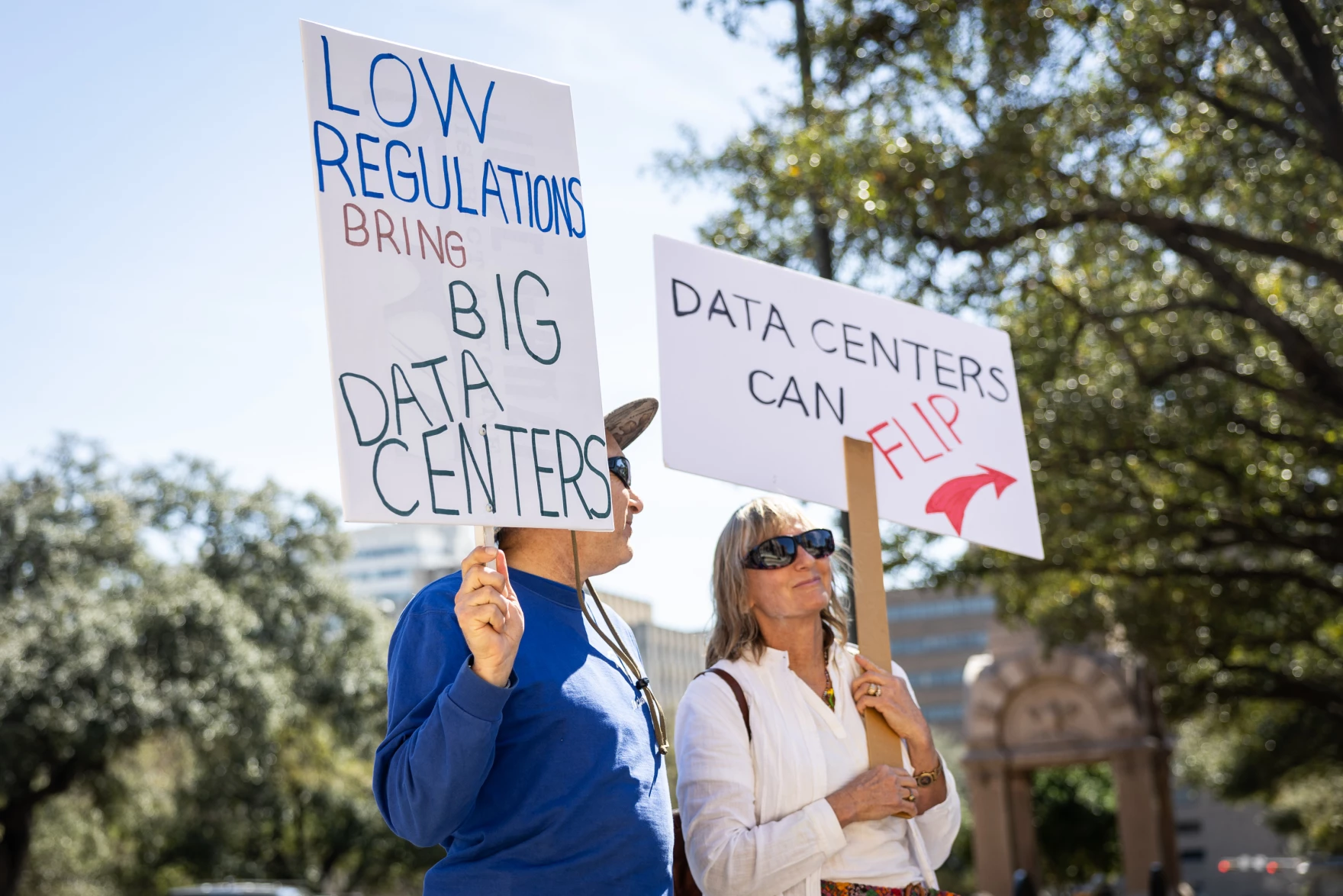
An advocate wears a “Don’t Data center my Texas” pin during a hearing at the Texas Capitol last month.

Sen. Juan “Chuy” Hinojosa (D-McAllen) noted lawmakers initially estimated the exemption would reduce state revenue by about $14.6 million for the 2014-15 biennium. Current projections put that figure at roughly $3.3 billion during the state’s 2028-29 budget cycle.

Hinojosa questioned whether that level of foregone revenue is sustainable and whether lawmakers have enough information to determine if taxpayers are receiving sufficient benefits in return.

Members of the Senate Finance Committee also questioned whether the permanent jobs created by data centers justify the size of the tax break. While facilities can create construction jobs, staffing levels are often much smaller once they begin operating.

Reynolds acknowledged some companies have struggled to meet the program’s minimum requirement of employing 20 workers.

“To be unable to justify employment of even 20 people… tells you how little employment is really stemming from this,” Reynolds said.

For their part, the companies behind data centers in Texas argue the state does see substantial benefit from the growing industry.

“In 2024 alone, data centers contributed $4.5 billion in state and local tax revenues in Texas, including $2.3 billion in local tax revenues to fund schools, roads, public safety, and other essential services,” said Dan Diorio of the Data Center Coalition in a statement to The Texas Newsroom.

“This is on top of contributing more than $65 billion to Texas’ GDP and creating more than 103,000 direct jobs,” Diorio added.

Limited state oversight

Lawmakers on Monday also questioned how closely the state monitors companies after they receive certification.

The Comptroller’s Office said Texas has certified 138 qualifying data centers, though only about 20 have been audited or are currently under audit. Notably, Reynolds told the panel that several of those reviewed were found to be out of compliance.

In one instance, a company was ordered to repay nearly $5.6 million after voluntarily surrendering its certification. Audits involving other companies remain ongoing.

The findings raised questions from lawmakers about whether the state relies too heavily on companies to police themselves.

“I like to think that everybody is honest in America,” Sen. Lois Kolkhorst (R, Brenham) said.

Reynolds responded that state law directs companies to certify their planned investment first and requires the agency to audit them afterward.

“The expectation was… these companies would state their commitment… and then the statute says the Comptroller is to audit them after the fact,” Reynolds said.

Political pushback grows

The debate over whether the incentive should continue also comes as Gov. Greg Abbott has shifted his position on the rapid expansion of data centers in Texas.

The sales tax exemption was originally created under Gov. Rick Perry, but it was expanded in later sessions, including during Abbott’s tenure as governor. More recently, Abbott has called for limits on some future data center development, particularly in rural areas where communities have raised concerns about the strain on water, land and local infrastructure.

The governor has directed state agencies to study additional oversight of the industry, though lawmakers have said any major changes to the program would require legislative action.

Lorianne Willett / KUT News

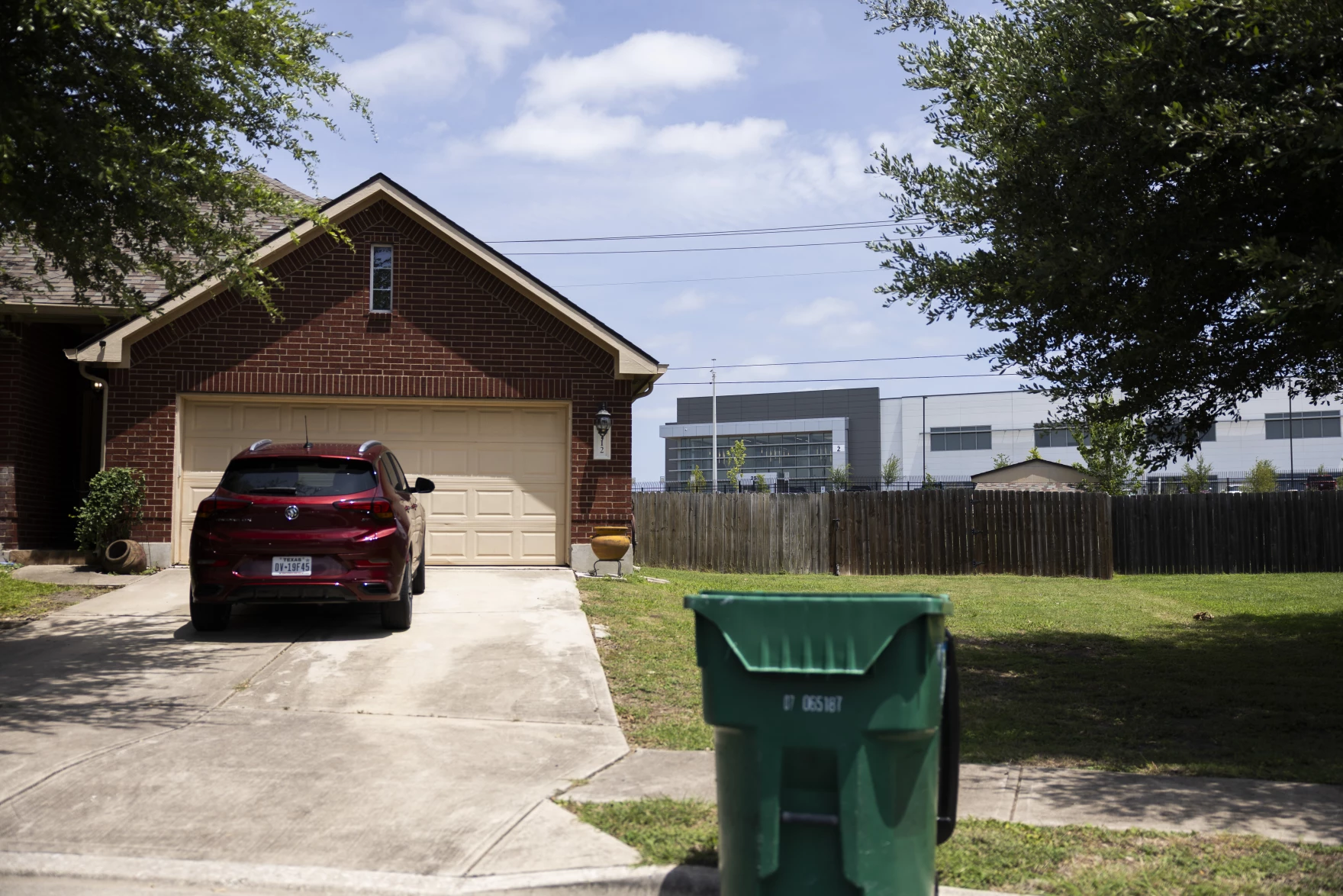
Skybox Data Centers sits behind a home on Timothy John Drive in Round Rock, Texas, on June 25, 2026.

While the state Senate panel met on Monday, Agriculture Commissioner Sid Miller was outside the Capitol, leading a rally with activists and local officials calling for a pause on new data center development until the state addresses residents’ concerns over the industry’s impact on Texas communities, water and farmland.

Among the speakers was Clayton Tucker, secretary of the Texas Farmers Union and the Democratic candidate for agriculture commissioner this November. Tucker said the potential economic benefits of AI data centers do not outweigh their impact on Texans’ way of life.

“It doesn’t matter whether you’re city or country, whether you are red, blue, yellow, or green — we all wanna do what we love with those we love,” Tucker said. “Data centers and AI is a grave threat to that dream right now. Because, look, we don’t have the water for these things.”

Miller, a Republican, used the rally to once again call on Abbott to bring the Texas Legislature back for a special session on the issue, arguing the state needs new rules and oversight before more projects move forward.

“Texans deserve more than just empty rhetoric,” Miller said. “The answer to that is a special session now.”

(Of note: Miller will not be on the ballot for reelection in November after losing his Republican primary earlier this year)

More unknowns ahead

Inside the Texas Capitol, as lawmakers continued questioning officials, another theme emerged: Despite the rapid growth of the industry, the state still lacks a complete picture of what future development will look like.

Sen. Joan Huffman (R-Houston) asked whether there are more projects in development than the state currently knows about.

Reynolds said there likely are.

“We don’t really know what’s going on,” Reynolds said. “There’s a lot of deliberate secrecy involved in these developmental plans.”

Lawmakers also asked Reynolds and others who testified during the hearing whether the state tracks the broader economic impact of data centers or regulates where they are built, particularly as more facilities are proposed in rural and water-stressed areas.

Officials acknowledged the state does not currently regulate where companies build data centers, leaving those decisions largely to developers unless lawmakers create new requirements.

By the end of nearly three hours of testimony, lawmakers had established that a tax incentive originally expected to cost millions has grown into a multibillion-dollar program.

But they also arrived at another conclusion: the state still lacks many of the answers needed to determine whether those billions in foregone tax revenue are producing the economic return lawmakers intended when they created the incentive more than a decade ago.

If you found the reporting above valuable, please consider making a donation to support it here. Your gift helps pay for everything you find on texasstandard.org and KUT.org. Thanks for donating today.